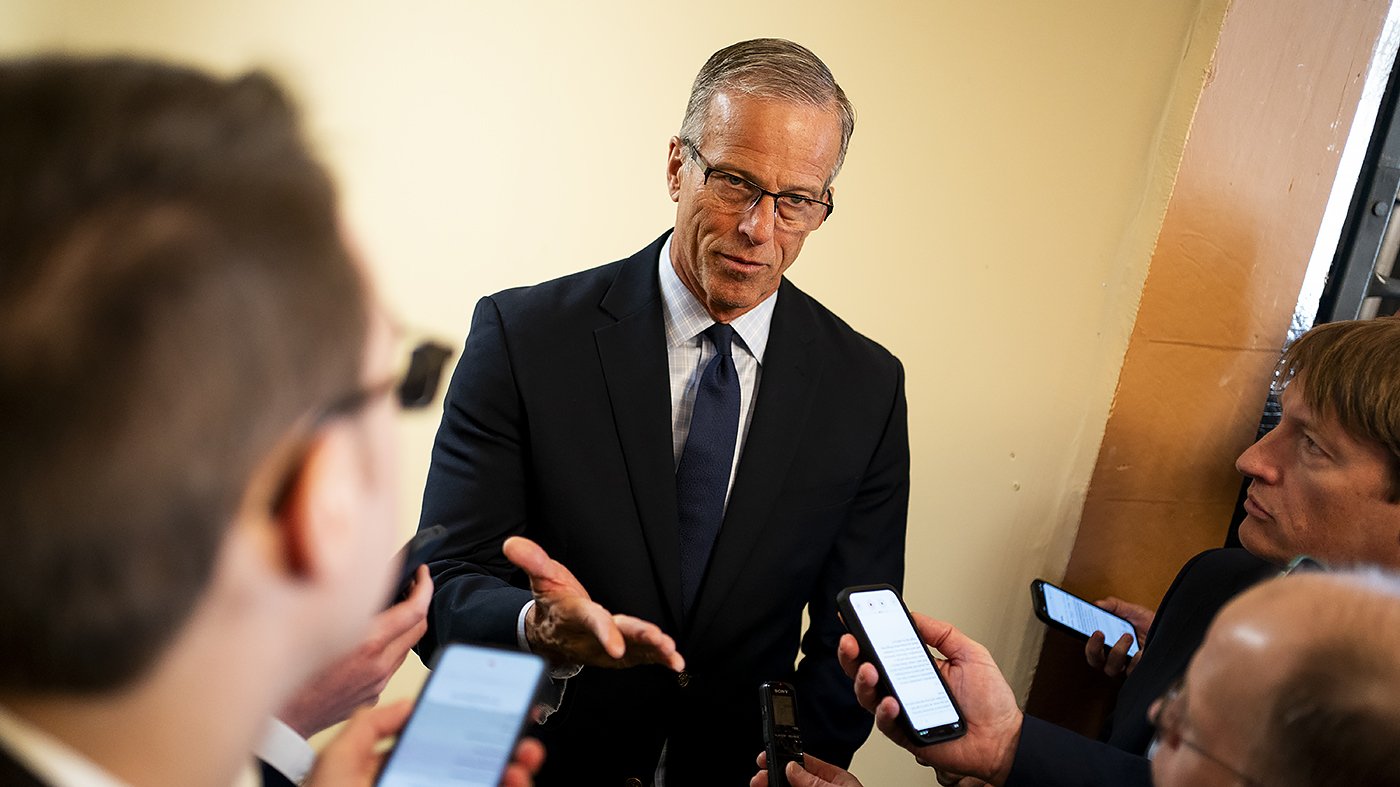
Senate Republicans pushed through a budget resolution early Thursday morning after a marathon voting session that stretched past midnight, clearing the path for a reconciliation package next month aimed at funding immigration enforcement and reopening the Department of Homeland Security. The measure passed 50-48, with GOP Senators Lisa Murkowski of Alaska and Rand Paul of Kentucky joining all Democrats in opposition.
GOP Unity Tested on Amendments
Republicans largely held together to fend off Democratic amendments designed to derail the resolution, but cracks emerged among vulnerable incumbents. Senators Susan Collins of Maine and Dan Sullivan of Alaska broke ranks on several votes, backing measures to lower out-of-pocket healthcare costs, reverse recent cuts to the Supplemental Nutrition Assistance Program, and target health insurers that delay or deny care. The defections signaled anxiety within the GOP conference ahead of the midterm elections.

Missouri Senator Josh Hawley, a conservative who has frequently pressed for lower healthcare costs, joined Collins and Sullivan in raising a point of order against any reconciliation bill that fails to address insurance company practices. The trio also sided with Democrats on an amendment from Vermont Independent Bernie Sanders directing the Budget Committee chairman to pursue policies to slash prescription drug prices by more than 50 percent. Sanders argued his proposal would codify the president's executive order on Most Favored Nation drug pricing, ensuring Americans pay no more than Canadians or Europeans for the same medications.
While the amendments lacked binding force, Democrats used the debate to force Republicans into politically uncomfortable votes. Senate Democratic Leader Chuck Schumer of New York made clear his intent to maximize pressure. “This reconciliation, or this budget act, will show who’s on whose side, and clearly if Republicans vote against our amendments, they’re not on the side of the American people,” he said on the floor Thursday night.
Reconciliation Path to Bypass Filibuster
The budget resolution is a procedural first step to unlock the reconciliation process, allowing Republicans to fund Immigration and Customs Enforcement and Border Patrol without needing 60 votes to overcome a Democratic filibuster. Senate Majority Leader John Thune of South Dakota framed the effort as critical to border security. “We have a multistep process ahead of us but at the end Republicans will have helped ensure that America’s borders are secure and prevented Democrats from defunding these important agencies,” Thune said.
GOP senators plan to advance a package next month that would fund ICE and Border Patrol through 2029 at a cost of $70 billion to $80 billion. But the House must first pass its own budget resolution, and the two chambers will need to reconcile differences before the Senate can craft a narrowly focused bill. The resolution, introduced by Budget Committee Chairman Lindsey Graham of South Carolina, instructs the Homeland Security and Judiciary committees to produce legislation that fully funds those agencies for three and a half years, with a deficit impact not exceeding $70 billion over a decade. GOP aides expect the final cost to be roughly half that amount.
DHS Shutdown and Urgent Funding Needs
The urgency stems from the Department of Homeland Security's funding lapse on February 14, when Senate Democrats blocked a House-passed appropriations bill that included money for ICE and Border Patrol. Democrats have demanded reforms such as requiring judicial warrants for federal officers and banning them from wearing masks as conditions for funding. Negotiations between the White House and Senate Democrats failed to produce a deal, leading Thune to broker a plan before Easter that funded most of DHS but excluded immigration enforcement, with the understanding that reconciliation would fill the gap.
However, House Speaker Mike Johnson of Louisiana refused to bring the Senate's stripped-down Homeland Security funding measure to the floor without immigration enforcement money, forcing Senate Republicans to accelerate their reconciliation timeline. DHS Secretary Markwayne Mullin warned in a Fox News interview Tuesday that his department has only one payroll left. “I’ve got one payroll left and there is no more emergency funds so the president can’t do another executive order because there’s no more money there,” Mullin said.
The standoff has left DHS partially shut down, and Senate Republicans are racing to finalize a package that can pass both chambers before funding runs out completely. For more context on GOP defections, see Murkowski and Paul Defy GOP on Budget Resolution Over DHS Funding. The political maneuvering also echoes broader tensions, as detailed in Jeffries Warns Florida GOP Redistricting Plan Could Cost Republicans House Control.