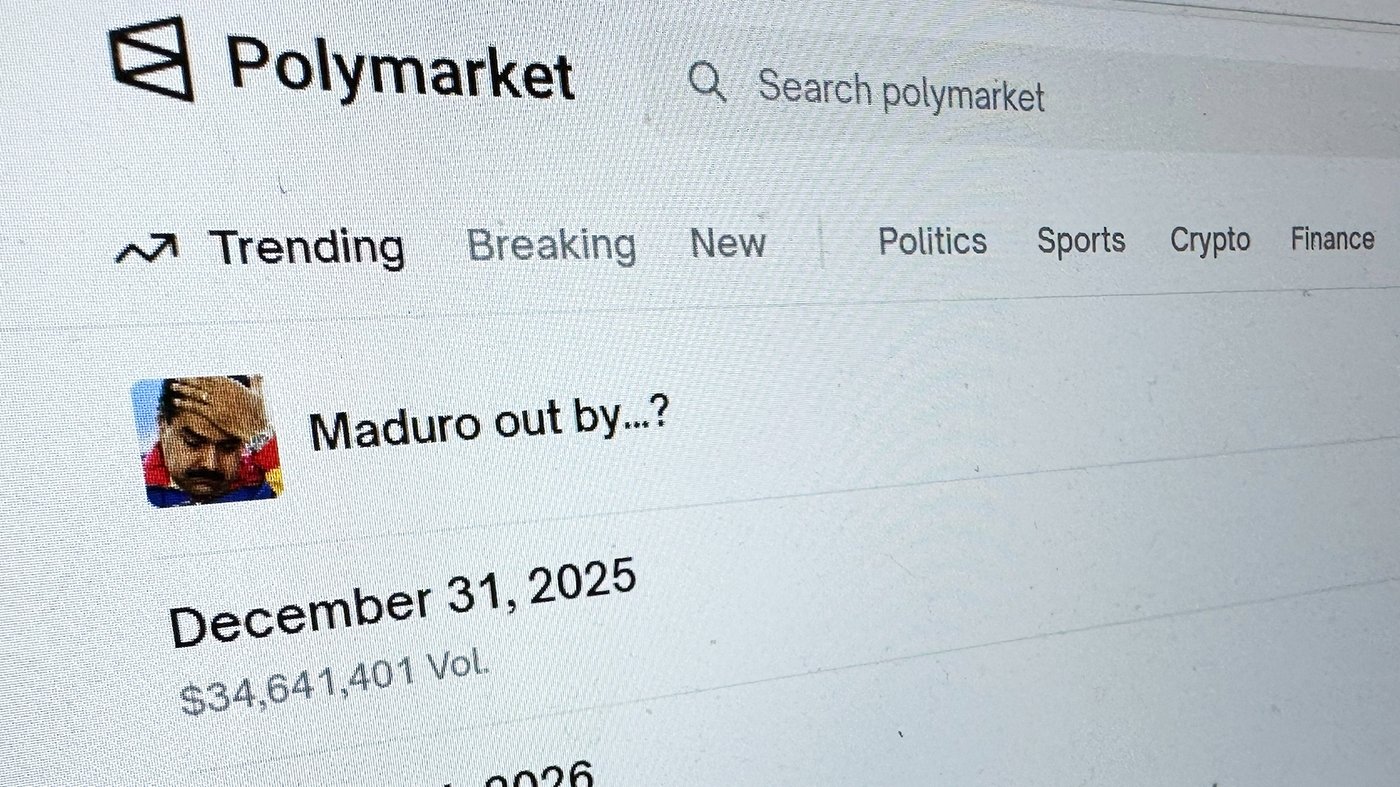
The arrest of a U.S. Army soldier accused of leveraging classified information to place bets on the capture of Venezuelan President Nicolás Maduro has intensified concerns that prediction markets could become a national security liability. The case, involving Fort Bragg-based soldier Gannon Ken Van Dyke, marks a pivotal moment in the ongoing debate over the risks these platforms pose.
Van Dyke, who was involved in planning the operation, allegedly placed around $33,000 in wagers between December 27 and January 2 on whether Maduro and his wife would be ousted. According to the Department of Justice, he made over $400,000 in profits and later tried to hide his identity by asking Polymarket to delete his account. He now faces multiple charges, including violations of the Commodity Exchange Act and wire fraud.
The incident has amplified fears that prediction markets could inadvertently serve as real-time intelligence feeds for adversaries. Alex Goldenberg, a fellow at the Rutgers University Miller Center on Policing and Community Resilience, warned that the real danger isn't the soldier betting on himself, but that enemies can read the order book. "Prediction markets on military ops are a real-time intelligence feed for our enemies," he said.
Former Air Force Secretary Frank Kendall echoed this, noting that modern AI tools can easily detect trading patterns that deviate from norms. "It's also easy for our enemies to set traps by encouraging betting in areas they are trying to collect intelligence on," Kendall said. The integration of prediction market data into mainstream media, such as Fox Corp's use of Kalshi data and Polymarket's availability on Dow Jones platforms, could amplify these risks.
The case has also sparked political debate. Some lawmakers, like Senator Bernie Moreno, have proposed banning prediction market trading for politicians, while others, like Representative Luna, have called for a presidential pardon for Van Dyke. The proposed ban on prediction market trading reflects growing unease about the platforms' potential for abuse.
Polymarket CEO Shayne Coplan defended the platform's transparency, stating that every trade is "public, permanent and auditable." He emphasized that the company flagged the suspicious activity and cooperated with authorities. "We flagged this, referred it, and cooperated throughout the process. This happens constantly behind the scenes," Coplan said.
Despite these safeguards, experts remain skeptical. Max Meizlish, a research fellow at the Foundation for Defense of Democracies, warned that adversaries could manipulate markets to create false impressions of stability or instability, potentially influencing broader market behavior. "If an adversary could make it seem that there's instability in the market... that could actually have some really big downstream implications," he said.
The Commodity Futures Trading Commission, under Chair Mike Selig, has taken a friendly approach to prediction markets, arguing they serve a useful function. However, this case has prompted calls for stricter oversight. Kendall, now at the Center for American Progress, argued that without strong insider trading rules, public markets couldn't function. "In a sense, commodities markets and stock markets take into account similar risks, but in these markets, the insider trading rules are strong and enforced," he said.
The arrest has been welcomed by national security experts as a sign that federal regulators are paying attention. "This was a good day for the rule of law," Goldenberg said, though he cautioned that the underlying risks remain. As prediction markets become more integrated into the financial and media ecosystems, the challenge of balancing transparency with security will only grow.