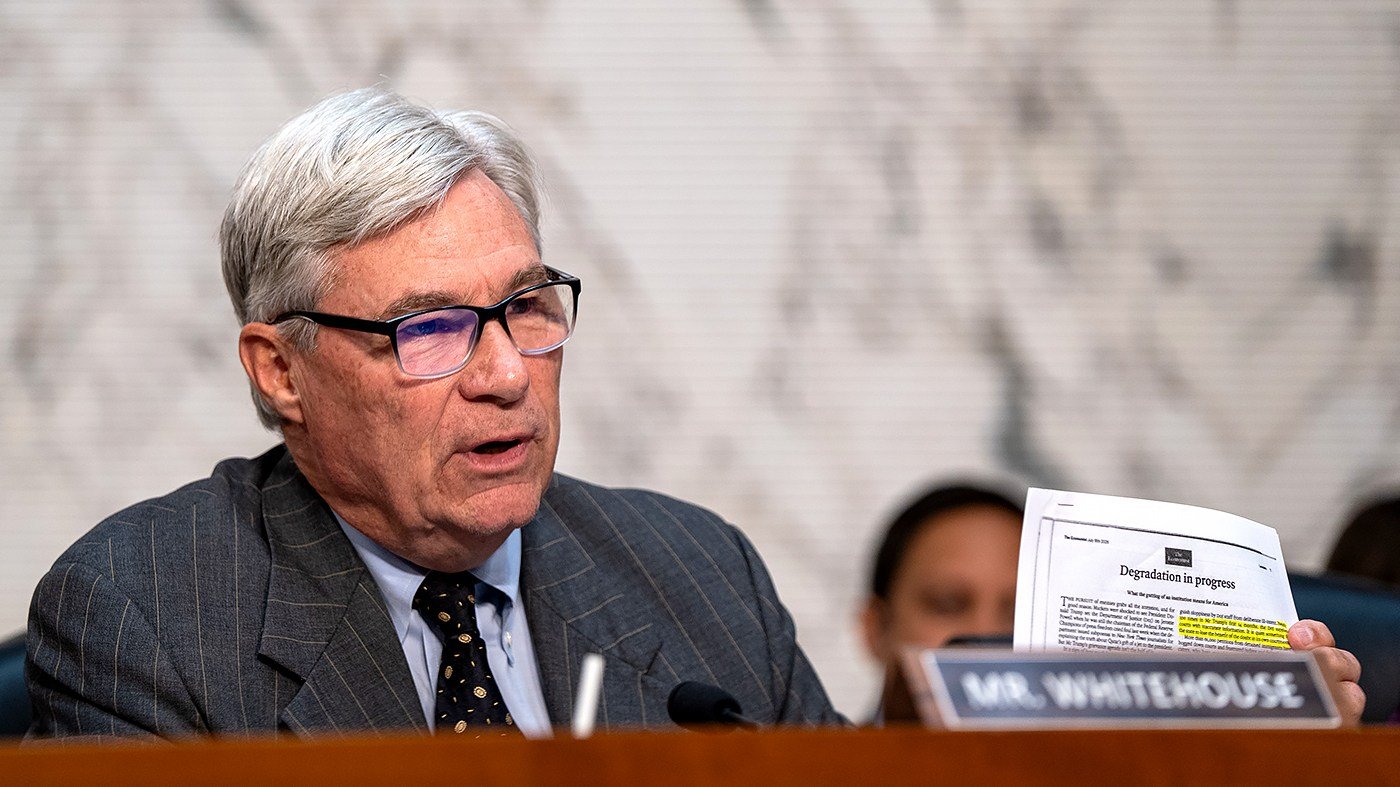
Senate Environment and Public Works Committee Chairman Sheldon Whitehouse (D-R.I.) told reporters Thursday that negotiators are on the verge of a breakthrough on permitting reform, the long-sought effort to accelerate infrastructure and energy project approvals. “We are over the hump on the deal-breaker issues, so we’re in a very good place on the substance of the bill,” Whitehouse said, adding that legislative text could be finalized in “days, maybe even hours.”
That timeline would set the stage for senators to formally consider the measure and offer amendments. For years, Democrats and Republicans have struggled to agree on how to speed up federal permitting, with Democrats prioritizing renewable energy and grid upgrades while Republicans have focused on fossil fuels and broad cuts to environmental reviews and legal challenges. The Trump administration’s efforts to block or slow renewable projects have further strained negotiations.
Whitehouse suggested the emerging deal could improve prospects for wind and solar under Trump. He described a “general agreement” but cautioned that some assurances remain vague. “Some assurances have been fairly specific; others still need to be clarified,” he said. “I appreciate very much what the Trump administration has done to move in this direction, but in order to brief colleagues on what this really means, we need just a bit more clarity on exactly what return to regular order for wind and solar projects looks like.” He expects that clarification “in fairly short order.”
However, the White House painted a different picture. A White House official told Punchbowl on Wednesday that “the administration and congressional Republicans agreed to a strong bipartisan offer. The Democrats have since refused to take yes for an answer. If they think that the administration is going to freeze these concessions until the lame duck, they are severely mistaken.” The Hill has reached out to the White House for comment.
Whitehouse, a key Democratic negotiator, indicated that a vote is likely after the November elections. “I think there is consensus that the House is not likely to come back before the election, and that the time that is necessary for these ordinary Senate procedures to take place is a bit inconsistent with the rush by Republican senators to get the hell out of here and home campaigning, so I think that is moving us towards votes after the election as the best avenue for passage of this bill,” he said.
He added that negotiators are “very close” to finalizing all components. “We’re over all the deal breakers, and now it’s just a question of … ordinary Senate legislative procedure playing out, and then … a little bit more clarity from the executive branch about what they mean by return to regular permitting order, and then agreement on the voting schedule,” he said.
The outcome will hinge on whether both sides can bridge their remaining differences. With the House unlikely to return before Election Day and Senate Republicans eager to hit the campaign trail, the lame-duck session appears to be the most viable window for passage. As lawmakers look to wrap up other year-end priorities, such as bipartisan paid leave and tax credit measures, the permitting talks will test whether a divided government can still deliver on major policy. Meanwhile, Senate Democrats are also pressuring the administration on other fronts, including tougher AI chip export curbs ahead of a high-stakes summit with China. And with control of Congress up for grabs, recent polling in key Senate races could shape the political calculus for any post-election deal.