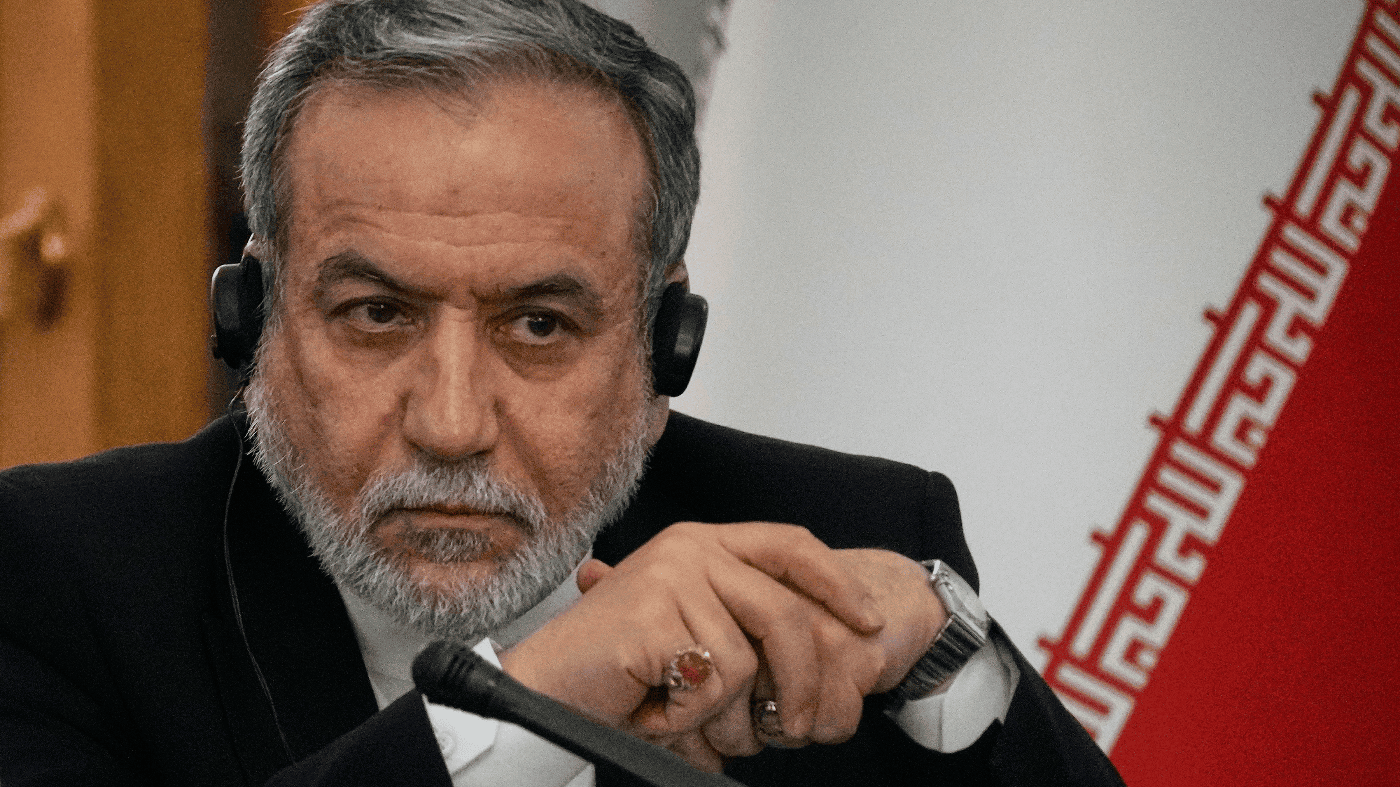
Iranian Foreign Minister Abbas Araghchi issued a stark ultimatum to the United States on Sunday, demanding that Washington either accept Tehran's latest proposal to end the eight-month war within two days or confront military escalation. The warning came as President Trump considers additional strikes in the wake of Tuesday's midterm elections, which saw Republicans suffer historic losses amid widespread voter anger over the conflict.
In a post on X, Araghchi wrote, "American voters have made their choice. Time for the White House to make its own." He continued, "Our 2-day proposal stands: meet the requirement, including end to war on all fronts, and you will see results. Or choose war, and see our alert and battle-hardened Warriors rain down hell."
Araghchi's message followed the midterms, where Democrats secured control of both the House and Senate, a outcome widely attributed to public opposition to the Iran war. Vice President Vance, seen as a potential 2028 Republican presidential contender, acknowledged the war's role in the party's defeat. "The reason we lost is the war. The president himself said so last night," Vance wrote in a lengthy social media post. He added, "If you'd like to argue it was worth it, that losing the Senate for the next 6 years was worth it, then do so. Argue it was a worthwhile cost to pay. Agree or disagree, that's at least honest. But everyone knows why we lost. And any honest conversation about where we go from here must start there."
The Iranian warning comes as mediators intensify efforts to broker a deal. Qatar is leading diplomatic efforts, backed by Egypt, Saudi Arabia, Pakistan, and Turkey. Tehran has offered to reopen the Strait of Hormuz—a critical waterway for global oil shipments whose closure has driven up gas prices—if the US agrees to several conditions, including lifting sanctions and releasing billions of dollars in frozen Iranian assets.
Trump has not ruled out renewed military action, though on Monday he said he was in no hurry to decide. The administration's next move will be closely watched, especially as Congress prepares to challenge Trump's foreign policy following the midterm rebuke.
Regional tensions remain high, with recent US strikes on Iranian radar and missile sites underscoring the risk of further escalation. Meanwhile, Iranians are bracing for renewed US-Israel strikes, adding to the urgency of diplomatic efforts.
The coming days will be pivotal. If Washington rejects Tehran's offer, the conflict could widen, with severe consequences for global energy markets and regional stability. The White House has yet to respond publicly to Araghchi's ultimatum, but the pressure is mounting for a decision that could define Trump's final years in office.