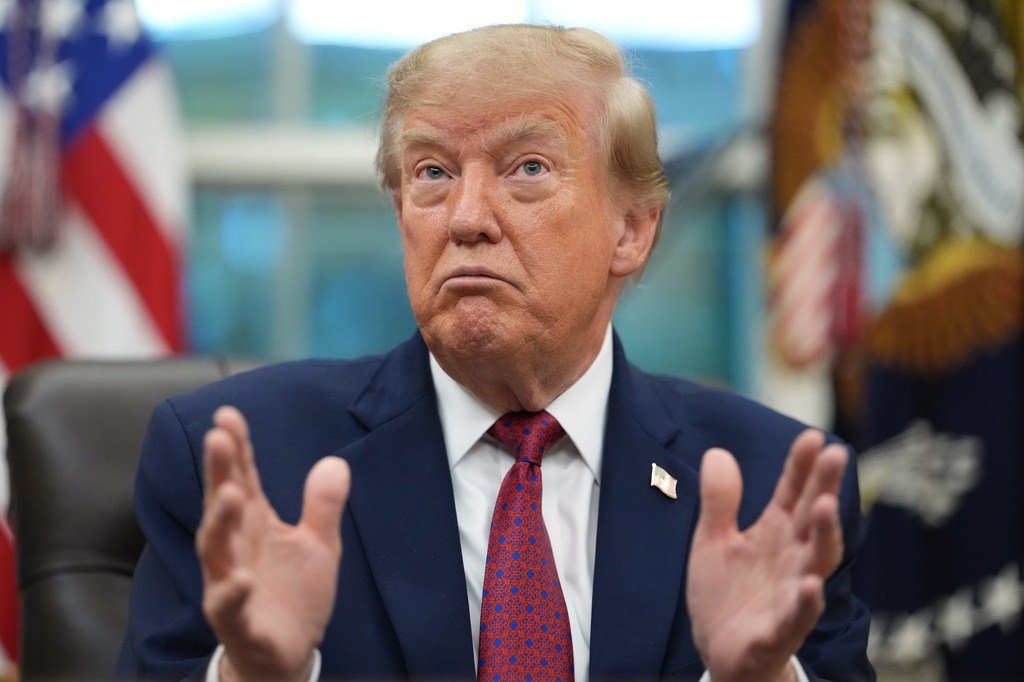
The midterm elections delivered a sharp rebuke to President Trump and his party, with voters punishing Republicans over the Iran war, tariff policies, and broader concerns about affordability. Vice President JD Vance has already pointed to the Iran conflict and the administration's Israel policy as key factors in the party's poor showing.
Since Trump's return to office, his "America First" agenda has dominated foreign policy debates. But one irony of his presidency may be that it weakens public support for the very policies he championed—from sweeping tariffs to risky military interventions—making future presidents less likely to repeat them. Still, some of Trump's actions will be difficult to undo, and repairing the damage could take multiple administrations.
A foreign policy legacy that may not last
While both Trump and former President Joe Biden raised tariffs on Chinese goods, the second Trump administration went further on "Liberation Day," slapping tariffs on allies and adversaries alike. Trump also unsettled close partners by musing about acquiring Greenland and making Canada the 51st state. His wavering support for Ukraine and hostility toward NATO have deepened a rift with European allies, while dismantling the U.S. Agency for International Development undercut America's traditional role as the world's leading humanitarian donor.
Many of these choices are unlikely to endure. The inflationary impact of higher gas prices and the unpopular war with Iran contributed to the Republican electoral wipeout. It's hard to imagine another president imposing tariffs as indiscriminately, especially on close trading partners like Canada and the European Union. And the growing competitive threat from Chinese exports in critical minerals, batteries, and autos is not something the United States can tackle alone.
Surveys by the Chicago Council on Global Affairs show limited domestic support for key elements of Trump's foreign policy, including tariffs, territorial expansion, NATO, and Ukraine. The American public may be only intermittently focused on foreign affairs, but after major failures like the Iran war, voters have historically punished leaders and their parties. While affordability and domestic issues may dominate the current moment, foreign policy choices on tariffs and Iran clearly loomed large in the midterms. Current international setbacks suggest another reckoning is likely.
Congress flexes its muscles
With Congress flipping after the midterms, expect efforts to restrain or reverse some of Trump's foreign policy excesses. At a minimum, lawmakers will use oversight powers to hold the administration's foreign policy architects accountable—including possible impeachment proceedings against Defense Secretary Pete Hegseth. Congress may also move to restrict presidential leeway on tariffs and to ensure the executive branch respects Congress's appropriations power over foreign aid. This week's rebuke will increase pressure on the administration to end the Iran war.
That said, some aspects of Trump's foreign policy will be hard to undo quickly. Simply returning to the pre-Trump internationalist status quo—support for free trade, democracy, multilateral alliances, and freedom of navigation—is not an option. Too much damage has been done.
Restoring funding for foreign aid programs will also be politically fraught, as Republican voters and foreign policy leaders remain hostile to many forms of assistance, though more open to humanitarian aid. On immigration and climate change, wide partisan gaps among both voters and leaders suggest policy debates may devolve into partisan feuds.
Rebuilding the foundations of U.S. foreign policy after a second Trump presidency won't be easy. The legacy effects of another forever war may sap Americans' willingness to stay engaged in the Middle East, with the Strait of Hormuz constantly threatened by a strengthened Iran. Russia's war in Ukraine appears no closer to ending, even as Trump has tried to tilt the balance toward Moscow.
The road ahead
On China, the American default has been reflexive hawkishness, but other countries are reluctant to choose between the U.S. and its major rival. Meanwhile, the American public—and U.S. munitions stockpiles—may be in no shape for another conflict.
In this context, American leaders must articulate at home why global engagement matters and what it should look like. Abroad, greater consistency and collaboration with allies will be essential to begin regaining trust. But it will take more than four years before America is once again more admired than feared across much of the world.