Vice President JD Vance and Tehran would prefer that Americans pin the Republican midterm shellacking on the war with Iran and on Israel. President Trump, however, is not buying that narrative. He should tune out the finger-pointing and return to the core U.S. national interest by making good on his repeated promise to “finish the job” with Iran.
When Trump unveiled Operation Epic Fury on Feb. 28, he laid out five clear American objectives: destroy Iran’s missiles, annihilate its Navy, ensure its terrorist proxies can no longer destabilize the region or the world, prevent Iran from obtaining a nuclear weapon, and unleash Iran’s “prosperous and glorious future.”

Those goals have been steadily watered down. The first to go was Trump’s direct call for the Iranian people to “take over your government.” By April, Secretary of State Marco Rubio and Joint Chiefs Chairman Gen. Dan Caine had stopped mentioning an end to Iran’s support for terrorism. Trump walked back the missile-destruction goal in June, saying “missiles aren’t the problem.” And just recently, Vance abandoned the demand to end Iran’s nuclear program, settling instead for a “meaningful” reduction in enrichment.
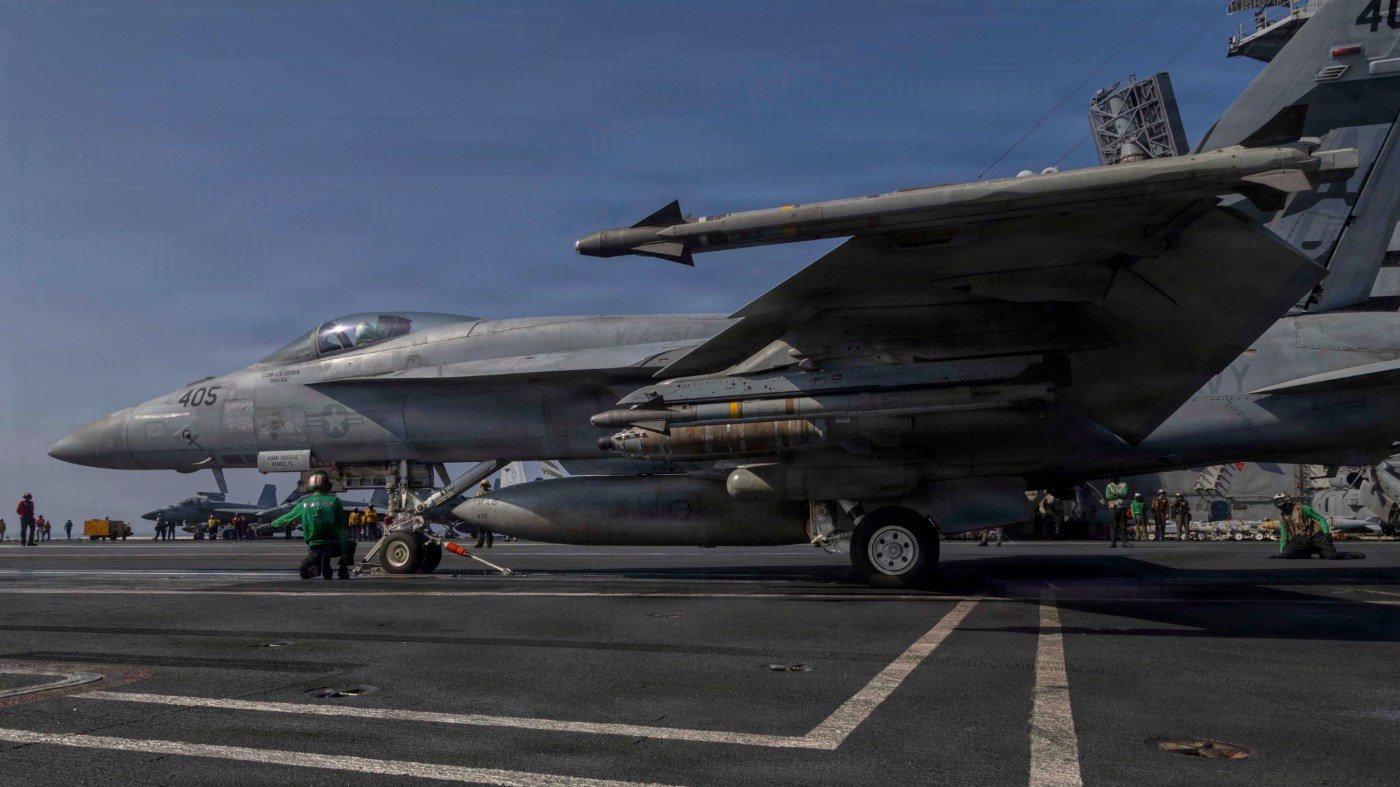
All that remains of the original war aims is annihilating Iran’s navy—a goal already achieved and largely irrelevant to the threat Tehran poses.
Operation Epic Fury has scored real gains. Trump overstates when he claims Iran has been “systematically destroyed, both militarily and financially,” but seriously damaged is accurate. Iran’s nuclear program and defense industrial base remain under rubble. Its oil exports, the regime’s economic lifeline, have been largely choked off. And an entire tier of military and civilian leaders has been eliminated.
But that is not enough. Iran rebuilt its conventional military far faster than expected after last year’s 12-Day War and could do so again. While most of Iran’s 60 percent enriched uranium was entombed by U.S. B-2 bombers, Iran could still access it. The U.S. and Israel reportedly had a plan to extract it using ground forces, but Trump declined. Pickaxe Mountain, dangerous because of its depth, was not targeted in either last year’s war or this year’s.
Rather than be dragged back into conflict by a rearmed Iran, the U.S. and Israel can and should, as Trump has said, finish the job by returning to and fulfilling his original five objectives. That means launching a new, short but intense campaign of strikes against Iran’s remaining missile and drone facilities, coastal radars, batteries, small boat launches, and air defenses.
This operation should also set the conditions for rendering Iran’s nuclear facilities inoperable, including Pickaxe Mountain, and eliminating its 60 percent enriched uranium, with a ground operation as necessary. U.S. strikes should also target a portion of Iran’s domestic energy infrastructure, further weakening the regime’s grip on power, and clearly signal that any Iranian retaliation will prompt further strikes.
Such a campaign carries risks. U.S. forces and the homelands of our Israeli and Arab allies would come under Iranian fire. Fuel prices would likely spike, at least temporarily. But the alternative—leaving the Iranian threat in place—is riskier and costlier still.
Yet Iran’s missiles, drones, proxies, navy, and nukes are not the primary threats. Even if fully destroyed, Iran would try to rebuild them or find new means of aggression. The threat is the Iranian regime and its determination to destroy America, Israel, and the West at any cost. Thus, even a new round of strikes will not finish the job. The U.S. will have to remain vigilant, monitoring Iran and potentially returning for additional strikes to stop it from reconstituting.
The war will only end by returning to the first objective Trump dropped: the collapse of the fanatical, barbaric Tehran regime. No deal should be made with Iran; it would only sustain the regime. The U.S. military’s blockade is vital to further weakening it and accelerating its demise.
But more is needed: encouraging defections, fomenting distrust and friction among regime factions, and strengthening opposition within Iran—providing everything from public statements of support to covert arms shipments to enable the Iranian people to overcome the regime’s violent forces and dispatch the Islamic Republic to the dustbin of history.
The midterms changed the political landscape in Washington but not the geopolitical chessboard in the Middle East. The Iranian threat remains; removing it is still the only way to end the war.
Michael Makovsky, Ph.D., a former Department of Defense official, is president and CEO of the Jewish Institute for National Security of America. Blaise Misztal is vice president for Policy at JINSA.