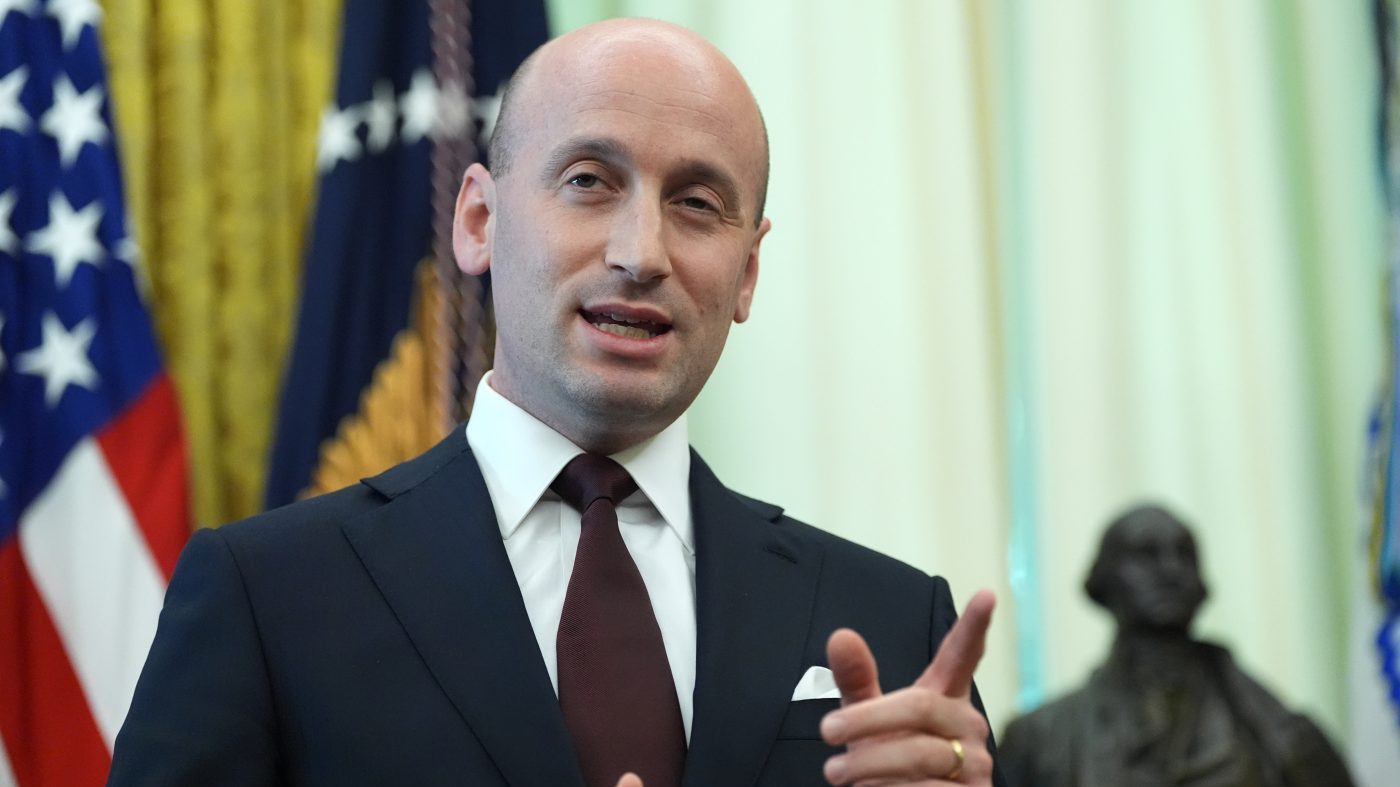
President Trump announced Friday that Stephen Miller, a senior adviser and immigration hardliner, will become his next White House chief of staff, succeeding Susie Wiles, who has held the position since Trump returned to office. The promotion elevates one of Trump's most controversial and loyal aides to the second-most powerful role in the West Wing.
Miller's rise has drawn sharp criticism from Democrats and even some Republicans, who blame him in part for the GOP's sweeping midterm losses that cost the party control of both the House and Senate. Democrats condemned the appointment as dangerous, while Senator Thom Tillis called it a "colossal mistake" in light of the electoral rout. Tillis's rebuke underscored the unease within Republican ranks.

From Senate Aide to Trump Confidant
Miller began his Washington career in 2007 as a press secretary for Rep. Michele Bachmann (R-Minn.) and later for Rep. John Shadegg (R-Ariz.). In 2009, he joined the office of then-Sen. Jeff Sessions (R-Ala.) as press secretary, eventually becoming communications director. Miller pushed Sessions to adopt a more combative stance on immigration and helped scuttle a bipartisan immigration reform bill in 2013 by drafting a handbook for lawmakers opposed to the measure.
Behind the scenes, Miller earned a reputation as a hard-charging aide who frequently clashed with reporters and other Washington players. When Trump launched his 2016 presidential campaign, Sessions became the first senator to endorse him. Miller, meanwhile, became a trusted confidant, remaining close to Trump through his first term, his years out of office, and his second term.
Architect of Hardline Immigration Policies
Miller is widely regarded as the driving force behind Trump's immigration agenda, including the administration's mass deportation efforts. As deputy chief of staff for policy, he urged the administration to suspend habeas corpus rights and to triple daily immigration arrest targets to 3,000. He also championed the family separation policy during Trump's first term.
One of the most high-profile immigration operations of Trump's second term was "Operation Metro Surge" in Minneapolis, during which federal agents fatally shot two American citizens. Miller labeled both victims "domestic terrorists."
A Consummate Insider with Expanded Power
Before his promotion, Miller was already a key policy adviser in Trump's ear. Now, as chief of staff, he will oversee White House operations and manage staff, a role that requires no Senate confirmation. The chief of staff serves as a gatekeeper to the president and can influence every policy decision.
Miller is one of the few aides from Trump's first term to hold a senior position in the second. His background as a Senate aide gives him deep knowledge of Congress and executive power. During legislative debates on immigration, he was seen as highly influential in shaping Republican positions. Known for his attention to detail, Miller reads briefs, asks pointed questions, and demands results.
Wiles, the outgoing chief, was viewed by some as a brake on Miller. With her departure, that check disappears just as Miller assumes what is historically the second-most powerful job in the White House. Miller has vowed absolute loyalty to Trump in his new role.
A Family Embedded in Trump World
Miller's wife, Katie Miller, is a Republican political adviser and podcaster with deep connections in GOP circles. During Trump's first term, she served as communications director and press secretary to then-Vice President Mike Pence. When Trump returned to office, she became an adviser to the Department of Government Efficiency (DOGE), the Elon Musk-led initiative to slash spending and shrink the federal workforce. She now hosts "The Katie Miller Podcast," aimed at conservative women.
Steadfast Loyalty Through the Years
While many in Trump's orbit have come and gone—including Wiles, who had a brief falling out with Trump before returning to run his 2024 campaign—Miller has remained loyal throughout. After Trump lost reelection in 2020, Miller co-founded America First Legal, a conservative nonprofit that fights DEI programs, pushes strict immigration enforcement, and litigates election integrity cases. He rejoined Trump's 2024 campaign and immediately returned to the White House as deputy chief of staff for policy and a homeland security adviser.
Miller's promotion solidifies the influence of the hardline immigration wing in Trump's second term, but it also intensifies the internal GOP debate over the party's direction after its midterm shellacking. House Minority Leader Hakeem Jeffries called Miller a "dangerous xenophobe", reflecting the fierce opposition he faces from Democrats. As chief of staff, Miller will now have a hand in every decision that crosses Trump's desk—a prospect that alarms critics and energizes supporters.