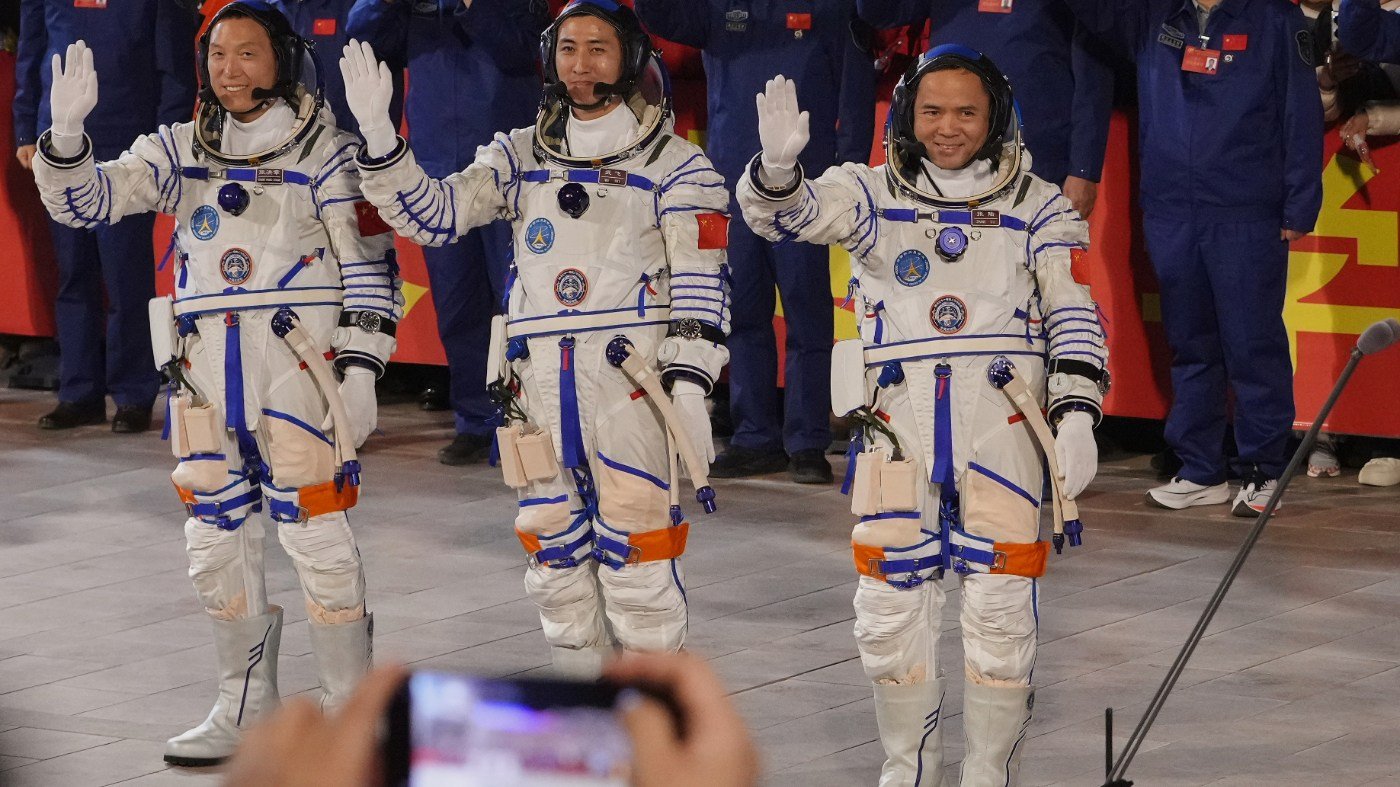
Beijing has laid out a straightforward, two-launch architecture for putting Chinese astronauts on the lunar surface before 2030, a plan that underscores the country's confidence in its space program and its determination to beat NASA back to the moon.
Wang Xiang, deputy chief designer of China's manned space program, outlined the mission profile: one Long March 10 rocket will carry the Mengzhou crew spacecraft with three astronauts into lunar orbit, while a second Long March 10 will deliver the Lanyue lunar lander. The two vehicles will dock in orbit, and two astronauts will transfer to the lander for the descent to the surface.

The simplicity of the approach is notable. In contrast, NASA's Artemis program relies on a more complex series of launches, including multiple refueling flights for SpaceX's Starship human landing system—estimates range from six to eight, though some say as many as 22—and four launches for Blue Origin's Blue Moon lander.
Before the crewed attempt, China has scheduled three test missions: a 2027 flight of the Mengzhou on a Long March 10A to the Tiangong space station, an uncrewed landing of the Lanyue in 2028, and a full uncrewed dress rehearsal of both spacecraft to the moon and back in 2029.
The transparency of the announcement is striking for a totalitarian regime, which historically tends to shroud its space efforts in secrecy. The Soviet Union, during the original moon race, was famously opaque, and a public failure would be a significant embarrassment. Beijing's willingness to commit to a timeline suggests a high degree of confidence in its technical capabilities.
As of early November 2026, the race is tight. NASA has already flown its Orion spacecraft and Space Launch System rocket twice around the moon, once with a crew, while China's new hardware has yet to fly. But China's lander requires only one launch to reach the moon, simplifying logistics and potentially accelerating the schedule.
The Lanyue, however, is smaller than its American counterparts. It is designed for a brief stay, not for building a permanent lunar base. If China intends to establish a sustained presence, it will need a larger lander—a fact that could shape its long-term strategy.
Political dynamics could also influence the outcome. Jeff Foust of Space News notes that the midterm elections and the 2028 presidential campaign could disrupt bipartisan support for Artemis. Additionally, congressional Democrats' ongoing legal battles with Elon Musk, who runs SpaceX, and their potential takeover of Texas—where the company has a launch facility—could complicate matters. Trump's post-midterm visit to Kennedy Space Center highlighted the political stakes.
On the Chinese side, Xi Jinping's grip on power appears secure, and he has recently purged PLA generals, suggesting that domestic political upheaval is unlikely to derail the program. Gordon Chang, a China analyst, cautions that anything is possible, but the regime's stability is a factor in its favor.
If the United States wins the race, it would be a political triumph, particularly for President Trump, who would relish a legacy-defining achievement. If China prevails, it would be a short-term embarrassment, with blame likely falling on NASA Administrator Jared Isaacman, who has been tasked with beating China and has acknowledged he expects to be fired if he fails.
Yet the long-term picture is more nuanced. Even if China reaches the moon first, the United States could still establish the first lunar base and reap the economic and strategic rewards. In that scenario, a Chinese victory in Space Race 2.0 might be remembered as little more than a footnote in the broader history of lunar exploration.