When Democrats take control of Congress in January, they will inherit a mandate shaped by voters' anger over corruption and the rising cost of living. As Senator Jon Ossoff (D-Ga.) put it during the campaign, "Corruption is why things don't work for the American people." That message helped propel 49 Democratic congressional candidates to pledge that comprehensive anti-corruption legislation would be their "first order of business."
Now, with control of both chambers, Democrats have a golden opportunity to make good on that promise—but only if they learn from past mistakes. In a 2027 version of the New Deal's first 100 days, they are expected to pair ethics reforms with economic measures aimed at affordability: raising the federal minimum wage, restoring cuts to child care tax credits, health insurance, Medicaid and SNAP, and rolling back tariffs. At the same time, they plan to investigate the Trump administration's ethical abuses and advance a series of concrete anti-corruption bills.

Some of this legislation will likely die in the Senate or be blocked by a president who has already threatened to be "Mr. Veto" if Democrats prevailed. But even rejected bills can become political ammunition. As one Democratic strategist noted, every veto or filibuster gives Democrats a new plank for their 2028 platform—and a way to force Republicans to defend their opposition to ethics reform.
The public mood is on their side: 89% of Americans believe corruption permeates the government, according to recent polling. Yet politicians have a long history of breaking anti-corruption promises. Even Donald Trump, who has used the presidency to enrich himself, his family and his allies, campaigned on a pledge to "drain the swamp." Recently, when asked about voters' concerns, he insisted that "there's massive corruption" among Democrats, while claiming "we are straight and we are solid."
Lessons from 2019
Democrats have been here before. After regaining the House in 2019, they made the "For the People Act" a top priority—a sweeping bill that combined ethics reform with voting rights, redistricting and campaign finance. It passed the House on a party-line vote but was immediately attacked by Senate Majority Leader Mitch McConnell as a "partisan power grab." McConnell refused to bring it to the floor, and a revised version later died by filibuster in 2021.
The lesson? Bundling ethics with election provisions gave Republicans an easy target. By focusing on the bill's voting rights elements, they never had to justify opposing new ethics rules. This time, Democrats should advance a series of unbundled reform bills, forcing Republicans to explain their objections one vote at a time.
First steps: Cleaning up Congress
Democrats can start by cleaning their own house—literally. The Senate has already barred its members from betting on prediction markets. When Congress returns on Jan. 3, the newly Democratic House majority should ban members and staff from using inside information to make such bets.
Next, Congress should bar legislators, staff, senior executive branch officials and their immediate families from trading individual stocks. Trump endorsed a weaker version of this in his 2026 State of the Union address—one that would not apply to the president or vice president. Democrats should force him to sign a comprehensive bill or explain a veto.
Unlike most executive branch employees, the president and vice president are exempt from the principal criminal financial conflict-of-interest statute. Democrats should require them to divest assets that pose substantial conflicts or place them in blind trusts.
A separate bill should mandate disclosure when large donors or their businesses receive federal contracts or grants. Such legislation would give the public a chance to assess whether campaign contributions are influencing government decisions.
Absent a constitutional amendment, Congress cannot directly limit the president's pardon power—which Trump has used to benefit political allies, donors and friends. But it can and should require disclosure of relevant financial relationships and Justice Department pardon recommendations.
Strengthening the watchdogs
Congress must also strengthen the referees. The post-Watergate system relied on inspectors general to investigate agency misconduct, an Office of Government Ethics to handle executive branch conflicts of interest, and an Office of Special Counsel to protect whistleblowers and enforce restrictions on partisan political activity.
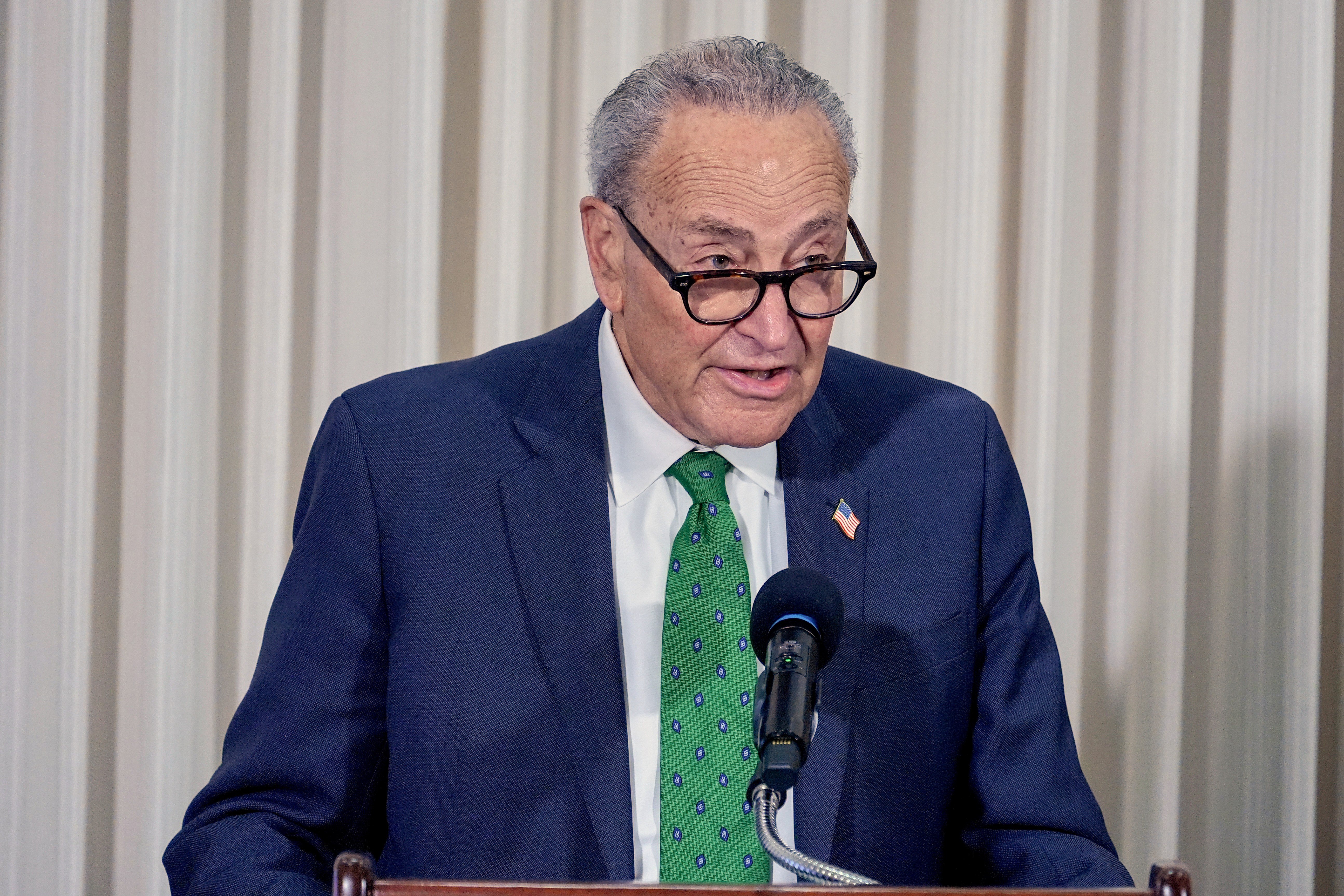
Since returning to office, Trump has systematically dismantled these guardrails. In response, Senate Minority Leader Chuck Schumer has proposed a new Anti-Corruption Bureau that would absorb the Federal Election Commission, Office of Government Ethics and Office of Special Counsel. But mixing election oversight with ethics enforcement might prove administratively cumbersome and invite constitutional challenges. A better approach is to strengthen existing institutions with ample funding, greater investigative authority and stronger protections against politically motivated interference.
Cleaning up Washington will take more than one election, especially since the Supreme Court has given the president broad authority to fire agency heads and ethics enforcers—and Trump has demonstrated repeatedly his willingness to circumvent legal constraints. The post-Watergate reforms established safeguards that constrained public officials for decades. Republicans may filibuster new safeguards, or Trump may veto them. But Democrats should make them defend those choices, one bill at a time, and prepare to make them pay a price for self-dealing in 2028.
David Wippman is emeritus president of Hamilton College. Glenn C. Altschuler is the Thomas and Dorothy Litwin Emeritus Professor of American Studies at Cornell University.