Fresh off a decisive midterm victory, Democratic leaders are gearing up to confront President Trump's tariffs, framing the effort as a direct response to rising household costs. The tariffs, a cornerstone of Trump's economic agenda since his first term, became a rallying cry for Democrats on the campaign trail, and now party leaders are promising legislative action.
House Democratic Leader Hakeem Jeffries (N.Y.) told reporters on Wednesday, "We need to stop the Trump tariffs that have increased costs on everyday Americans by thousands of dollars." The party's new majorities in both chambers provide a platform, but the path to actually dismantling the tariffs is fraught with procedural and political obstacles.

Legislative Options and Strategic Debates
Economists and trade lawyers say Democrats could pursue a narrow or broad approach. Erica York, a senior economist at the Tax Foundation, explained that legislation might simply "overrule those tariffs" or "remove those from the books," or it could be more expansive, aiming to reclaim tariff authority from the president altogether. Arun Venkataraman, a former Commerce Department official now at Covington & Burling, suggested that targeted actions might gain more traction than a wholesale rewrite of trade laws. "I don't think we're going to see them out of the gate on day one completely try to revise all of the U.S. trade laws," he said, predicting a more focused strategy to win Republican support.
The Veto Threat and Republican Dynamics
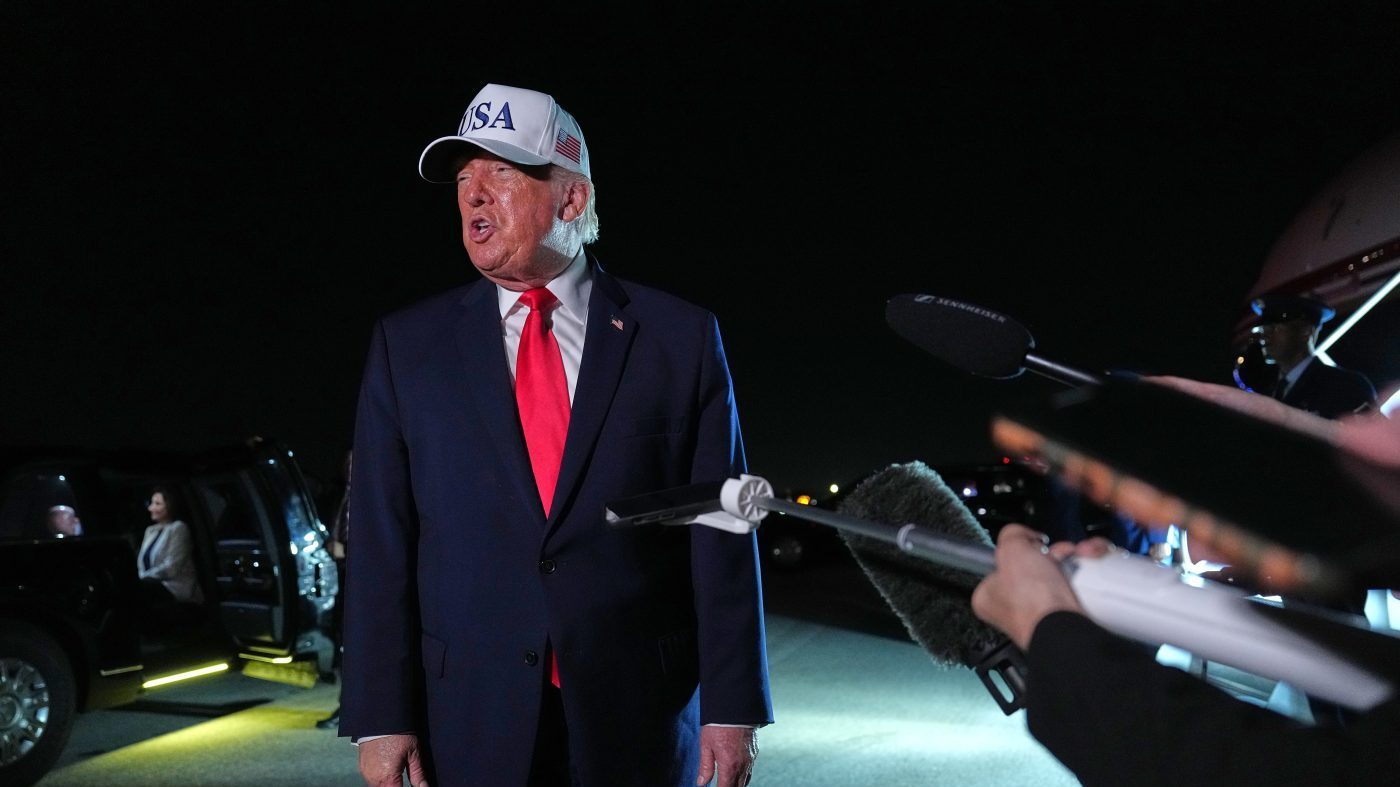
Trump, however, has made clear he will not cede ground. "I have the ultimate power — it's called 'veto,'" he told CBS News, and he has brandished a red "VETO" hat on social media. Overriding a veto requires a two-thirds majority in both chambers, a tall order given that several GOP critics of tariffs, including Sens. Susan Collins (R-Maine) and Thom Tillis (R-N.C.) and Rep. Don Bacon (R-Neb.), are leaving office. Kyle Sweetser, an Alabama construction company owner and vocal tariff opponent, voiced concern: "They're going to have to build a coalition that breaks that two-third veto, and that's my concern." Yet he added, "I think right now, if we zero in on tariffs … we can get a two-thirds vote on a solution here."
Some analysts remain skeptical. Pierre Yared, who served on the White House Council of Economic Advisers under Trump, wrote that a change in congressional control alone won't likely shift tariff policy, predicting the president will retain control subject to legal challenges and negotiations. Venkataraman, though, cautioned against dismissing the possibility of a veto-proof majority, noting that "there are Republican members that share these concerns and who heard directly from constituents."
Legal and Constitutional Battles
Trump has imposed tariffs under multiple statutes, including Section 232 of the Trade Expansion Act of 1962 and Section 338 of the Tariff Act of 1930, citing national security and discriminatory trade practices. The Supreme Court struck down his IEEPA-based tariffs in February, but other authorities remain. Democrats argue that the Constitution vests taxation power in Congress, and Rep. Brendan Boyle (D-Pa.), in line to chair the House Budget Committee, called reclaiming that authority a "major priority." He described overturning the tariffs as a "de facto tax cut" for Americans.
The Tax Foundation estimates that as of August, Trump's tariffs had added an average of $820 to U.S. household costs, though that figure is lower than earlier estimates because the IEEPA tariffs took effect later. York noted that internal party divisions between free traders and protectionists could create "tension" when Congress reconvenes in January.
Even if Democrats unify and pass legislation, Trump's veto pen looms large. The party's ability to override will depend on peeling away Republican votes, a task that may prove difficult in the current political climate. The coming months will test whether Democrats can translate their electoral mandate into tangible trade policy changes—or whether the president's veto power will once again stymie their agenda.
As the new Congress prepares to convene, the tariff fight is set to be a central flashpoint, with implications for the economy, U.S. trade relations, and the balance of power between the executive and legislative branches. For now, Democrats are vowing to press forward, but the road ahead is uncertain.