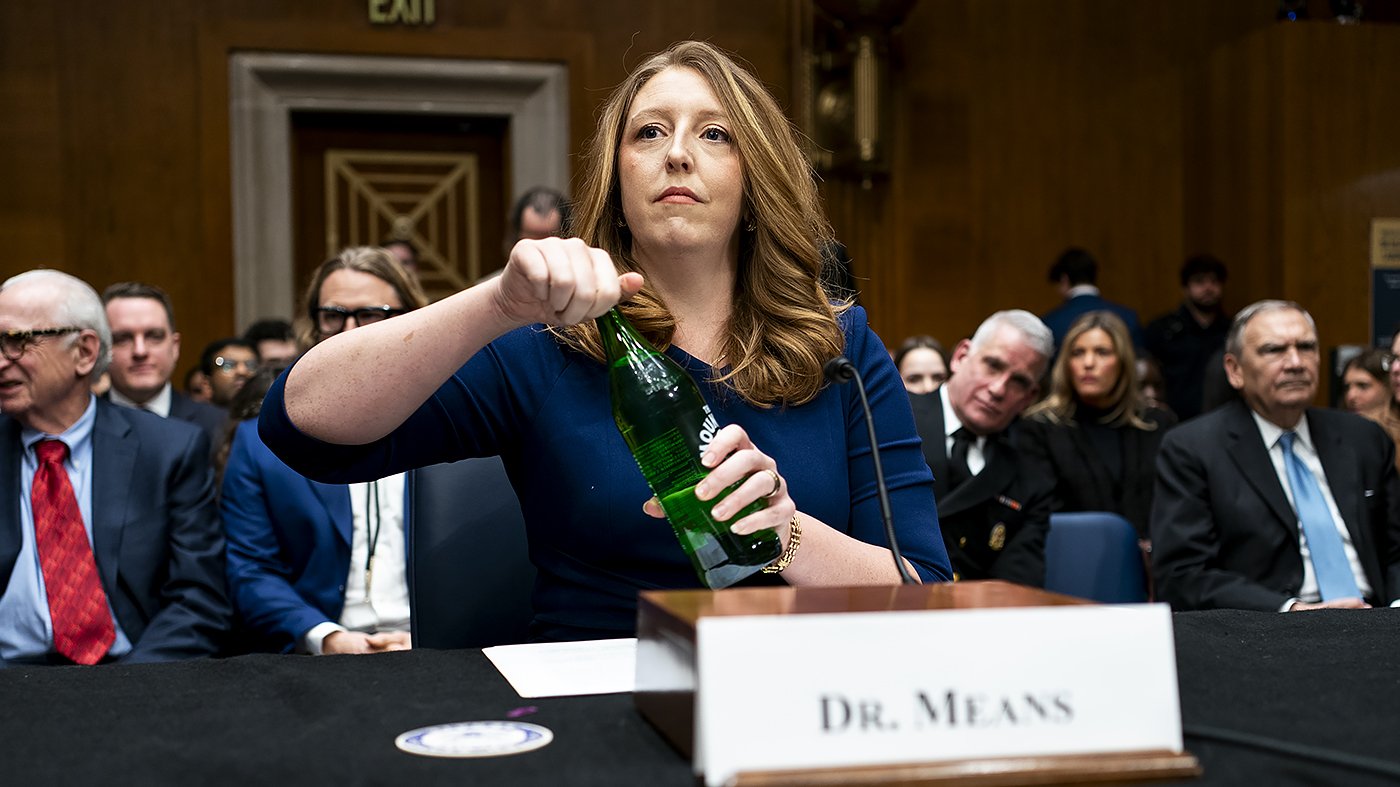
President Donald Trump has publicly acknowledged that his nominee for U.S. Surgeon General, Casey Means, faces significant Republican opposition in the Senate and may be withdrawn. The admission came during an impromptu press briefing aboard Air Force One on Sunday, marking a potential retreat on a key healthcare appointment.
Nomination in Peril
Casey Means, sister of White House senior adviser Calley Means, was tapped for the nation's top public health post. However, her path to confirmation has stalled due to a lack of necessary support from Senate Republicans, whose votes are crucial for advancing the nomination. The development highlights ongoing challenges the administration faces in staffing key positions.
When questioned by reporters about the nomination's status, Trump offered a non-committal response. "Well, we're looking at a lot of different things. I don't know how she's doing in the nomination process," the President stated, before immediately pivoting to foreign policy. "I'm more focused on Iran."
Focus Shifts to Iran
Trump's reference to Iran underscores the administration's current preoccupation with escalating Middle East tensions. The President has recently issued stark ultimatums to Tehran and has floated unconventional economic tactics in the strategic Strait of Hormuz. His remarks suggest domestic nominations are taking a backseat to immediate international crises.
Despite the deflection, Trump did not rule out withdrawing the nomination. "But, you know, something like that would be possible," he conceded. "We certainly have a lot of, we have a lot of great candidates." This comment indicates the White House has alternative candidates in mind should the Means nomination collapse entirely.
Broader Political Context
The stumbling nomination occurs amid other contentious policy battles. The administration has simultaneously moved to roll back Title IX gender identity agreements with several school districts, a move that has drawn sharp criticism from civil rights groups. Furthermore, Trump has recently lashed out at the Supreme Court over rulings on birthright citizenship and tariff authority, showcasing a broader pattern of confrontation with other branches of government.
The potential withdrawal of Casey Means raises questions about the vetting process for high-level appointments, particularly for roles requiring specialized public health expertise. The Surgeon General serves as a leading spokesperson on critical health issues, a position that has gained heightened visibility during public health emergencies.
As the administration weighs its next steps, the episode demonstrates the complex interplay between domestic appointments and foreign policy priorities. With the President's attention firmly fixed on Iran and other international flashpoints, the fate of key domestic posts may hinge on the availability of political capital and unified party support.