Former President Donald Trump launched a sharp critique of the U.S. Supreme Court on Monday, asserting the justices "just doesn't seem to care" about the nation following recent legal developments concerning his executive actions on tariffs and birthright citizenship.
In a post on his Truth Social platform, Trump expressed frustration with the Court's ruling against his tariff policies and the apparent skepticism several justices displayed during oral arguments last week about overturning the long-standing interpretation of the 14th Amendment that grants citizenship to anyone born on U.S. soil. He framed the issue as a financial and legal scam, urging the justices to reconsider.
Targeting a Constitutional Principle
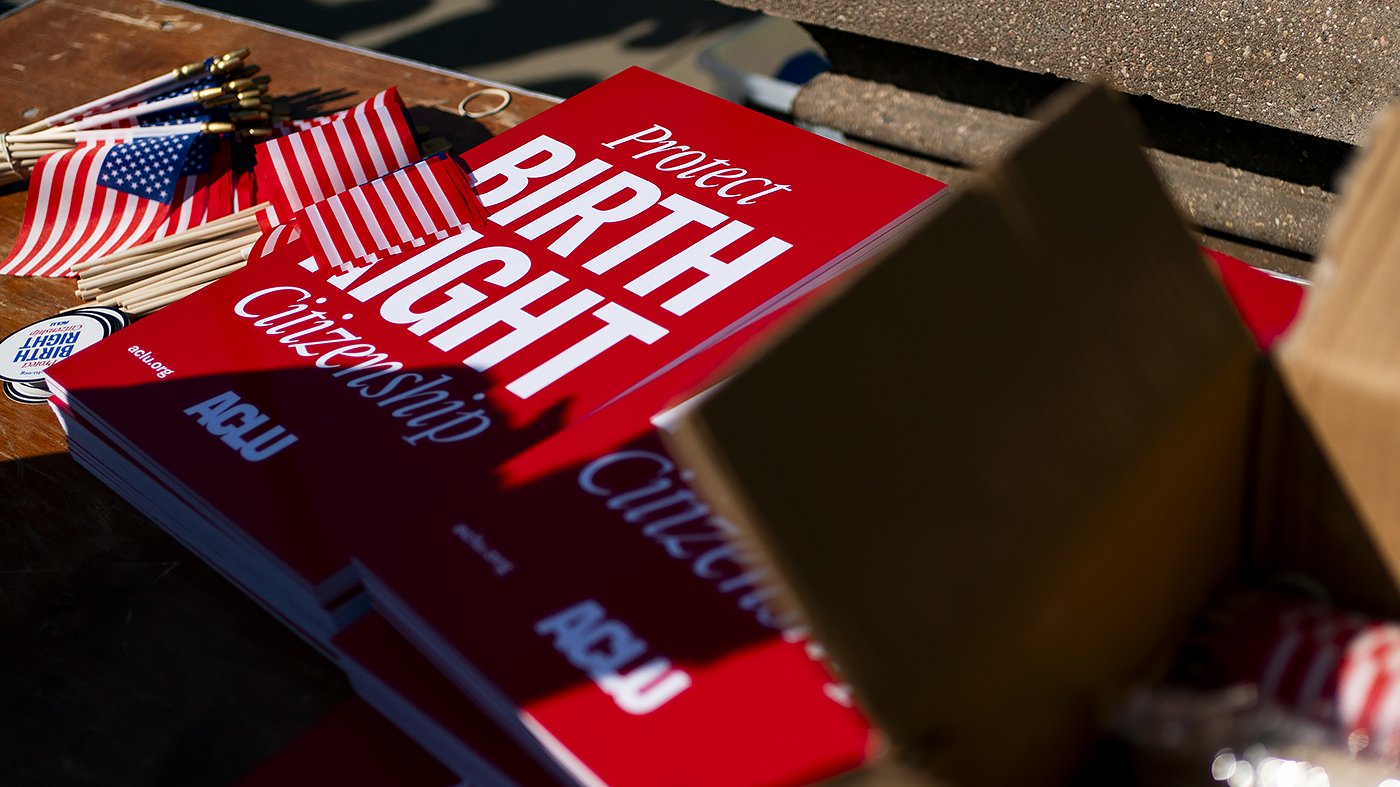
Trump's comments centered on an executive order he issued last year, which seeks to block children of immigrants and temporary visitors from automatically receiving citizenship. This move challenges the precedent established over 125 years of interpreting the Citizenship Clause of the 14th Amendment. "They failed miserably on Tariffs, needlessly costing the USA Hundreds of Billions of Dollars in potential rebates," Trump wrote, linking the two issues. "The Country can only withstand so many bad decisions from a Court that just doesn't seem to care."
He specifically referenced conservative commentator Mark Levin's television program, suggesting the justices should "watch and study" it to understand what he called the "Birthright Citizenship Scam." "If they saw it they would never allow that money making HOAX to continue," Trump asserted. Levin, on his Fox News program, argued that birthright citizenship was never explicitly mentioned in the Constitution and that its authors in 1868 could not have intended it to apply to children of undocumented immigrants, as immigration was largely unrestricted at the time.
Justices Probe Practical Implications
During last week's arguments, Supreme Court justices from across the ideological spectrum raised pointed questions about the practical implementation and historical basis of Trump's order. Justice Ketanji Brown Jackson questioned whether mothers would be required to produce documentation at hospitals. Justice Neil Gorsuch inquired how the order would categorize Native Americans, a question that initially gave Solicitor General D. John Sauer pause.
Trump's broader pattern of challenging established norms and institutions was evident in his plea for the Court to "USE THEIR POWERS OF COMMON SENSE FOR THE GOOD OF OUR COUNTRY." This approach mirrors other confrontational stances from his administration, such as when the Trump administration moved to nullify Title IX gender identity agreements with several school districts, asserting a different interpretation of federal law.
The former president's combative rhetoric toward the judiciary coincides with his continued hawkish foreign policy statements. Recently, he has made several provocative declarations regarding Iran, including floating the idea of U.S. toll collection in the Strait of Hormuz and dismissing war crime concerns over threatened strikes on Iranian civilian infrastructure.
Legal scholars widely maintain that overturning birthright citizenship would require a constitutional amendment, not merely an executive order. The 14th Amendment states: "All persons born or naturalized in the United States, and subject to the jurisdiction thereof, are citizens of the United States and of the State wherein they reside." For over a century, "subject to the jurisdiction thereof" has been interpreted to exclude children of foreign diplomats and occupying armies, but to include the children of immigrants regardless of status.
Trump's latest remarks underscore his ongoing effort to reshape foundational aspects of American law and policy, placing him once again in direct conflict with the judicial branch. The Supreme Court's eventual ruling on his executive order will represent a pivotal moment for constitutional interpretation and the limits of presidential power.