President Issues Stark Warning as Deadline Approaches
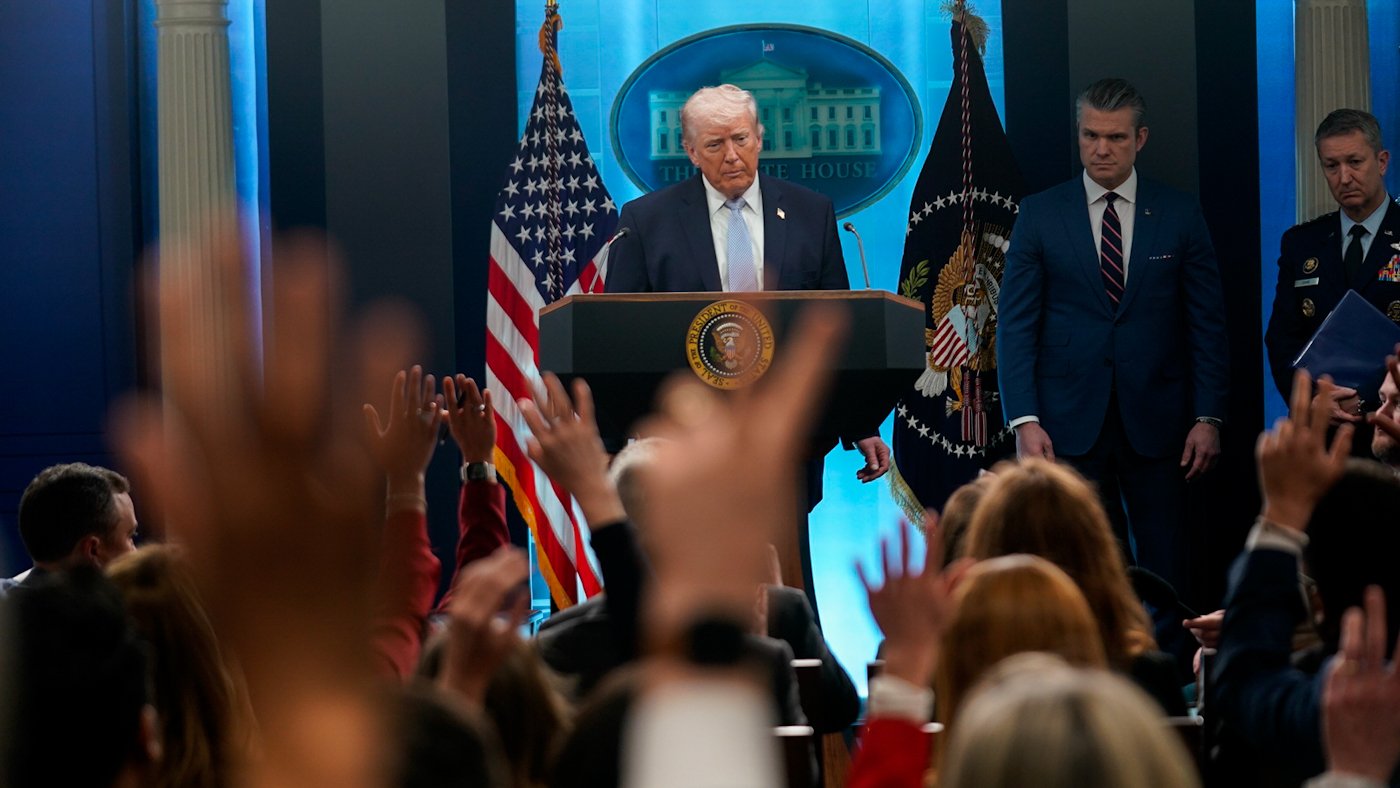
President Donald Trump has reinforced his ultimatum to Iran, declaring that the Islamic Republic must reach an agreement with the United States by 8 p.m. Tuesday or face the systematic destruction of its critical infrastructure. Speaking at a White House briefing, Trump stated that failure to comply would result in Iran having "no bridges, no power plants," adding that the country would be sent back to the "stone ages."
Military Contingency Plan Detailed
The president outlined a specific military contingency, asserting that U.S. forces could decimate every bridge and power plant in Iran within a four-hour period if necessary. "We have a plan because of the power of our military, where every bridge in Iran will be decimated by 12 o'clock tomorrow night, where every power plant in Iran will be out of business, burning, exploding and never to be used again," Trump told reporters. He claimed such destruction would set Iran's development back a century, though he emphasized, "We don't want that to happen."
The immediate demand centers on reopening the Strait of Hormuz, a vital global oil shipping channel that Iran has largely closed since hostilities began over five weeks ago. The closure has destabilized energy markets and sent oil prices soaring. Trump originally set the deadline on his Truth Social platform Sunday, extending a warning first issued in late March. He acknowledged receiving a ceasefire proposal from Egypt, Pakistan, and Turkey that included a 45-day truce and opening the strait, calling Iran's movement "significant" but "not good enough."
International Law Concerns Dismissed
When questioned about whether targeting civilian infrastructure would constitute war crimes, Trump responded, "not at all." This stance comes as United Nations Secretary-General António Guterres warned through a spokesperson that international law prohibits attacks on civilian infrastructure. The president's threats have drawn sharp criticism from political figures, including Senator Chris Murphy (D-Conn.), who stated that carrying out such strikes would be "a clear war crime." Former Representative Marjorie Taylor Greene (R-Ga.), a frequent Trump critic, also condemned the approach, arguing it would harm Iranian civilians.
Trump suggested a paradoxical future engagement, stating the U.S. "may even get involved with helping them rebuild their nation" after destroying its infrastructure. He framed the potential reconstruction as dependent on "the genius of the United States of America." The president further claimed that Iranian citizens support continued U.S. military action, even at the cost of their own infrastructure, saying they "would be willing to suffer that in order to have freedom."
The escalating rhetoric occurs against a backdrop of broader strategic calculations about control of the Strait of Hormuz and domestic political pressure over rising oil prices and congressional dissatisfaction with U.S. involvement. Trump has maintained that his administration's actions have prevented Iran from developing nuclear weapons, calling this a primary achievement.
As the deadline looms, the administration faces mounting scrutiny over its diplomatic and military posture. The president's dismissal of legal concerns contrasts with established international norms, while his characterization of Iran as an "active, willing participant" in negotiations suggests diplomatic channels remain open, albeit under severe duress. The situation represents one of the most direct confrontations since hostilities began, with global energy markets and regional stability hanging in the balance.