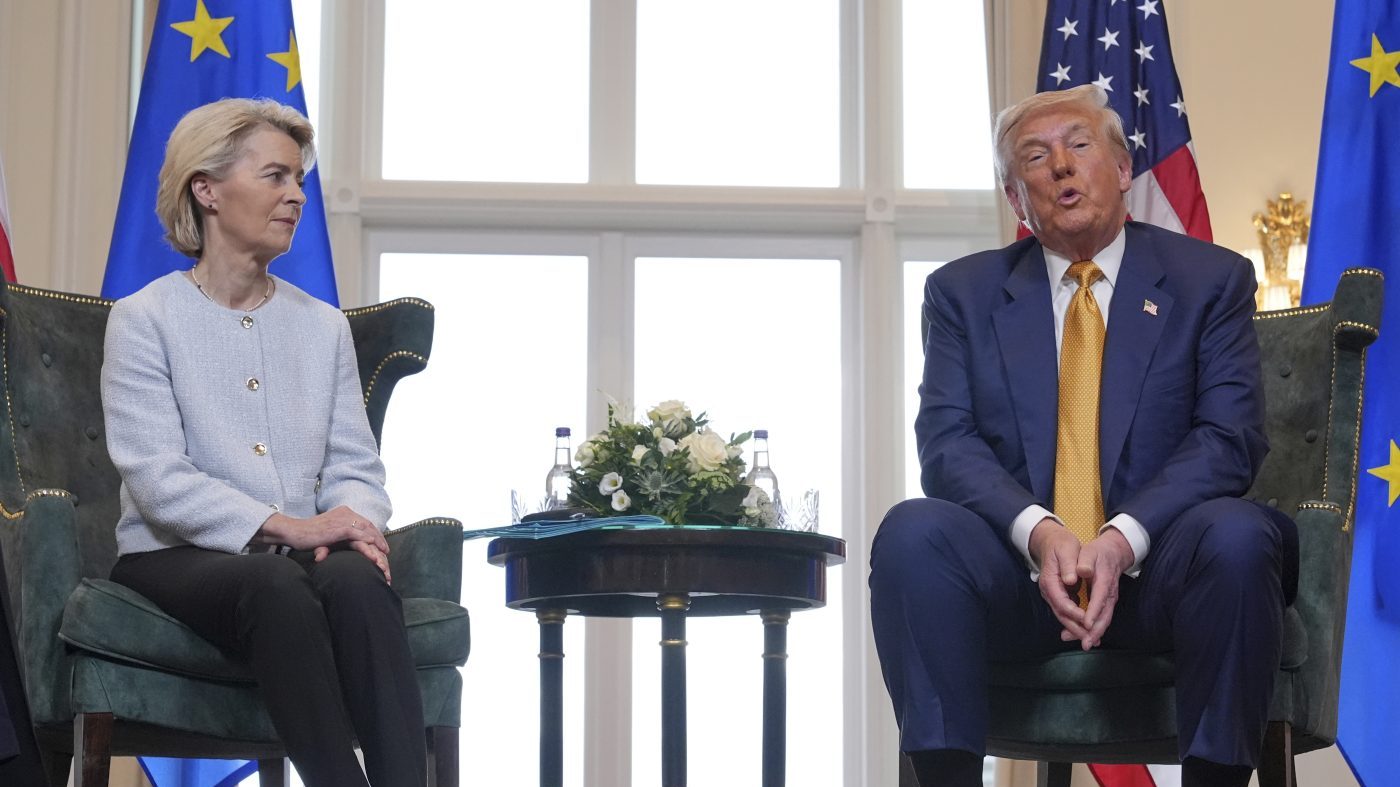
President Donald Trump on Thursday issued a sharp ultimatum to the European Union, demanding the bloc meet its obligations under a previously agreed trade deal by July 4 or face a sharp increase in tariffs. The announcement, delivered via a post on TruthSocial, marks a significant escalation in transatlantic trade tensions.
In his post, Trump noted he had a "great call" with European Commission President Ursula von der Leyen, during which they discussed the trade agreement and shared concerns about Iran's nuclear ambitions. "I've been waiting patiently for the EU to fulfill their side of the Historic Trade Deal we agreed in Turnberry, Scotland, the largest Trade Deal, ever!" Trump wrote. "A promise was made that the EU would deliver their side of the Deal and, as per Agreement, cut their Tariffs to ZERO!"
Trump added that he had agreed to give von der Leyen until the 250th anniversary of American independence, but warned that failure to comply would result in "much higher levels" of tariffs. The July 4 deadline underscores the president's willingness to leverage trade as a political tool, a hallmark of his administration's approach to international relations.
The ultimatum builds on last week's decision to raise tariffs on European cars and trucks to 25 percent, a move that rattled markets and drew sharp criticism from EU leaders. In July of the previous year, Trump and von der Leyen had announced a deal setting tariffs at 15 percent on European goods, with the EU also committing to purchase $750 billion worth of U.S. energy. That agreement averted a full-blown trade war, but tensions have simmered ever since.
European leaders have pushed back against Trump's tariff threats. In February, EU officials stated they would not accept an increase in U.S. tariffs following a Supreme Court ruling that invalidated some of Trump's broadest tariff measures. The legal setback has emboldened Brussels to take a harder line, though Trump's latest move suggests he is determined to force compliance on his terms.
The trade dispute is unfolding against a backdrop of broader diplomatic strains. Trump's administration has pursued an aggressive trade agenda, often bypassing traditional State Department channels in favor of direct negotiations with foreign leaders. This shadow diplomacy, where real estate moguls have replaced professional diplomats, has yielded mixed results, with critics arguing it undermines long-standing alliances.
Meanwhile, the EU has sought to diversify its trade partnerships and reduce reliance on the U.S. market. The bloc's recent agreements with other major economies signal a strategic pivot, but Trump's tariff threats could disrupt those plans. The July 4 deadline adds urgency to what has become a high-stakes standoff between two of the world's largest economic powers.
The president's announcement also comes amid a series of other contentious trade and security negotiations, including a recent White House meeting with Brazil's President Lula that yielded few concrete outcomes. As Trump continues to press his "America First" agenda, the EU trade dispute is likely to remain a flashpoint in the months ahead.