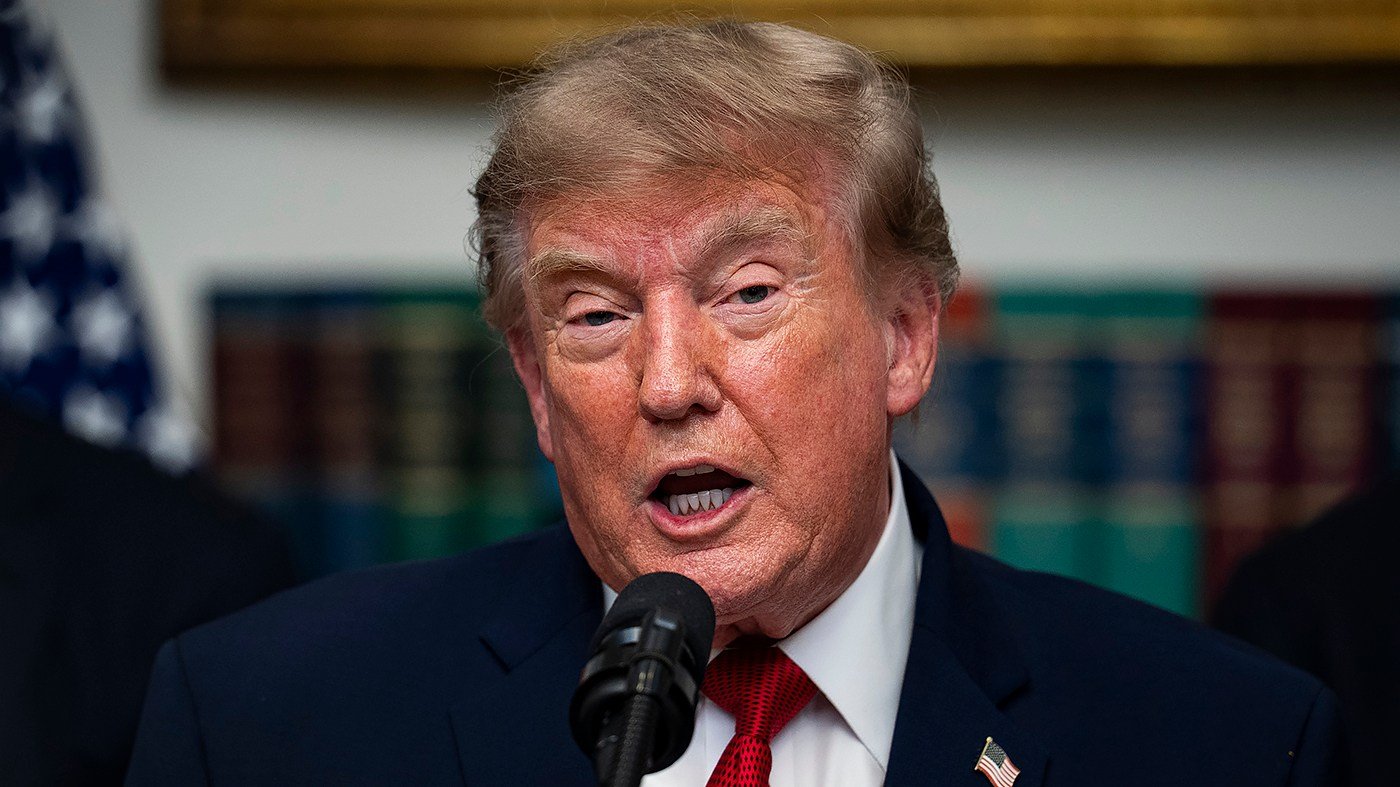
President Trump escalated his rhetoric against Canada on Sunday, accusing the country of wanting the perks of U.S. statehood without actually joining the union. The comments came as a new round of tariffs between the two nations took effect, deepening a trade conflict that has unsettled a long-standing alliance.
In a Truth Social post, Trump wrote, "Canada wants the benefits of being a State, without being one!!! They have also charged our great farmers, for many years, massive amounts of Tariffs. No more!!!" The president's outburst followed Canada's announcement on Saturday that it would impose retaliatory tariffs on U.S. goods beginning September 8.

Canadian Prime Minister Mark Carney said his government would "match Washington's new tariffs dollar for dollar in order to protect Canadian workers, farmers, families and businesses." The measures will target a range of products, including steel, dairy, appliances, agricultural equipment, pulp and paper, and electronics. Carney said additional details would be released in the coming days, but stressed that Ottawa was acting "reluctantly."
The immediate trigger for the retaliation was the Trump administration's decision to raise tariffs on Canadian goods to 50 percent, a move that took effect this weekend. The escalation marks the latest chapter in a trade dispute that has repeatedly flared during Trump's second term, straining relations with a neighbor that has historically been one of America's closest allies.
Trump has previously floated the idea of making Canada the 51st U.S. state, a notion that Canadian leaders have consistently rejected. Earlier this year, the president mocked Carney as the "future Governor of Canada," reviving a taunt he had used against former Prime Minister Justin Trudeau. In that same post, Trump referred to Carney in a discussion about combating invasive Asian carp in the Great Lakes, suggesting the Canadian leader would be "happy to contribute to this worthy cause."
The trade war has drawn criticism from some lawmakers. Senator Susan Collins has urged the White House to consider the economic fallout as the dispute intensifies, warning of potential harm to American industries and consumers. Meanwhile, the tariffs that took effect Sunday are expected to raise prices on both sides of the border, affecting everything from automobiles to agriculture.
Canadian officials have emphasized that they are not seeking a trade war but feel compelled to respond to protect their economy. Carney's government has framed the retaliation as a measured response, aimed at applying pressure on U.S. exporters while minimizing disruption to Canadian supply chains.
Analysts note that the conflict could have broader political implications. Canada's dollar-for-dollar tariff plan mirrors the structure of U.S. tariffs, a deliberate strategy to signal fairness and proportionality. However, the escalating measures risk entrenching a cycle of retaliation that could be difficult to break.
Trump's latest comments suggest he is unlikely to back down, framing the dispute as a matter of fairness for American farmers and manufacturers. Yet his statehood remarks have been met with skepticism in Canada, where leaders view them as rhetorical posturing rather than a serious proposal.
As the September 8 deadline approaches, businesses on both sides of the border are bracing for higher costs and disrupted trade flows. The outcome of this standoff could reshape North American trade relations for years to come, with no clear resolution in sight.