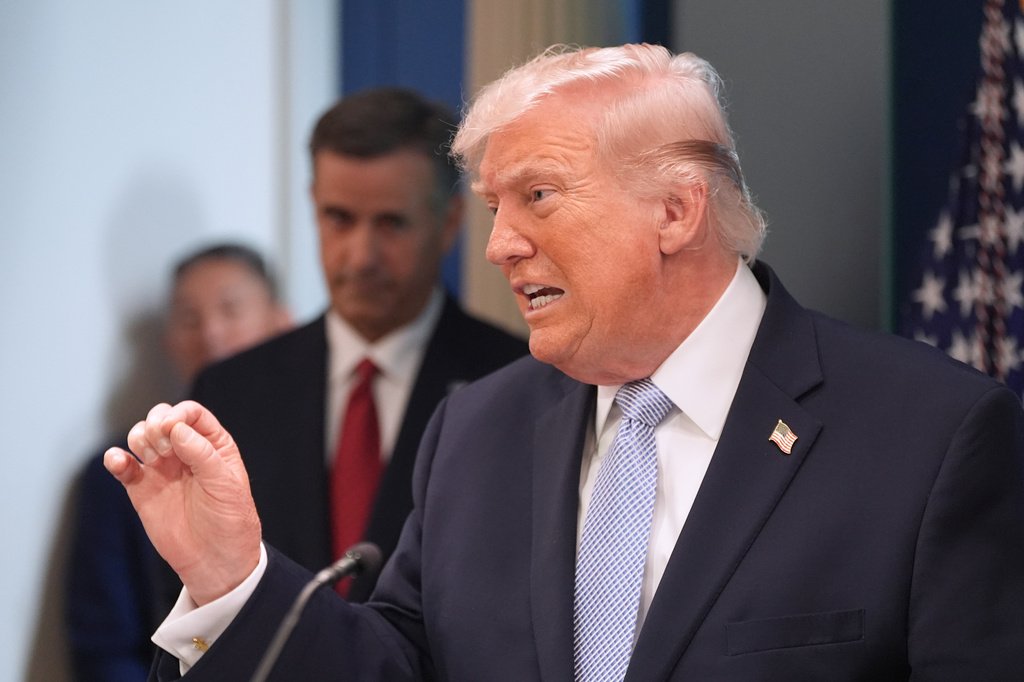
President Donald Trump recently floated the possibility of invoking a rarely-used constitutional power to recall Congress from its Easter recess, aiming to break the prolonged funding stalemate paralyzing the Department of Homeland Security. The threat, made in an interview with the New York Post, highlighted the severity of what has become the longest partial government shutdown in history, visibly marked by sprawling airport security lines nationwide.
As of now, no such emergency session has been convened. Such a move would require the President to cite "extraordinary occasions" under Article I, Section 3 of the Constitution to convene one or both chambers. The political gambit would have placed intense pressure on congressional leaders during an already volatile midterm election season.
Executive Action Preempts Constitutional Showdown
The immediate pressure for a special session dissipated after Trump signed two executive memoranda. The first, on March 28, restored pay for Transportation Security Administration workers. A second order on April 3 covered nearly all remaining DHS personnel, excluding Immigration and Customs Enforcement and Border Patrol agents whose funding was secured in last year's omnibus spending bill.
These unilateral actions effectively removed the most urgent crisis—unpaid federal workers—that might have justified an extraordinary recall of lawmakers. The episode underscores how executive power can circumvent legislative gridlock, a dynamic also seen in other policy areas where the administration has faced legal challenges, such as when a federal judge blocked the termination of Temporary Protected Status for Ethiopians.
Why a 'Special Session' Is Largely Obsolete
The president's threat also revealed a modern constitutional reality: the special convening authority is practically obsolete. Congress, even during formal recesses, maintains continuous legislative session through brief "pro forma" meetings held every three days. While no business is conducted, these sessions technically prevent the Senate from being in "recess," thereby blocking presidential recess appointments and negating the need for a presidentially-called emergency session.
Furthermore, House and Senate leaders retain their own power to reconvene their chambers if a genuine emergency arises. This procedural framework, solidified over the last two decades, leaves little functional space for a president to unilaterally interrupt the congressional calendar, rendering Trump's consideration more a political warning than a viable procedural tool.
Historical Precedent: Truman's 'Turnip Day' Gamble
The most dramatic historical use of this power came in 1948 when President Harry S. Truman, accepting the Democratic nomination, famously called the Republican-controlled "do-nothing Congress" back into a special post-convention session. He demanded action on civil rights, Social Security expansion, and national healthcare.
While Truman's "Turnip Day" speech electrified his party and helped propel his underdog campaign to victory that November, it failed legislatively. The GOP-controlled Congress used the session to pass its own bills on inflation and housing before adjourning. The episode remains a classic study in using constitutional authority for political theater and campaign momentum, a tactic Trump has frequently employed across his foreign and domestic policy, from vowing sustained military pressure on Iran to his ongoing legal appeals against New York fraud penalties.
Political Calculus in a Divided Congress
For Trump, the mere suggestion of a special session served as a potent pressure tactic on congressional leaders from both parties. It underscored executive frustration with the funding impasse and the amendment "ping-pong" between chambers. The threat may have helped catalyze the final acceptance of a Senate compromise, avoiding the need for the extraordinary session itself.
The dynamic reflects the ongoing challenges of governing with narrow majorities, a pressure point for Speaker Mike Johnson as he navigates GOP revolts on issues like FISA reauthorization and DHS funding. While the immediate crisis has passed, the underlying tensions between presidential authority and congressional prerogative remain a defining feature of the current political era, ensuring that threats of extraordinary constitutional measures will likely resurface during future legislative breakdowns.