President Trump has ignited a fresh intra-party conflict with Senate Republicans by approving a surprise arrangement that permits Russia to export diesel to the United States, a decision that comes at a politically delicate moment just weeks before the midterm elections. Four GOP senators have already publicly condemned the move, and many more are said to be privately fuming.
Senators Susan Collins of Maine, Lisa Murkowski of Alaska, John Curtis of Utah, and Thom Tillis of North Carolina have all spoken out against the deal, which was struck between Trump and Russian President Vladimir Putin without prior consultation with congressional Republicans. The agreement, which would see the U.S. purchase an estimated 2.5 million tons of Russian fuel, is expected to channel hundreds of millions of dollars into the Russian economy, potentially bolstering Moscow's war effort in Ukraine.
Vin Weber, a former House Republican leader and longtime GOP strategist, noted that the backlash may be broader than the public statements suggest. "I think there are a lot more people that are privately critical of it. The question is whether they want to go public with it," Weber said. He added that the president faces a significant political risk given the strong anti-Russia sentiment within his own party. "There is a substantial base of support in his party for taking a very tough attitude on Russia which he does not seem to share."
The move comes just two months after the Senate passed a sweeping Russia sanctions package, which Trump had delayed for months before reluctantly signing it into law. That legislation, backed by Collins and others, explicitly banned Russian energy imports, a provision that the new diesel deal appears to violate. Collins, who is in a tough reelection fight in a state that has backed Democrats in recent presidential contests, took to social media to voice her opposition, calling the decision a direct contravention of the law she helped author.
Collins and six other senators—including Republicans Murkowski, Tillis, and Curtis, as well as Democrats Ron Wyden of Oregon, Richard Blumenthal of Connecticut, and Jeanne Shaheen of New Hampshire—issued a joint statement condemning the move. "Congress explicitly banned Russian energy imports in 2022 to prevent American dollars from financing Putin's brutal war against Ukraine," they declared. "President Trump's decision to allow Russian diesel imports to the U.S. runs directly counter to that law." The senators also criticized the administration for failing to consult Congress or provide a legal justification for lifting the sanctions, as required by statute.
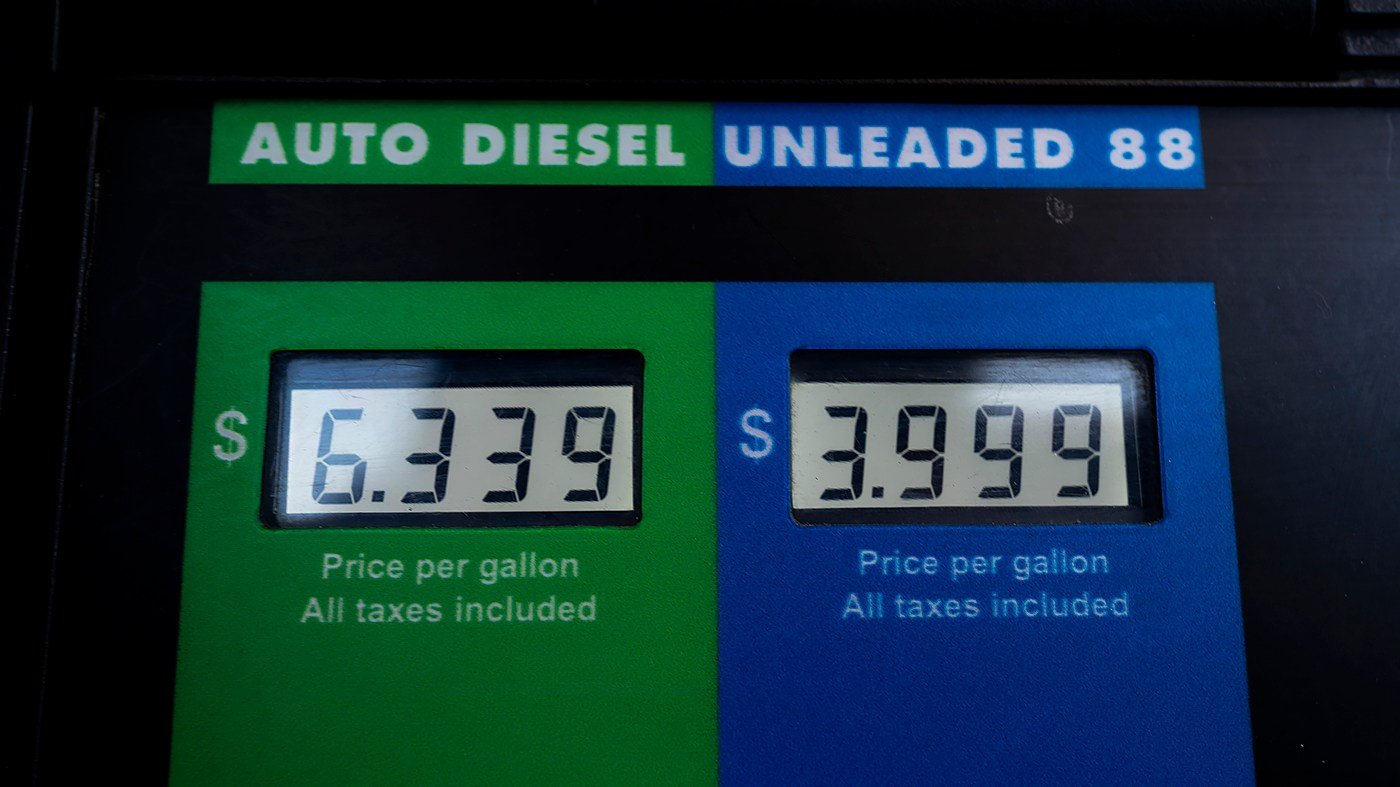
Administration officials have not offered a detailed explanation for the reversal, but allies suggest that Trump is motivated by a desire to bring down diesel prices, which have become a major political liability for Republicans in battleground races. Diesel prices have dipped slightly from a September peak of $6.53 per gallon to $6.27, but they remain painfully high for voters. A senior Senate Republican aide expressed hope that the deal could provide a boost to GOP candidates, acknowledging that Trump is "trying to do anything he can do get it down. He did a deal with the devil from the looks of it."
Danielle Pletka, a senior fellow at the American Enterprise Institute specializing in U.S. foreign policy, described the arrangement as "a lifeline for Putin" at a time when the Russian offensive in Ukraine has stalled. She suggested that Trump's desperation over fuel prices is clouding his judgment. "It's just an act of desperation by a president who doesn't see the optics," Pletka said, calling it "a pact between two desperate men."
Senate Majority Whip John Barrasso of Wyoming, one of Trump's closest allies, offered a more measured defense, framing the decision as part of a broader balancing act. "The president is balancing and has to make tough decisions," Barrasso said on CBS News's "Face the Nation," adding that Trump is weighing the need to end Putin's war while also lowering costs for American families. Barrasso did not explicitly endorse the deal and quickly pivoted to blaming Democrats for restricting domestic oil production.
The controversy is likely to escalate as more Republicans weigh in, with some analysts predicting that the deal could become a defining issue in the final stretch of the campaign. Weber warned that Republican voters' deep-seated support for Ukraine should not be underestimated. "Most Americans have spent their entire lives understanding that Russia is our rival at best and our flat-out enemy at worst," he said. "They are deeply invested in supporting Ukraine emotionally and otherwise."
The political fallout also intersects with other controversies swirling around the Trump administration, including scandals involving his inner circle and attacks on Democratic lawmakers. As the midterms approach, the diesel deal adds another layer of turbulence to an already volatile political landscape, raising questions about whether Trump's gambit will pay off or backfire spectacularly.