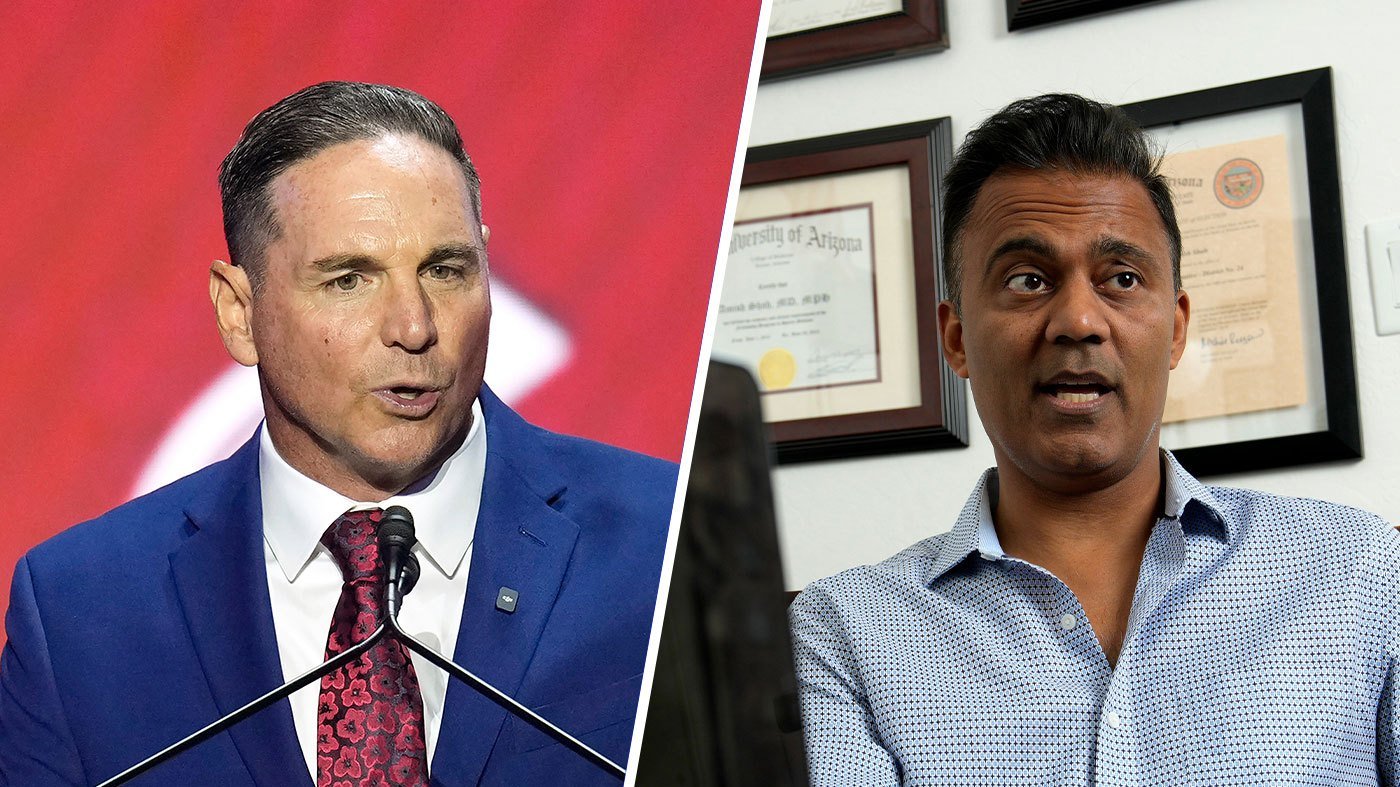
As the midterm campaign cycle intensifies, a notable cluster of congressional candidates is seeking office in districts where they do not actually live, sharpening the perennial question of what it means to represent a community.
In Arizona's 1st Congressional District, Democrat Amish Shah and Republican Jay Feely are both running despite living outside its boundaries. The situation echoes in New York's 1st District, where GOP Rep. Nick LaLota—who resides in Amityville, part of the neighboring 2nd District—faces Democratic challenger Chris Gallant, a resident of Amity Harbor.
The Constitution only requires House members to be inhabitants of the state they represent, not the specific district. But strategists argue that living outside the district can create a disconnect with voters. Democratic consultant Antjuan Seawright told The Hill that such candidates struggle to truly understand the “community and the people,” putting both parties at a disadvantage.
Some candidates have pledged to relocate if elected, while others have been pushed out of their districts by redistricting. In Virginia, former Democratic Rep. Elaine Luria is running to reclaim the 2nd District, which she lost in 2022 after Republican-drawn maps shifted her home out of the district. Her campaign blames the GOP's gerrymander for her defeat, with spokesperson Zach Emanuel noting that Luria's success in 2020 scared Republicans enough to redraw the lines.
Independent candidate J. Matt Baker, also running in Virginia's 2nd District, explained on his website that his neighborhood was moved to the 3rd District after the lines changed. “I did not leave the district; the mapmakers simply shifted a line less than a mile to the east,” he wrote, emphasizing that he only needs to be a state resident to run.
In Arizona and New York, redistricting isn't the culprit—Democrats' attempts to redraw lines were blocked in court. Feely, a former NFL kicker, said he and his wife are building a house in the district, stressing the importance of being close to constituents. A source close to Shah noted he lives just a mile outside and has represented parts of the district in the state legislature.
Republican analyst Rob Stutzman argued that the significance of a candidate's address depends on the district's nature. In sprawling metro areas like Phoenix, living just outside the lines may not be a distinguishing factor, as the community is essentially one large region. He also pointed to name recognition, citing Feely's celebrity as a former athlete, which can sometimes override residency concerns.
Still, opponents often weaponize such situations. The Republican National Committee issued a press release in August accusing Luria of buying a second home outside the district, saying she should “work out the logistics” of actually living there. The issue remains a flashpoint as voters weigh local ties against broader political dynamics.