In the dog days of August, when news cycles often slow, President Trump has injected a fresh wave of chaos into military affairs. His recent edicts to the U.S. Navy—ranging from a return to steam-powered catapults to declaring the Strait of Hormuz a U.S. territory and demanding aircraft carriers be redesigned for aesthetics—have left defense experts and lawmakers baffled.
The Strait of Hormuz claim is particularly confounding. International law is clear: territorial claims require permanent physical occupation and control, which is impossible for a body of water. Trump's naval blockade, which doesn't actually control the strait, doesn't help. The Fifth Fleet, including the USS Abraham Lincoln, will eventually have to sail away, while Iran remains geographically entrenched. The president's attempt to simply declare victory in a conflict he started without a clear strategy is a dangerous precedent.
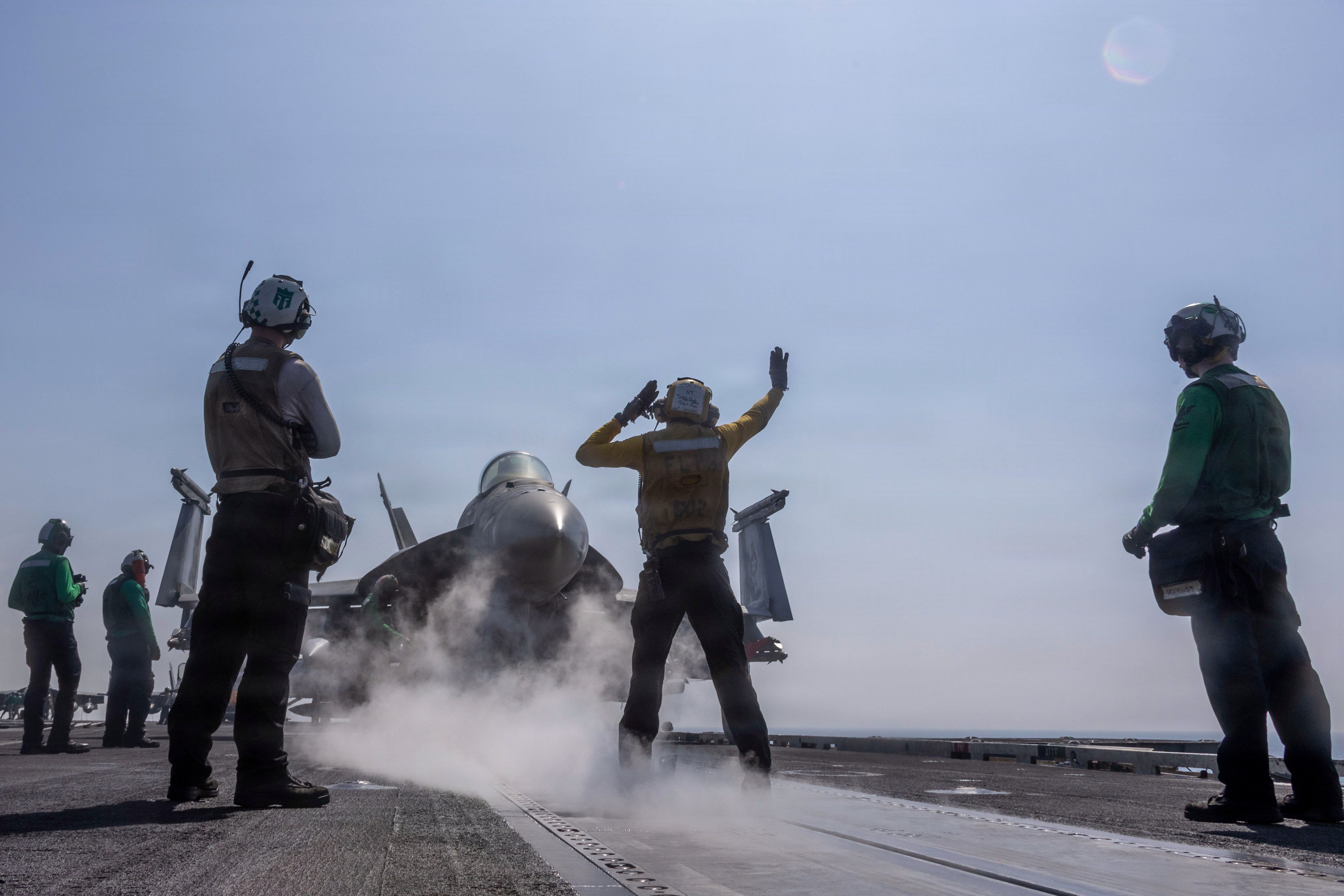
Trump's fixation on steam catapults is a throwback to his first term. He has now ordered that the electromagnetic catapults currently in use be replaced with older steam technology, a move that contradicts decades of naval engineering. Sen. Mark Kelly (D-Ariz.), a former Navy pilot and test pilot with a master's in aeronautical engineering, noted, "I've launched off the front of aircraft carriers hundreds of times, have a Master's degree in aeronautical engineering, and am a test pilot and even I wouldn't suggest to the Navy how to engineer specific systems on its ships." Trump's apparent belief that magnets stop working when wet is not a sound basis for military procurement.
His foray into naval architecture is equally troubling. Modern carriers place the island structure at the stern to maximize flight deck efficiency, allowing more sorties per hour. Trump, however, wants to move it back to the World War II-era midship position because he finds the current design less visually appealing. Such a change would degrade the carriers' combat effectiveness and cost billions in redesign and construction delays.
Beyond the absurdity, these decisions have real consequences for service members. The USS Abraham Lincoln has been deployed for nine months, with over 200 consecutive days at sea—the longest such stretch in modern history. This unplanned extension, a direct result of Trump's poorly conceived Iran policy, has led to severe conditions, including food shortages reported as early as April. The president has dismissed these reports as "fake news," but the sailors' morale and readiness are suffering.
Congressional Republicans have remained largely silent, a stark contrast to the late Sen. John McCain, who would likely have vocally opposed such reckless micromanagement. Rep. Pat Fallon (R-Texas) downplayed the Lincoln's conditions, saying he didn't "make much" of the reports. This abdication of oversight is alarming, especially as some GOP lawmakers block unrelated nominees over policy disputes while ignoring these urgent military issues.
As Trump continues to pursue diplomatic overtures with adversaries and mend fences with former allies, his erratic behavior toward the Navy suggests a deeper concern. Critics argue his decisions reflect a deteriorating grasp of reality, possibly linked to cognitive decline. Whether or not that is the case, the impact on national security is undeniable.
Feeding sailors and designing ships should not be partisan issues. They are fundamental responsibilities of the commander in chief. The president's whims are endangering lives and undermining the Navy's readiness. It is time for Congress to step up and hold this administration accountable, regardless of party lines.