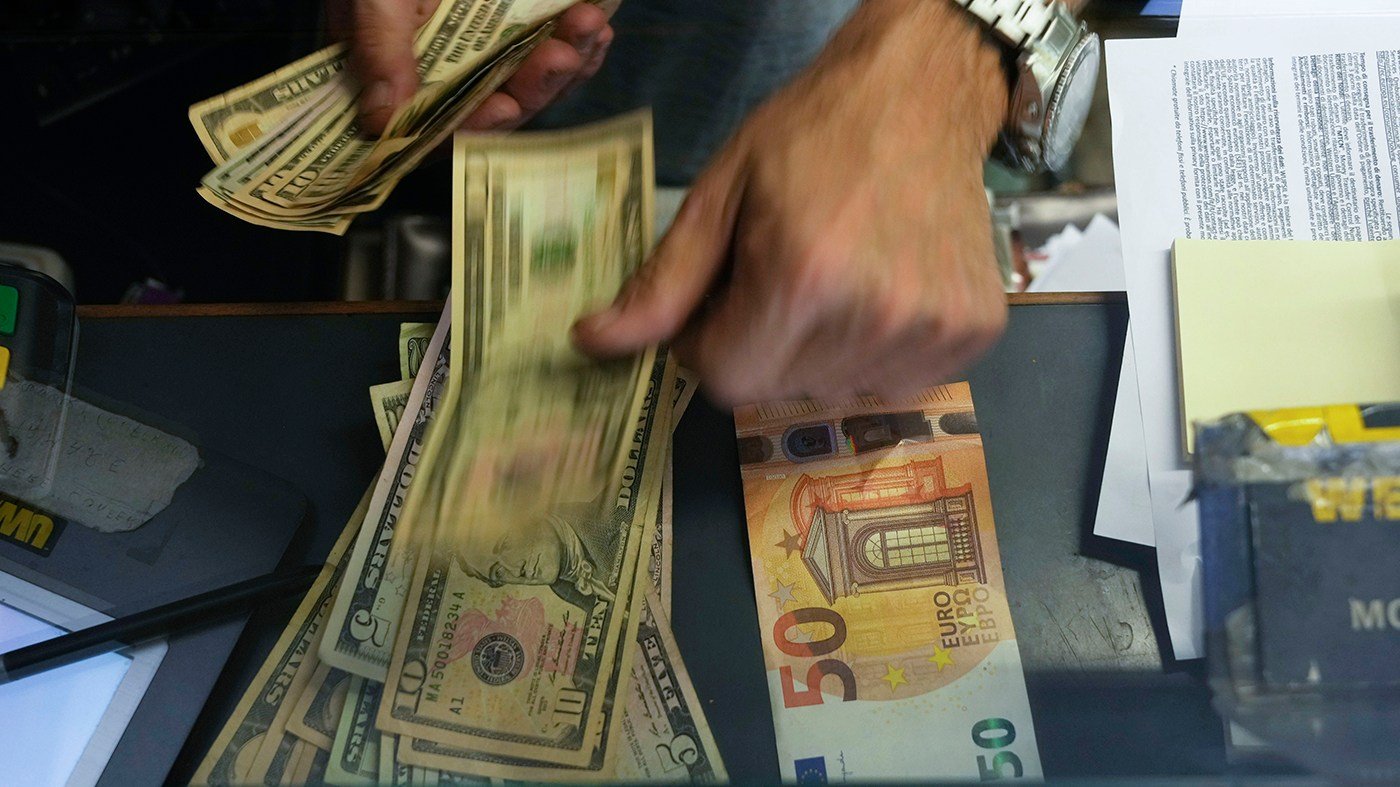
The euro tumbled to its weakest level in 17 months on Monday, pressured by a fresh wave of sovereign debt concerns across Europe and an ongoing global bond sell-off. By mid-afternoon on the East Coast, the shared currency was trading at roughly $1.12, after briefly dipping below that threshold earlier in the session. That marks the lowest point since May 2025, when the euro was worth about $1.11.
The decline represents a sharp reversal from earlier this year: in January, the euro was buying around $1.17, and as recently as mid-September it was still above $1.16. The last time the euro traded below parity with the dollar was in late 2022, when it spent roughly six weeks under the $1 mark—the first such stretch in about two decades.

A weaker euro automatically boosts the dollar’s relative standing, which has broader trade implications. European goods become cheaper for U.S. buyers, while American exports face a tougher price environment overseas. The United States ran a $220.3 billion trade deficit with the European Union last year, importing $632.9 billion worth of goods from the bloc, according to the Office of the U.S. Trade Representative.
Richard Stevens, executive director of research and product development at CME Group, noted in a September 25 analysis that the dollar “has shown relative stability” this year, despite persistent inflation that prompted the Federal Reserve to raise interest rates by a quarter point last month. Stevens argued that markets are already pricing in further rate hikes and higher borrowing costs, which “neutralizes the net impact on the dollar.”
The broader bond market rout has not spared European governments. Rising public debt across the continent, coupled with elevated energy costs stemming from the ongoing conflicts in Iran and Ukraine, has driven investors to flee European assets. France’s 10-year bond yield closed at roughly 4.86% on Monday, while Germany’s equivalent stood at about 3.50%—both significantly higher than before the U.S.-Israel campaign against Iran began in late February.
The euro’s slide accelerated after Spanish Prime Minister Pedro Sánchez called a snap election for November 29. Sánchez, a left-wing critic of President Trump who has led the government since 2018, made the announcement amid nationwide protests over a housing crisis. Political uncertainty in one of the eurozone’s largest economies added another layer of pressure to the currency.
Investors are now watching whether European policymakers can address the debt and energy challenges without triggering a deeper confidence crisis. The dollar’s strength, meanwhile, continues to reflect the Fed’s tighter monetary stance relative to the European Central Bank.
For now, the euro’s slide reinforces the dollar’s dominance in global markets, but it also raises the stakes for European leaders facing both economic and political headwinds.