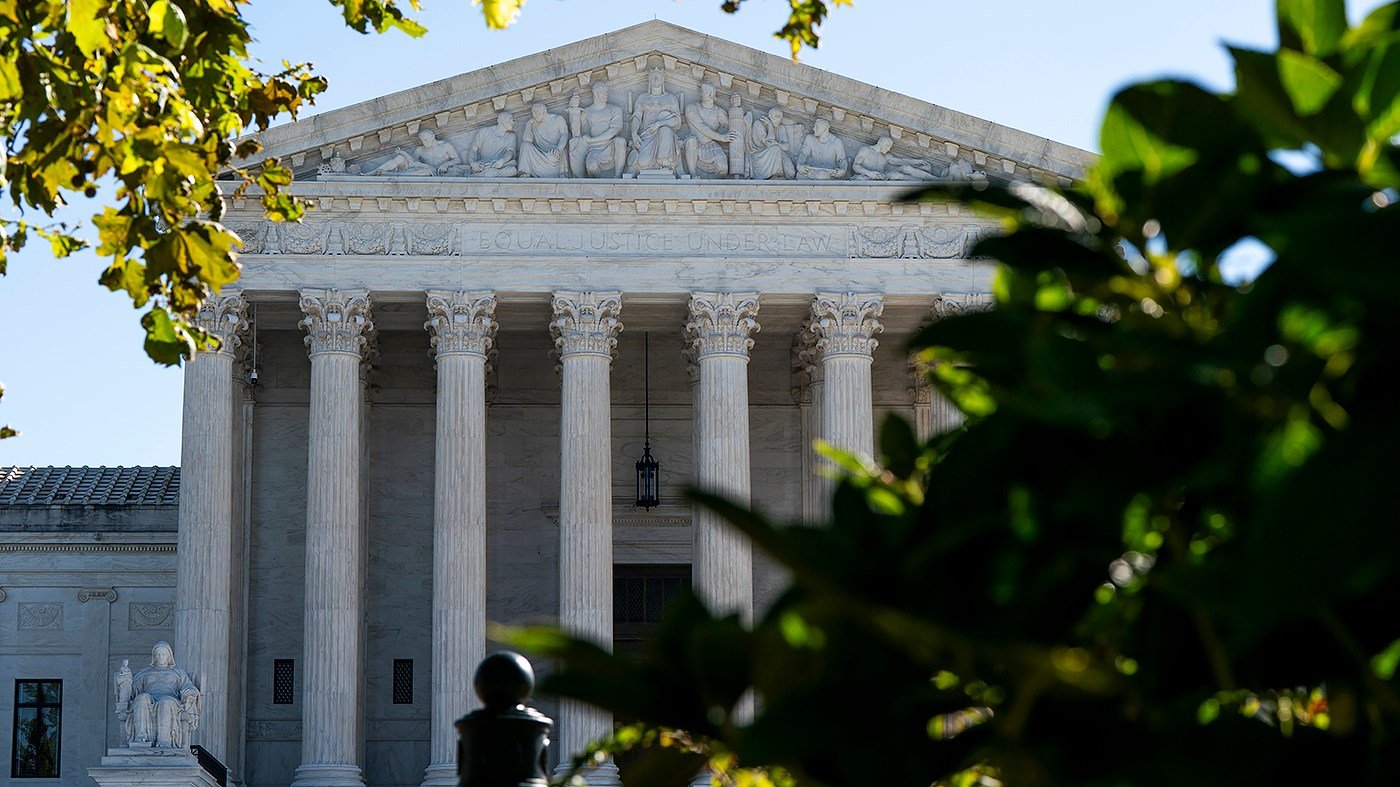
Several Supreme Court justices on Monday expressed skepticism about a bid by oil companies to preemptively halt a climate change lawsuit that could expose them to liability for climate-related damages. The justices raised concerns about whether the court should even consider the case at this early juncture.
Liberal Justice Ketanji Brown Jackson told Suncor Energy's attorney, Kannon Shanmugam, that the discussions with her colleagues suggested the case was "really early" and that "this is sort of premature from the standpoint of this court exercising its jurisdiction." While Jackson's skepticism was not unexpected, conservative Justices John Roberts and Neil Gorsuch also posed tough questions to the fossil fuel companies.
Suncor and ExxonMobil have asked the high court to overturn a Colorado Supreme Court ruling that allowed a lawsuit to proceed. The suit alleges the companies misled the public about the connection between their products and climate change, creating a public nuisance. The outcome could have broad implications for similar litigation across the country, as states and municipalities sue oil and gas firms for damages linked to climate change.
The court could rule in one of three ways: explicitly block the case, allow it to proceed, or determine it lacks jurisdiction at this time. The latter two options could be partial victories for the localities, as they would allow the case to move forward, at least temporarily. Boulder County needs only four votes in its favor because Justice Samuel Alito has recused himself, while the fossil fuel companies would need five votes to prevail in a split decision.
During arguments, Shanmugam contended that Colorado state law should not apply to out-of-state energy companies. Roberts responded with a hypothetical: "If you're in [State] B and you're aiming at [State] C, but you hit somebody in [State] A, that doesn't make a difference, does it?" The analogy drew attention to the interstate nature of emissions.
However, the justices also pressed Boulder County's lawyer, Kevin Russell. Roberts questioned, "Presumably, if you prevail the next day, a municipality in every single state will file a lawsuit. How would you think that will work out on the ground?" Russell pointed to past mass liability cases, such as asbestos, but Roberts noted that greenhouse gas emissions are different because they affect every state.
The justices also considered whether the case differs from state-level suits involving tobacco or opioids. Meanwhile, the oil companies and the U.S. government argued that federal law preempts such suits, given the national and international significance of climate change. The Environmental Protection Agency has recently stated that the Clean Air Act does not authorize it to regulate greenhouse gas emissions from cars or trucks.
Justice Department lawyer Sarah Harris argued that even if the EPA lacks authority, cases like Boulder's are still preempted under federal law. Gorsuch pressed Harris on whether the Clean Air Act's silence on greenhouse gases would bar all lawsuits, questioning, "So before the Clean Air Act, you'd have some federal common law cause of action to decide, but because of the Clean Air Act and Congress not addressing this issue, nobody can sue at all?" Harris responded affirmatively, suggesting that federal common law should not fill gaps where Congress has not acted.
The court's decision, expected later this term, will be closely watched as landmark climate liability cases against oil giants proceed. The ruling could shape the legal landscape for city and state lawsuits over climate deception, with potential consequences for the energy industry and environmental policy.