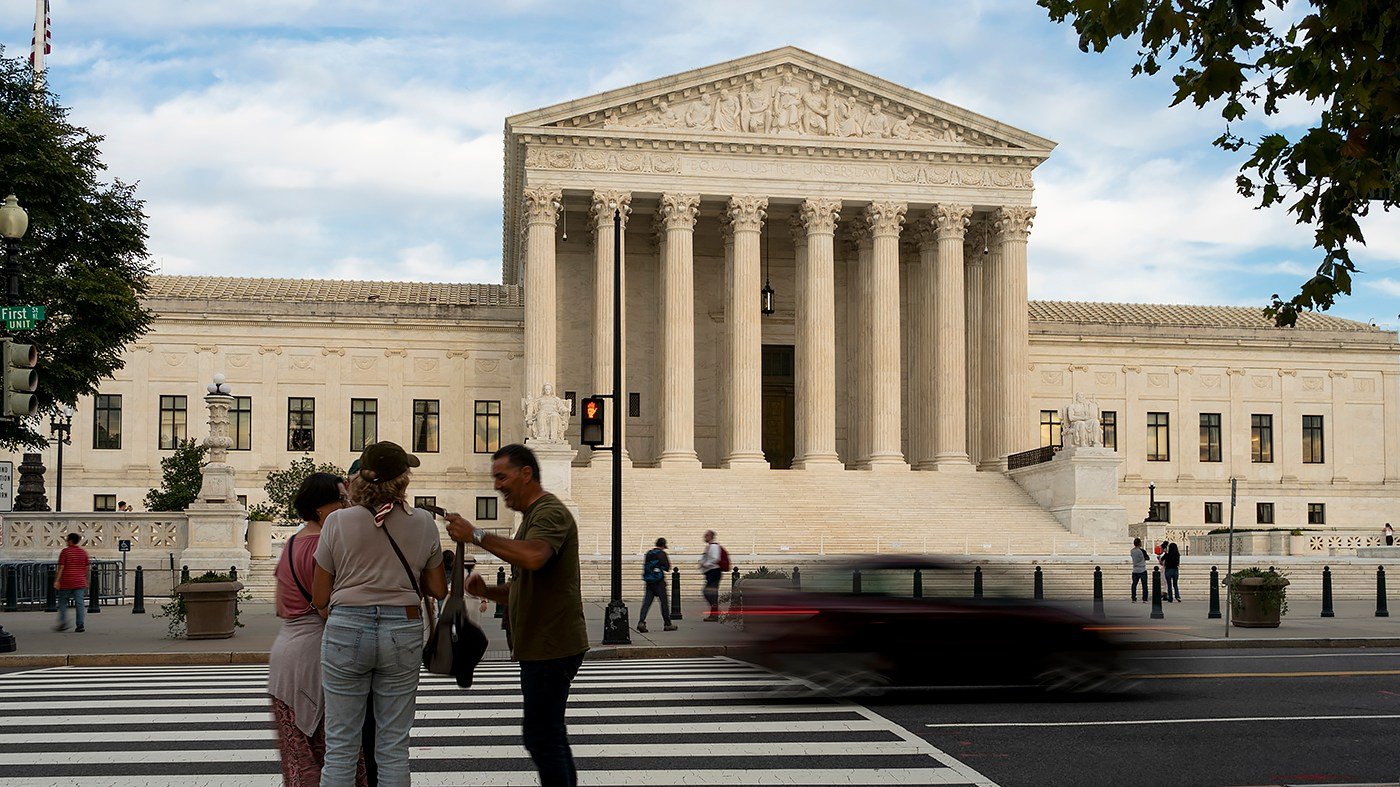
The Supreme Court is set to hear oral arguments Monday in a case that could reshape the legal landscape for climate change litigation, with implications for dozens of similar lawsuits filed by state and local governments against major oil companies.
At the center of the dispute is Suncor v. Boulder, an appeal from oil giants Suncor Energy and ExxonMobil challenging a Colorado Supreme Court ruling that allowed climate damage claims brought by Boulder city and county to proceed in state court. The companies argue that federal law preempts such state-level lawsuits, while Boulder contends that its claims are valid under state tort law.
Legal experts say the outcome could have sweeping consequences. “What’s at stake is the future of litigation seeking money damages from fossil fuel companies over climate change,” said Michael Gerrard, faculty director of Columbia Law School’s Sabin Center for Climate Change Law. If the justices side with the oil companies, localities would lose a potential avenue to recover costs for climate adaptation measures like sea walls, flood protections, and wildfire preparedness. Gerrard estimates there are currently about two dozen such cases pending across the country.
Conversely, if the lawsuits are allowed to proceed and ultimately succeed, Gerrard warned of “massive damages that would be very difficult for the companies to pay.” The financial exposure could be enormous, potentially affecting the entire fossil fuel industry.
In their brief urging the high court to reverse the Colorado ruling, Suncor and ExxonMobil argued that these cases represent an attempt by state and local governments to “assert control over the Nation’s energy policies” in a way that conflicts with federal constitutional structure and policy priorities. They contend that climate change is a global issue that requires a uniform federal response, not a patchwork of state court judgments.
Boulder, however, insists that federal law does not preempt its claims. “There is no constitutional bar to states addressing in-state harms caused by out-of-state conduct, be it the negligent design of an automobile or sale of asbestos,” the city and county argued in their brief. They maintain that their lawsuit seeks to hold companies accountable for damages already suffered, not to regulate emissions.
The Supreme Court agreed to hear the case earlier this year, but the justices also raised questions about their own jurisdiction, adding that issue to the docket. If the Court determines it lacks authority to decide the case, Gerrard said it would be effectively a “punt,” allowing the Colorado ruling to stand and likely sending the case back to state court. “The Boulder case would go forward, so would several of the others, and this issue will probably come back before the Supreme Court, but probably not for quite a while,” he said.
Justice Samuel Alito has recused himself from the case, citing financial holdings in other oil companies. He told Bloomberg that his recusal was “prudent” but not required, noting that his wife Martha-Ann Alito had inherited the energy stocks. The recusal means an 8-justice bench will hear the case, raising the possibility of a 4-4 tie, which would affirm the Colorado Supreme Court’s decision without setting a national precedent.
The Trump administration has sided with the oil companies, arguing in a brief that climate damage suits “severely interfere with the federal government’s constitutional and statutory responsibilities.” But critics point to an apparent inconsistency: the administration has simultaneously moved to roll back federal regulations on greenhouse gas emissions from cars and power plants. Erika Kranz, senior staff attorney at Harvard Law’s Environmental & Energy Law Program, called the government’s position “in tension” with its deregulatory agenda. “It’ll be interesting to see if the judges bring up this tension and how the government explains its position,” she said.
The case arrives as the Supreme Court faces a packed docket of politically charged disputes, including challenges to Trump administration policies on immigration and religious liberty. A decision in Suncor v. Boulder is expected by the end of the term in June. For now, the justices’ ruling could either open the floodgates for climate liability suits or slam the door shut on a major legal strategy for addressing climate change.