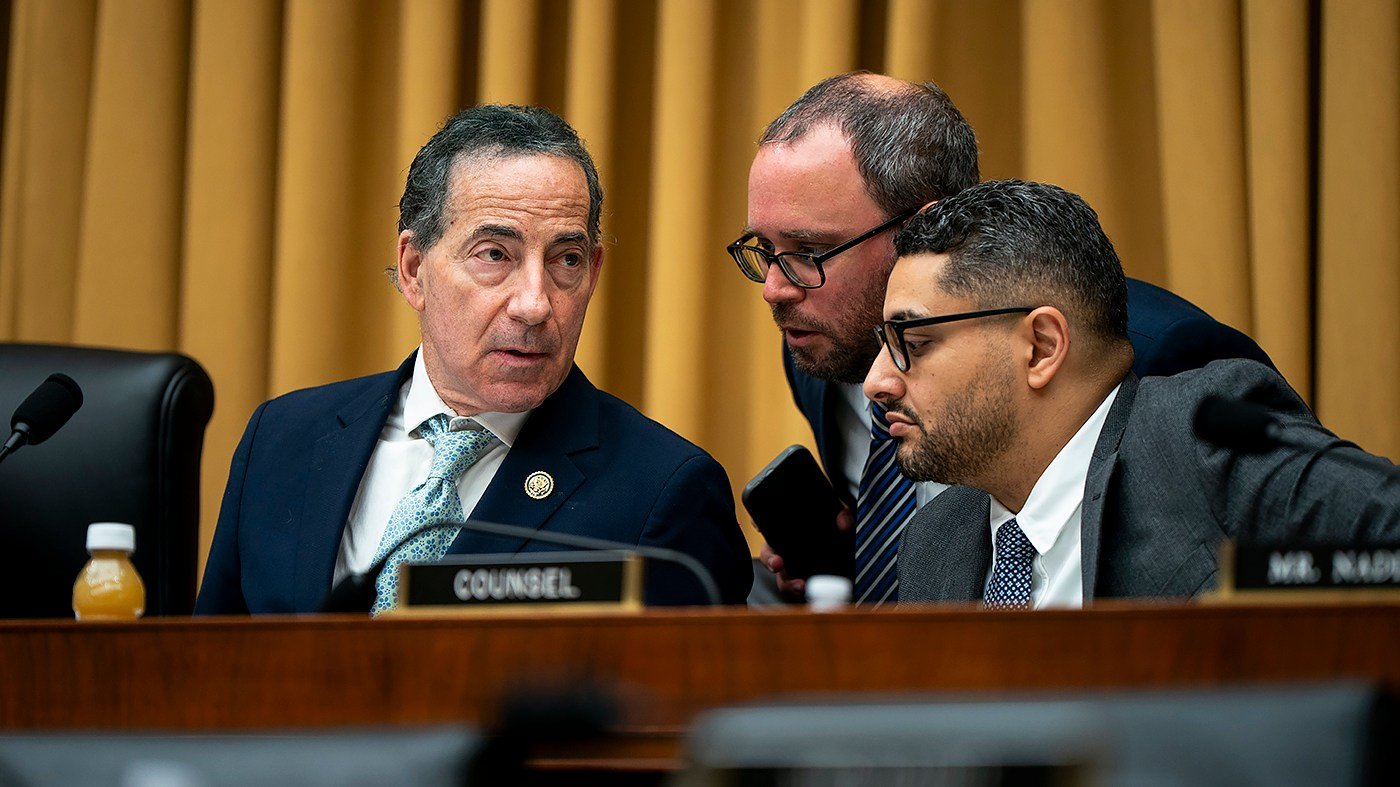
House Democrats are quietly assembling a comprehensive legal and educational apparatus to counter any attempt by the Trump administration to disrupt or undermine the 2026 midterm elections. The effort, which involves dozens of lawmakers, outside legal experts, and watchdog groups, reflects deep concern that President Trump may use federal power to tilt the electoral playing field in favor of Republicans.
Behind the scenes, Democratic teams have catalogued roughly 150 potential scenarios of interference, ranging from federal agents at polling places to attempts to seize ballots or challenge vote counts. The preparations include pre-drafted legal briefs, a network of lawyers ready to file suit at a moment's notice, and a series of public briefings for voters and election officials.

“We’ve got everything ready to be filed. We’ve got documents. We know the arguments. We’ve got the briefs already written,” said Rep. Stephen Lynch (D-Mass.). “So we’ve taken all the precautions we can.”
Rep. Jamie Raskin (D-Md.), a former constitutional law professor, said the party is not underestimating Trump’s willingness to push boundaries. “We don’t discount or undermine what Donald Trump is capable of. We saw in 2020 a dozen different plans they had to try to thwart democratic sovereignty [over] the election,” he said.
The initiative is split into two main tracks. Rep. Joe Morelle (D-N.Y.), ranking member of the House Administration Committee, is leading the coordination and voter education push, which has already held more than 15 “shadow hearings” in districts across the country. The goal, according to a source familiar with the effort, is to ensure local election officials know the law before any potential confrontation—such as an administration attempt to seize ballots in a contested district.
Rep. Joe Neguse (D-Colo.) heads the litigation task force, which has prepared legal challenges to potential federal overreach. Democrats have already scored several court victories, including rulings that blocked the administration from forcing states to turn over voter rolls and a Supreme Court decision that halted new restrictions on mail-in ballots, which were used by about a third of voters in 2024.
One particular concern is the suggestion by top administration officials that federal law enforcement—including FBI and ICE agents—could be dispatched to polling precincts. Democrats point out that federal law prohibits carrying firearms at polling sites, and they are working to ensure election officials are aware of that rule.
“These are just the standard rules that apply to any election, not just the midterm election. So we’re just trying to assure people that there’s nothing out here going on that you should be concerned about,” said Rep. Bennie Thompson (D-Miss.), the senior Democrat on the House Homeland Security Committee. “And to be honest with you, the plus side to the concern is that some people are saying, ‘I want to vote early, because I don’t want to deal with the mess.’”
Trump and his allies reject accusations of seeking an unfair advantage, insisting that their efforts—such as new photo ID requirements—are aimed at preventing voter fraud, which Trump has long claimed is rampant. In a July speech, Trump warned of “shocking vulnerabilities in our election infrastructure” and alleged that noncitizens could influence the midterms. However, he has provided no evidence, and studies have consistently shown that voter fraud is exceedingly rare.
Democrats argue that the fraud claims are a pretext for imposing rules that would suppress turnout and benefit Republicans. “We are very well aware that all they have is a bag of dirty tricks at this point,” Raskin said.
Despite the court victories, Democrats are not letting their guard down. The party’s preparations are designed to be flexible and responsive, with legal teams ready to act on multiple fronts. As the midterms approach, the battle over election integrity is likely to intensify, with Democrats vowing to protect the vote and Republicans insisting they are defending the system’s security.
For more on related developments, see Trump’s midterm turnout push and the Supreme Court’s role in election disputes.