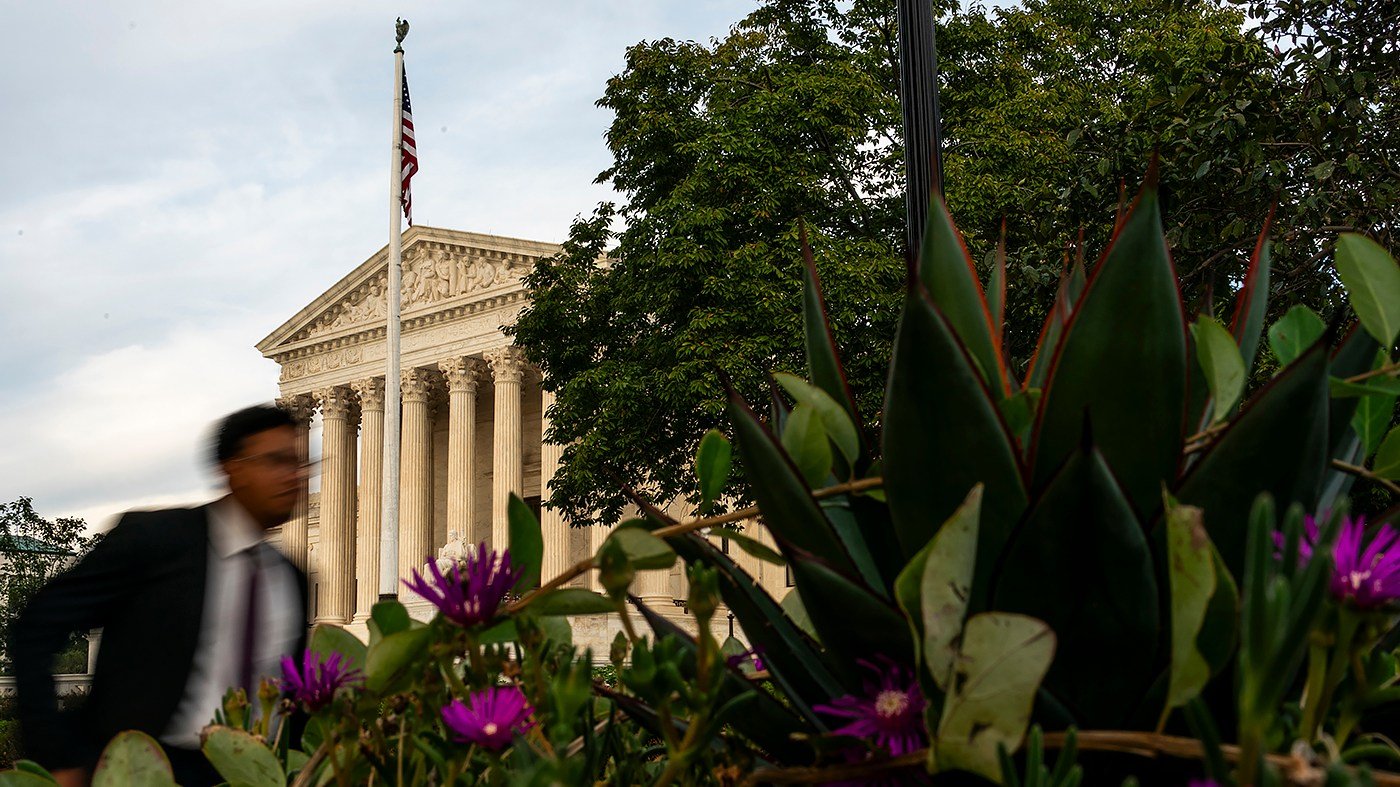
The Supreme Court gavels in a new term Monday, with a docket already crowded by clashes over President Trump's immigration policies and other contentious issues. The justices return to a bench facing historically low public approval and a fraught dynamic with the president, who has repeatedly lashed out at the conservative jurists he appointed.
In a recent interview with Time magazine, Trump did not hide his frustration with Justices Neil Gorsuch, Brett Kavanaugh, and Amy Coney Barrett, saying, "They voted against me too often. I gave them the position of a lifetime, and they vote against me often. They vote for me, too." That mixed record has fueled speculation about how Trump's agenda will fare this term, especially as lower courts keep blocking his policies and pushing disputes up to the high court.
Just in the past week, the justices added two major administration appeals on immigration. One case asks whether officials provide enough due process before deporting migrants to third countries where they have no ties. Another challenges the legality of Trump's mandatory detention policy, which has triggered a flood of litigation. Decisions are expected by summer.
Carrie Severino, president of the Judicial Crisis Network and a former clerk to Justice Clarence Thomas, said the sheer volume of immigration cases is a direct result of the administration's enforcement push. "Because of the vast number of illegal immigrants — particularly during the Biden administration, but for many years up until now — that just creates an incredible backlog of issues and concerns," she said. "Particularly as this president is trying to actually enforce the immigration laws. So, immigration is definitely an issue."
Groups that have fought Trump in court are bracing for another busy year. Cecilia Wang, national legal director of the American Civil Liberties Union, told reporters, "Last term, OT25, was one of the ACLU's busiest ever. This term may top that." Left-leaning organizations remain hopeful after last term produced a mixed outcome for the president: the court backed him on executive power over independent agencies and some immigration moves, but struck down his tariff policy, blocked his effort to end birthright citizenship, and stopped him from firing Federal Reserve Governor Lisa Cook.
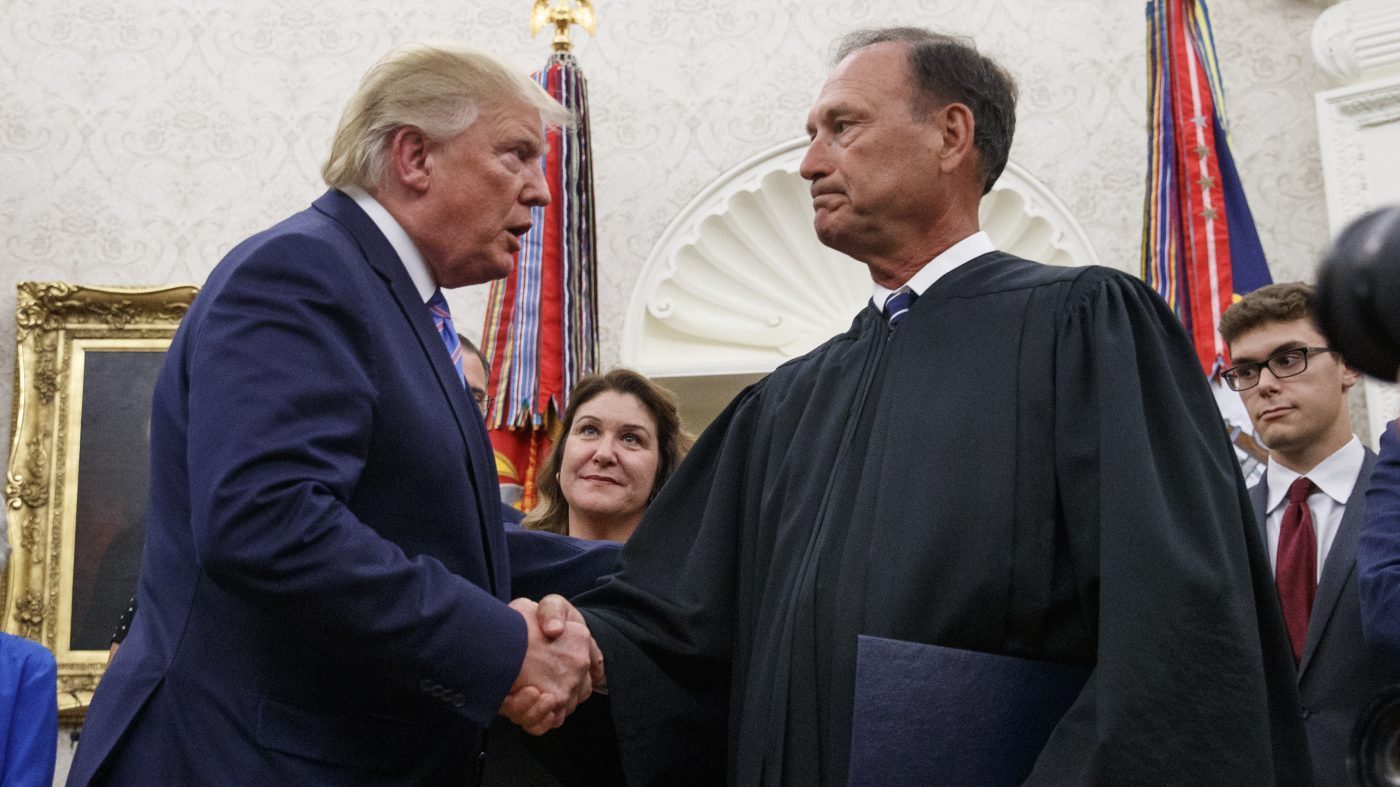
Trump's frustration has spilled into public view. In a social media post, he called his nominees "merely a shell of their original selves." Justice Samuel Alito, in an interview set to air Sunday on CBS, dismissed the notion that the justices act politically and noted that criticism comes from both sides. "He has his own way of saying things," Alito said of Trump. "But the criticism of the court, I mean, I want to be even-handed on this. The criticism of the court by President Biden and the justices by President Biden and his administration was very harsh. And President Trump has been very harsh."
The tension has not stopped Trump from courting the justices socially. Kavanaugh and Barrett were among the guests at a recent state dinner for Chinese President Xi Jinping. Meanwhile, public opinion of the court has soured. A Gallup poll from early September found a record-high 43 percent of Americans consider the court too conservative; just over a third say it is "just about right," and 17 percent call it too liberal.
Beyond Trump's direct legal battles, the docket includes cases that resonate with his base. The justices will hear a challenge to an Arizona law requiring documentary proof of citizenship to register to vote, a policy Republicans want nationwide. They will also take up religious liberty disputes and examine whether state bans on semi-automatic weapons like AR-15s are constitutional. Severino called it "a more exciting docket than we often do at this point," adding that some terms start with a snoozer list, but not this one.
The ACLU is pushing for even more cases, including a request to strike down Texas's law requiring the Ten Commandments in public school classrooms. The justices are expected to consider that petition after Texas responds this fall. Wang warned that "fundamental civil rights and civil liberties are under unprecedented attacks from all quarters," and many of those fights could reach the Supreme Court this term.
The term opens with a blockbuster: the justices will hear arguments in a major case involving the fossil fuel industry. That case, along with the immigration battles and other politically charged disputes, ensures the court will remain in the spotlight — and in Trump's crosshairs — for months to come.