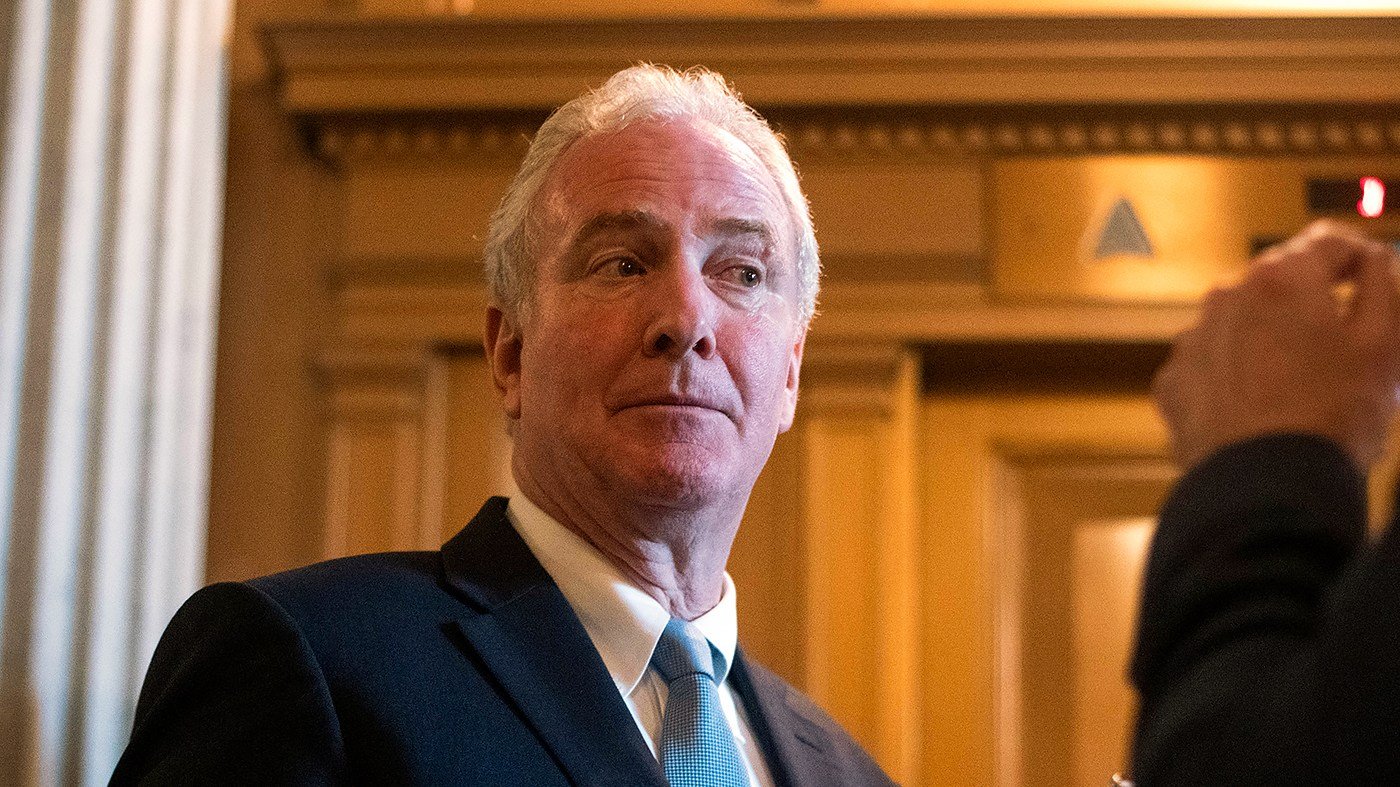
Senators Chris Van Hollen (D-Md.) and Jeff Merkley (D-Ore.) are set to lay out a sweeping reform agenda on Thursday, urging changes to Senate rules and Democratic Caucus procedures when the new Congress convenes. The push comes as Democrats prepare to reclaim the majority in January, and it lands squarely in the middle of a heated leadership fight within the party.
Van Hollen, who is challenging Senate Minority Leader Chuck Schumer (D-N.Y.) for the top Democratic post, and Merkley are expected to argue that the current rules have become a legislative straitjacket, allowing a determined minority to stall progress on key priorities. Their proposal aims to dismantle procedural obstacles that have repeatedly blocked major bills, while also empowering rank-and-file senators—including the incoming freshman class—to have a more meaningful say in shaping the party's agenda.

The event, scheduled for 3 p.m. EST, will be livestreamed, offering a rare public window into the internal Democratic debate over strategy and governance. The timing is no accident: the party's midterm victories have energized reformers who see an opportunity to institutionalize changes before the new session begins.
At the heart of the dispute is a fundamental question about how Democrats should wield power. Schumer has defended a more centralized approach, arguing that it has secured key legislative wins and kept the caucus unified. But Van Hollen and his allies contend that the current structure concentrates too much authority in the leader's office, leaving too many senators on the sidelines.
“The American people sent a clear message in November—they want action, not obstruction,” Van Hollen said in a recent statement. “Our Senate rules should reflect that mandate, not stand in the way of it.” Merkley, a longtime advocate for procedural reform, echoed that sentiment, calling for a more participatory caucus where every member’s voice counts.
The leadership battle has drawn sharp contrasts. While Schumer has emphasized experience and tactical acumen, Van Hollen has positioned himself as a change agent, promising to decentralize decision-making. His bid has attracted support from progressives, including Senator Bernie Sanders (I-Vt.), who has publicly criticized Schumer’s urgency. Sanders has argued that Schumer lacks the urgency needed to confront the challenges ahead.
Meanwhile, the broader Democratic caucus is navigating a series of leadership elections. The race for caucus vice chair was won by Representative Lauren Underwood, a sign that the party is looking to elevate fresh voices. In the House, Hakeem Jeffries has secured the Democratic nomination for Speaker, positioning him to make history as the first Black Speaker of the House.
Van Hollen’s challenge has already forced Schumer to respond, with the leader’s allies dismissing the effort as a distraction. But the reformers are undeterred, framing their push as essential to fulfilling the party’s mandate. The pressure on Schumer to loosen his grip is mounting, and Thursday’s remarks will likely intensify that pressure.
Observers note that the outcome of this internal fight could have lasting implications for how Democrats govern. If Van Hollen and Merkley succeed, the Senate could see more frequent use of the reconciliation process, a lower threshold for debate, and a more collaborative approach to setting priorities. If they fail, the status quo may hold, but the debate itself signals a restless caucus eager for change.
As the event approaches, all eyes will be on the two senators’ specific proposals. Will they call for eliminating the filibuster entirely, or simply for reforming it? Will they propose changes to committee assignments or leadership selection? The answers will shape the Democratic agenda for years to come.
For now, the livestream offers a chance for voters to witness the party’s internal deliberation in real time—a reminder that even in victory, Democrats are wrestling with how to wield their new power effectively.