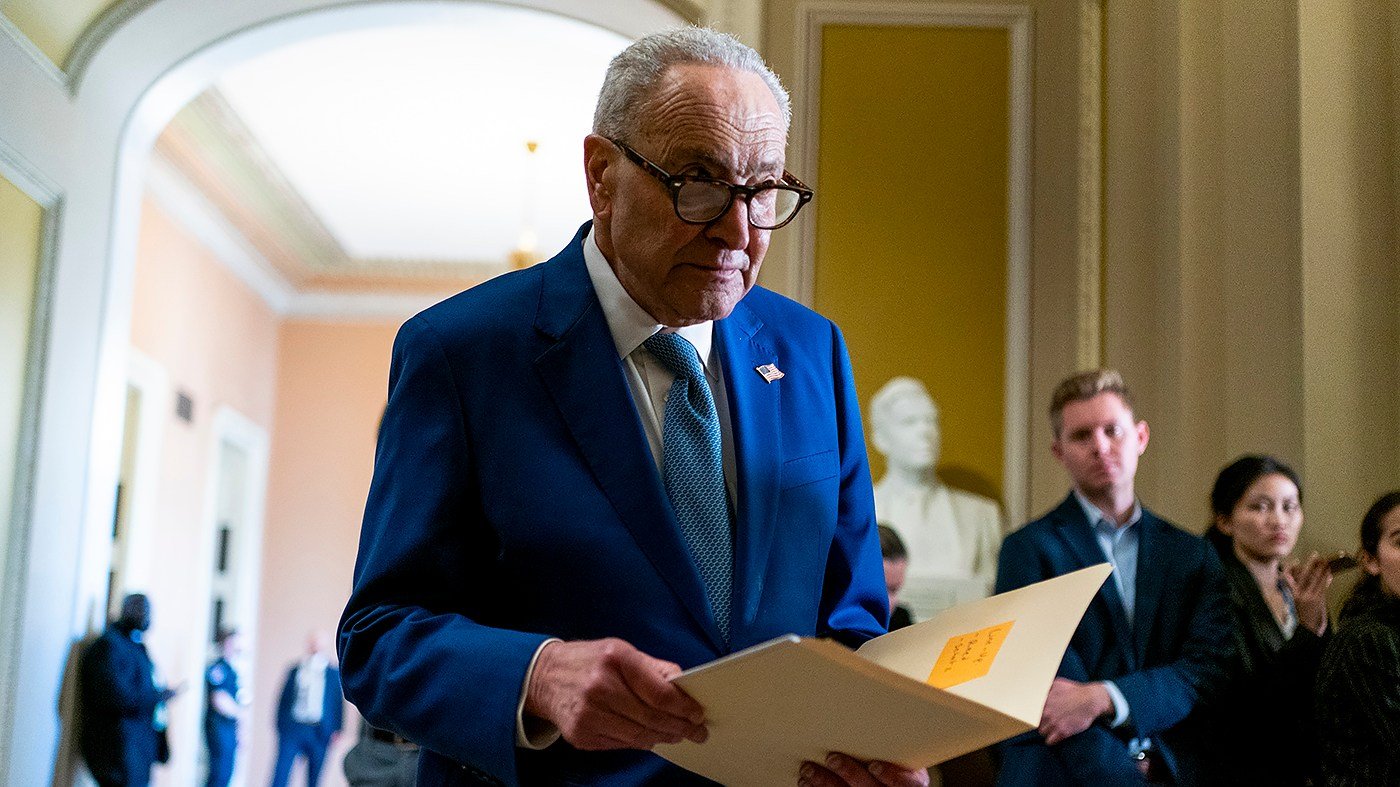
Senate Democrats are leveraging Sen. Chris Van Hollen's (D-Md.) insurgent leadership bid to push Minority Leader Chuck Schumer (D-N.Y.) to relinquish more control over the party's agenda and decision-making as they prepare to take the majority next year. The pressure reflects growing frustration with Schumer's centralized management of weekly caucus lunches and his near-constant presence at press conferences, which some lawmakers say stifles their input.
Several Democratic senators, speaking on condition of anonymity, described Schumer as a "lame duck" who may not seek reelection in 2028, when his current term ends. Schumer, who turns 76 this month, has not indicated his plans, but his leadership style has become a flashpoint. "Everyone knows that he's a lame duck," one senator said, predicting Schumer will step aside after this term.
The criticism is not universal. Even detractors acknowledge Schumer's strengths, including his fundraising prowess—he has helped raise hundreds of millions of dollars to keep Democratic campaigns competitive in television ad wars—and his ability to craft sharp messaging that counters Republican narratives. One Schumer ally defended his role as a "heat shield," absorbing GOP attacks while protecting vulnerable members.
Yet a significant bloc of the caucus feels sidelined, wanting more say in policy and political strategy. Sen. Tammy Duckworth (D-Ill.), who has not endorsed either candidate, called for changes to caucus rules to ensure broader participation. "There certainly needs to be more input from the caucus—not just from the leadership—from those of us who have been here and fighting in the trenches, as well as the amazing freshmen senators," she said. Duckworth noted her experience in the House, where she was part of a leadership team that met regularly with then-Speaker Nancy Pelosi.
Sen. Andy Kim (D-N.J.) said he is pushing ideas to make the caucus stronger, though he declined to detail them. "I certainly am raising with them what I hope we could do better with the caucus to make it stronger," Kim said, adding that his suggestions cover both policy and operational improvements. He has not yet declared a preference in the leadership race, which currently shows 14 senators publicly backing Schumer versus five for Van Hollen.
Sen. Martin Heinrich (D-N.M.), who is set to chair the Energy and Natural Resources Committee, wants committee chairs to take a more active role in negotiating legislation. "I think we do better work when committees are empowered," Heinrich said at a recent event. "The more that the power is pushed down to the committee, where we have the most knowledge about how to come up with a good product, I think that benefits our ability to produce a product." He has made this pitch to both Schumer and Van Hollen.
Schumer has shown some willingness to delegate, as when he let Sen. Elizabeth Warren (D-Mass.) lead on housing legislation and allowed Heinrich and Sen. Sheldon Whitehouse (D-R.I.) to negotiate permitting reform. But he remains confident he has the votes to defeat Van Hollen, and he is not offering public concessions. Asked about caucus reforms, Schumer said, "Look, I'm confident I'll be the next leader. I have the votes. And we're all going to roll up our sleeves and focus on lowering costs, ending corruption."
Van Hollen has specifically criticized Schumer's decision to back more moderate candidates in Senate primaries, such as Reps. Haley Stevens (D-Mich.) and Angie Craig (D-Minn.), arguing the leader should stay neutral. The challenge has put a spotlight on broader questions of caucus governance as Democrats prepare to govern with a slim majority. The outcome of the leadership vote will signal whether Schumer can adapt to a caucus that increasingly wants a seat at the table.