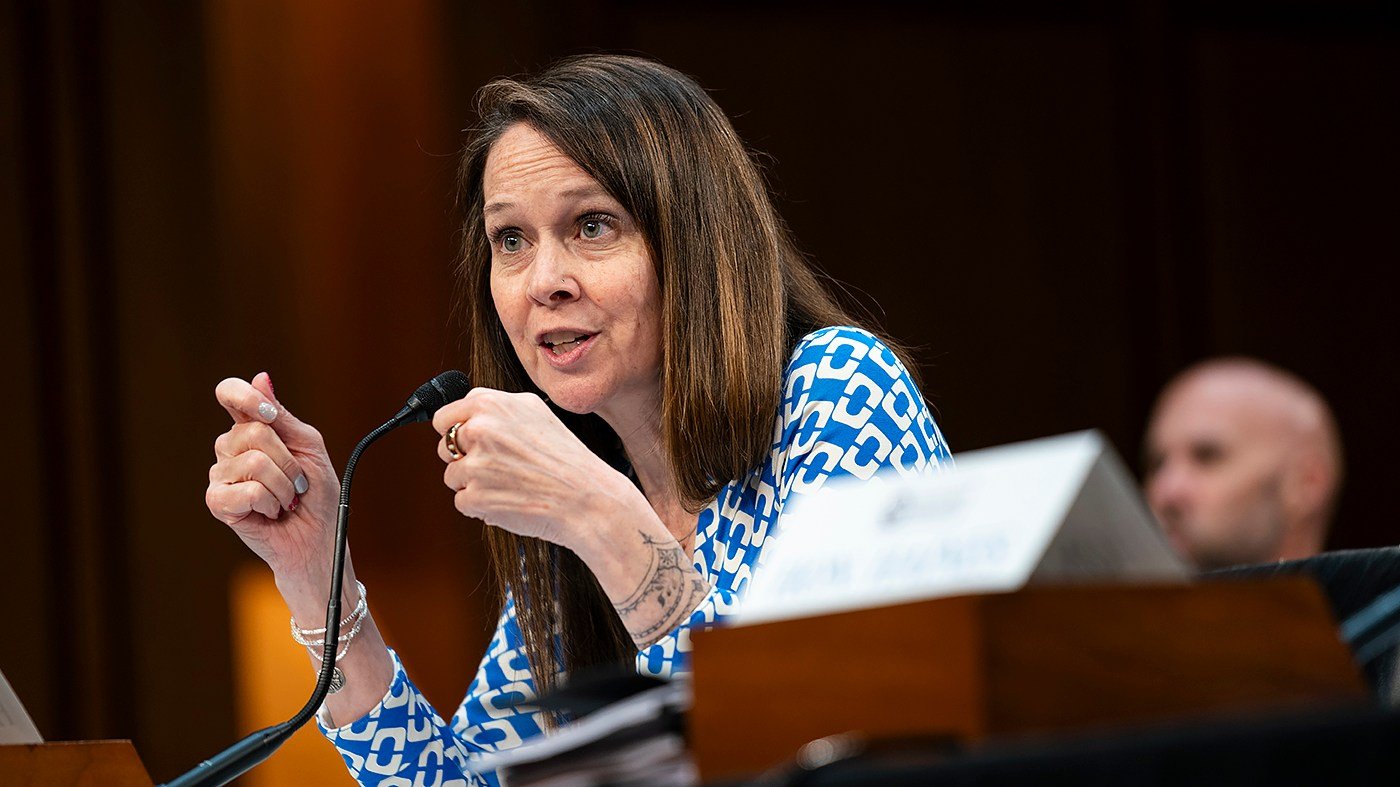
Jen Easterly, who led the U.S. Cybersecurity and Infrastructure Security Agency under the Biden administration, sounded the alarm Monday about a coming surge in digital infrastructure failures. In an interview with CNN's Anderson Cooper, she said the country should brace for a "significant ramp up" in incidents ranging from outages to cyberattacks.
"We have to be prepared for disruption, because disruption is going to occur," Easterly said. "We need to plan for it, prepare for it, exercise against it, have contingency plans in place." She warned that while the U.S. may eventually emerge with more resilient systems, the next few months and years will likely be rocky. "I am concerned that over the next few months and years, there will be a significant ramp up in incidents, and we don't have all of the resources to be able to handle it," she added.

Easterly called for sustained federal investment in modernizing critical digital infrastructure, noting that such funding must be consistent across presidential administrations. Her remarks come amid a wave of high-profile outages that have disrupted banking, air travel, and tech services over the past week.
Apple experienced glitches with iCloud and Apple Pay after an "internal update" on Tuesday. The National Security Agency saw its internal communications knocked offline following "scheduled routine maintenance." On Monday, customers of J.P. Morgan Chase, Bank of America, and Wells Fargo were temporarily locked out of their accounts, and United Airlines suffered a system outage that was resolved by evening.
The Federal Aviation Administration implemented a nationwide ground stop last Friday—only the third in its history—after investigators traced the problem to a router at an Arkansas radio facility that needed an upgrade. Microsoft also suffered a global outage lasting about an hour, cutting off access to Outlook for roughly 100,000 users.
Director of National Intelligence Jay Clayton sought to tamp down speculation that these incidents were the result of cyberattacks. In a CNBC interview Tuesday, he attributed the failures to aging systems and a broad push to patch vulnerabilities. "What I think is going on here ... is many people are patching their systems," Clayton said. "They know that they're legacy systems, have vulnerabilities, they're outdated ... it is time for an upgrade across our digital infrastructure."
Homeland Security Secretary Markwayne Mullin floated another theory, suggesting that "super intelligence"—the administration's term for advanced AI—might be behind the outages. He told reporters he had spoken with a tech figure who believed "that it's the SI." President Trump, meanwhile, downplayed the disruptions while traveling in the Philippines. "It's fine," he said. "When you're big and powerful and have all the money, things like that happen."
Easterly's warning adds to growing concern among experts about the fragility of the nation's digital backbone. The recent spate of failures has renewed calls for Congress to prioritize infrastructure investment, a topic that has been a point of contention between the administration and lawmakers. With the FAA's ground stop still fresh, new airport incidents continue to emerge, underscoring the urgency of modernizing critical systems.
As the administration weighs its approach to AI and cybersecurity, experts note that the pattern of outages may be a preview of more systemic challenges. "We need to invest in the modernization of our infrastructure," Easterly insisted, "and that investment must be sustained from one administration to the next."