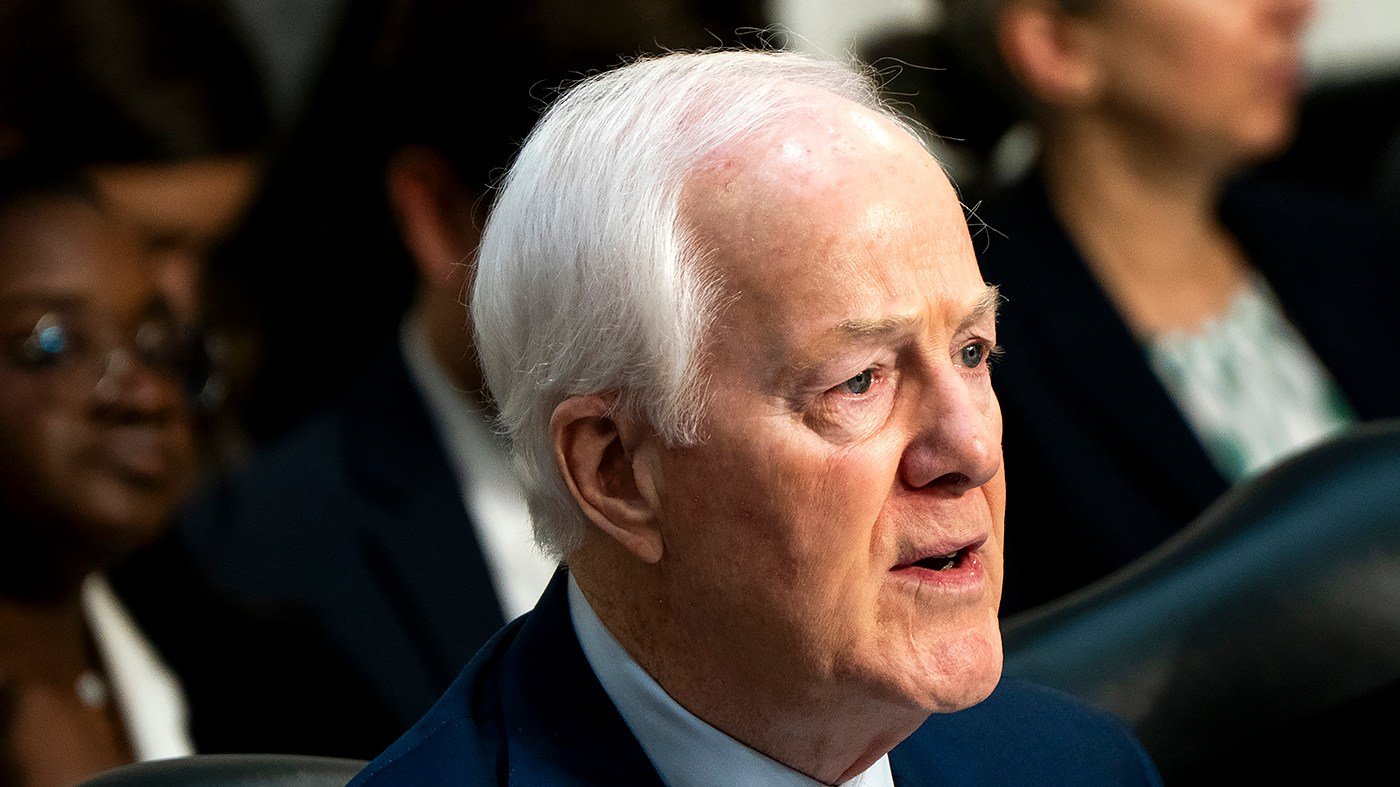
Sen. John Cornyn (R-Texas) on Wednesday derailed President Trump's nomination of T. Elliot Gaiser to a federal district court seat in Texas, escalating a showdown over the White House's failure to consult home-state senators on lifetime judicial appointments.
Cornyn, who is leaving the Senate and will be succeeded by Sen.-elect James Talarico (D-Texas), withheld his blue slip for Gaiser, a procedural move that effectively blocks the nomination from advancing in the Senate Judiciary Committee. The blue slip process allows home-state senators to weigh in on nominees, and a withheld slip typically halts consideration.

A Cornyn aide told The Hill that the senator had pressed the White House for months to nominate Steve Fahey, a former federal prosecutor, for the vacancy. Cornyn accused the administration of having "completely ignored" his recommendations and said he was "not willing to let the White House ignore the Senate's constitutional role."
Gaiser, who was expected to testify before the Judiciary Committee on Wednesday, was notably absent from the list of seven judicial nominees who appeared. Cornyn was blunt in explaining his opposition: "I just refuse to be jammed by a non-Texan who has no trial experience, who hasn't been vetted," he told CNN. "And so, we provided the White House an alternative, and I'm hoping they take advantage of it because I don't want the seat to go vacant either."
Speaking to CBS News, Cornyn declared the nomination "no longer viable," adding: "He's not a Texan, has no trial experience, and the White House tried to jam the Senate and wouldn't allow us to do our due diligence that we need to do on lifetime appointments."
Gaiser, who previously lived in Ohio, was tapped to lead the Office of Legal Counsel at the Department of Justice before his nomination. He has drawn scrutiny for issuing a classified legal opinion justifying lethal strikes against drug cartels and suspected traffickers, arguing the strikes did not trigger the War Powers Resolution because they did not meet the definition of "hostilities." He also ruled that Trump's outside advisers are shielded from congressional and legal investigations, with their internal communications protected by executive privilege.
The standoff is part of a broader pattern of friction between the White House and Republican senators over judicial picks. In Oklahoma, Sen. Alan Armstrong (R-Okla.) withdrew his support for attorney Zach West, Trump's nominee for the Northern District of Oklahoma. Sen. Thom Tillis (R-N.C.) signaled he might not drop his opposition, telling Bloomberg: "Frankly, it's an unforced error by the White House just not to consult more effectively with Senator Armstrong. I think he'll get done, but they're running it down to the wire."
Senate Republicans have increasingly pushed back on the administration's judicial selections, particularly when nominees lack ties to the states where they would serve. The Federalist Society's recent setbacks have added to the uncertainty surrounding the judicial confirmation pipeline.
The White House has not publicly commented on Cornyn's block, but the move underscores the delicate balance between executive prerogative and senatorial courtesy in the judicial confirmation process.