President Trump's decision to call a ceasefire in Iran effectively dismantled the momentum of a U.S.-Israeli military campaign that was on the verge of crippling Tehran's military infrastructure. The halt of Operation Epic Fury, which had destroyed 80 percent of Iran's air defenses and sunk over 150 naval vessels, handed the Islamic Republic a strategic lifeline it desperately needed.
According to Gen. Dan Caine, Chairman of the Joint Chiefs of Staff, U.S. forces had also eliminated 95 percent of Iran's naval mines and degraded over 2,000 command-and-control nodes. Yet Trump's order to stand down allowed Brig. Gen. Ahmad Vahidi and other hardliners time to regroup, leading to a series of retaliatory strikes that have exposed the fragility of the administration's approach.
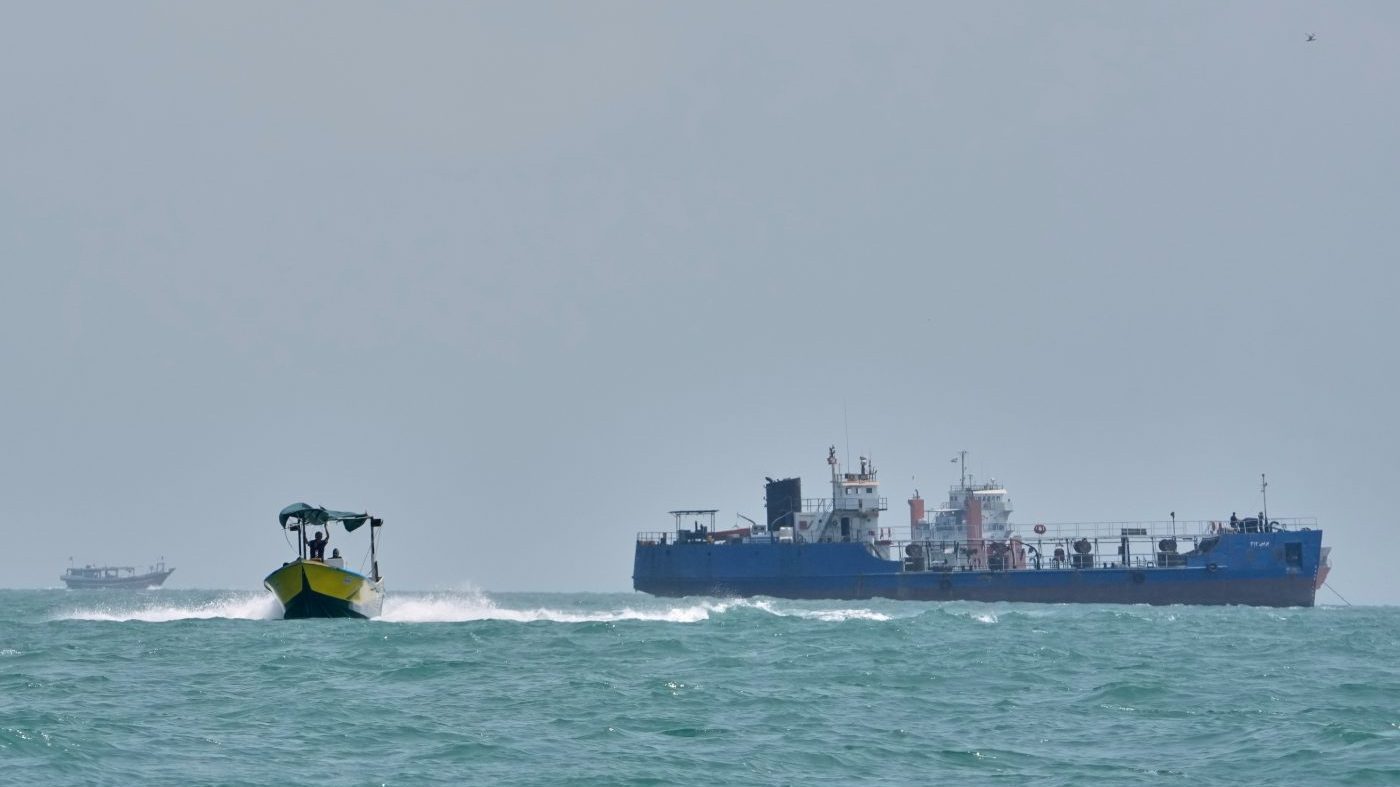
In the past ten days alone, Iran has launched 20 ballistic missiles at Israel, struck the U.S. base at Ali Al Salem Air Base in Kuwait, downed an AH-64 Apache helicopter in the Strait of Hormuz, and fired 21 missiles at U.S. forces in Kuwait, Bahrain, and Jordan. These actions contradict Trump's claims on Truth Social that Iran's military is a 'complete and total mess' or 'completely defeated.'
Tehran has mastered asymmetric warfare, relying not on traditional air, naval, or ground forces but on a coordinated regional strategy that leverages proxies and limited kinetic strikes. This approach, which analysts describe as a three-ring circus, includes mining the Strait of Hormuz as the centerpiece, punctuated by ballistic missile and drone attacks, and linking Hezbollah's survival to any potential deal.
Trump's focus on reopening the Strait of Hormuz and his economic blockade of Iranian ports—which he touts as 'the most successful Blockade in the history of Naval Warfare'—has failed to sway the regime. Meanwhile, as the Board of Peace faces funding gaps and a stalemate in Gaza, the administration's broader Middle East strategy appears increasingly adrift.
The president's biggest blind spot, according to critics, is his fundamental misunderstanding of his enemy. Despite the killing of Ayatollah Ali Khamenei and other top leaders on the war's first day, Iran's militant ideology remains intact, and the regime has only grown more entrenched. Trump's rhetoric on social media, once a tool of strategic ambiguity, is now perceived by hardliners as weakness, encouraging them to harden their negotiating stance.
While Trump's recent threat to 'hit [Iran] hard again' signals a potential shift, military experts argue that lasting victory requires directly targeting the Islamic Revolutionary Guard Corps and the Basij—the regime's domestic enforcers. Without that, the ceasefire remains a road to nowhere, as GOP support for the war frays and Democrats push for a war powers vote.
Sixty-five days after the ceasefire began, the U.S. finds itself further from victory. The path forward demands abandoning a deal Iran doesn't want and committing to a strategy that truly defeats the regime—not just for Trump's legacy, but for the stability of the entire Middle East.