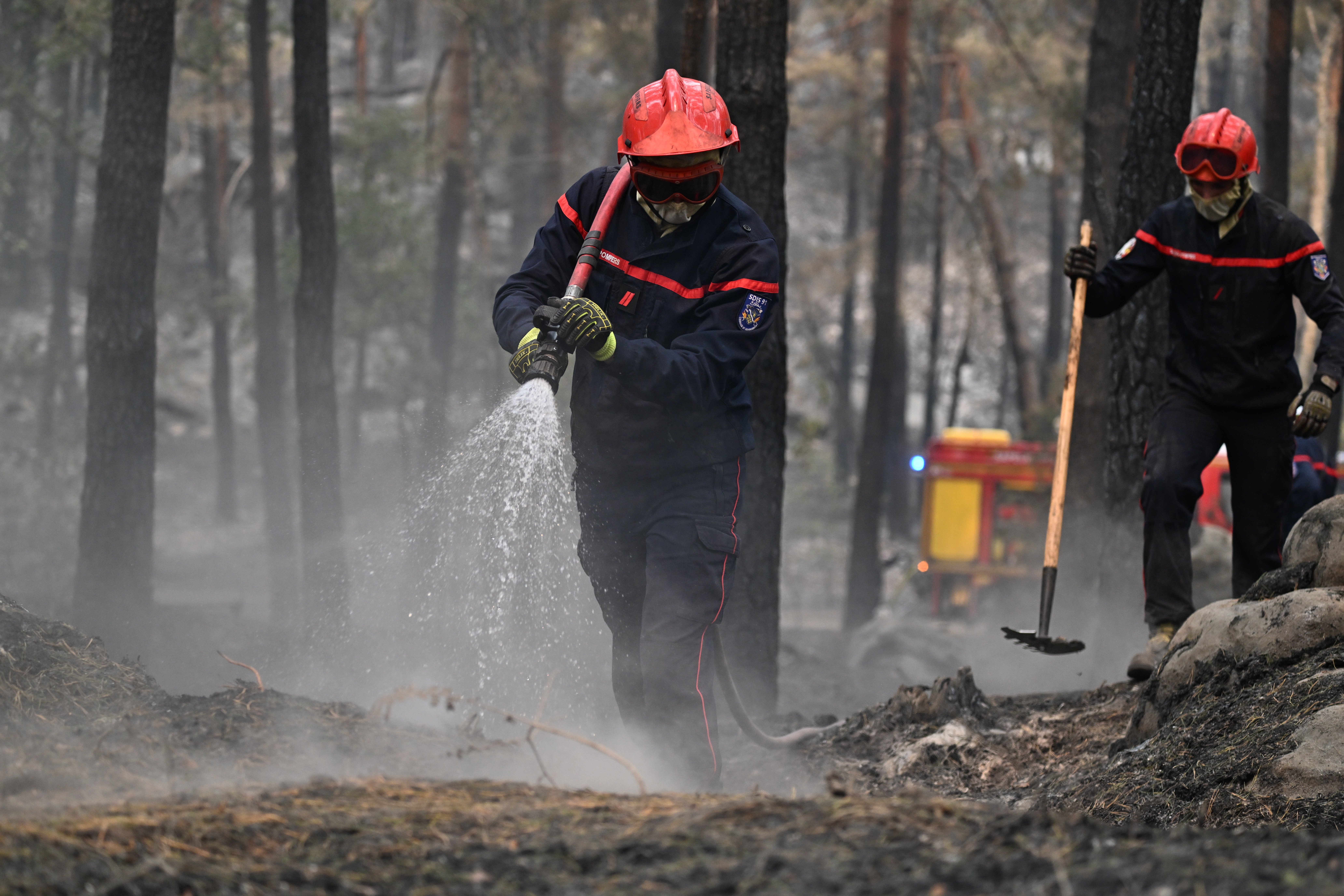
Wildfires raging across southwest Europe have forced more than a quarter-million people from their homes, with French and Spanish authorities reporting over 250,000 evacuations. No fatalities have been linked to the blazes, but strong winds and scorching temperatures have fueled flames through thousands of hectares, destroyed homes, and injured firefighters in southwestern France and central Spain.
French President Emmanuel Macron thanked emergency crews and international partners in a Saturday social media post, stating, “Everywhere the flames strike, thousands of hectares have been ravaged, homes destroyed, activities disrupted, lives upended. We will rebuild, we will repair, and we will be there as long as it takes.” Spanish Prime Minister Pedro Sánchez echoed that commitment, assuring the public that “the entire State, all Administrations, are coordinating all resources for an effective response to the fires and for the reception of evacuated and confined people.” He added, “Today we are in the fight and in the extinguishing, but the Government of Spain will also be in the reconstruction and recovery of the affected areas.”

The fires have also spread to parts of Italy and Scotland, stretching regional resources. European Commission President Ursula von der Leyen wrote on social media that the continent “stands alongside” both nations as they “face devastating wildfires.” She noted that five aircraft and two helicopters from the EU’s rescEU fleet have been deployed to France, with four more planes arriving in Spain on Saturday. “My thoughts go to the firefighters bravely battling the flames and to all those who have had to be evacuated,” she said.
Despite the crisis, French Minister for International Partnerships Éléonore Caroit urged tourists not to cancel travel plans, telling the BBC, “You have entire areas that are fine, you’re seeing similar phenomena in Spain and other countries. I’m in Paris and nothing is happening, and most other regions are OK, so do please come to France and do not cancel your travel plans.” The final stage of the Tour de France was shortened by 44 kilometers to reduce pressure on emergency services, with organizers rerouting the race through central Paris only.
The evacuations highlight the growing threat of extreme weather events across Europe, as policymakers grapple with climate adaptation. The response has drawn comparisons to recent disasters, such as Texas floods that killed two and required hundreds of rescues, underscoring the need for robust emergency frameworks.
Macron and Sánchez have both emphasized long-term recovery, with the French president vowing to “rebuild” and “repair” affected areas. The EU’s swift deployment of aerial assets reflects a coordinated approach to cross-border crises, though critics argue that more proactive measures—like those seen in foreign aid debates—are needed to prevent such devastation. As flames continue to threaten communities, the focus remains on containing the blazes and supporting the displaced.