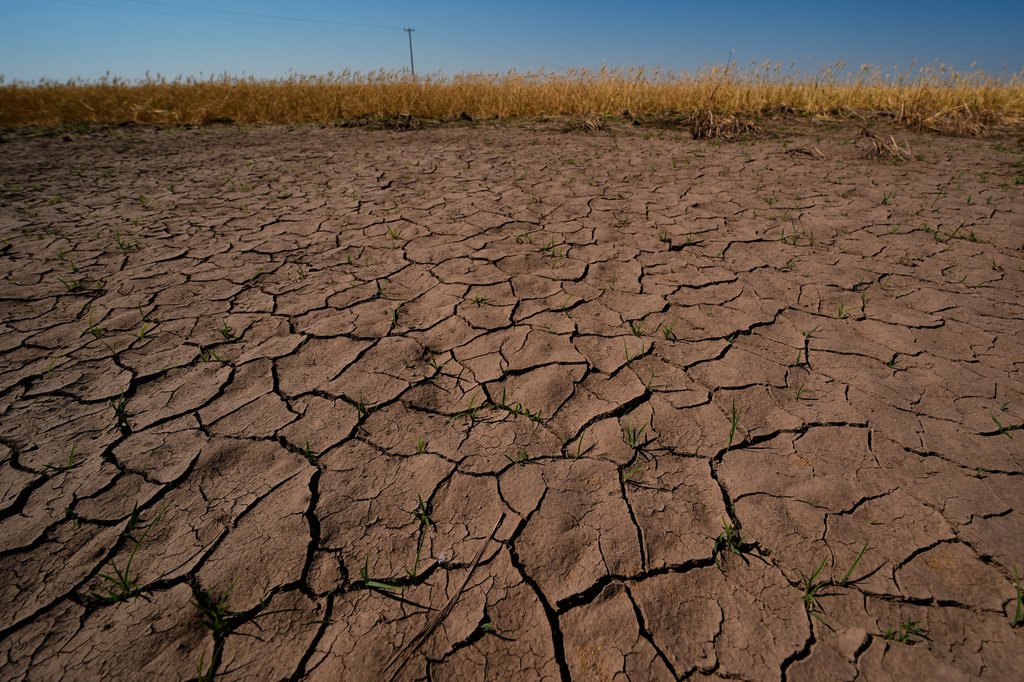
As drought conditions across the American West reach critical levels, a leading long-range forecaster is sounding the alarm: a supercharged El Niño could turn the region into a modern-day Dust Bowl. Paul Pastelok, AccuWeather's top long-range expert, warns that the combination of already severe dryness and a potentially historic El Niño this year raises the real possibility of a 'mini Dust Bowl' scenario.
According to the latest data from mid-July, large portions of Oregon, Idaho, Nevada, Wyoming, Utah, Colorado, New Mexico, Nebraska, Oklahoma, and the Texas Panhandle are experiencing 'extreme' to 'exceptional' drought—the two most severe categories on the U.S. Drought Monitor. For many of these states, the dry season is far from over, and the outlook is grim.
Pastelok noted that while El Niño typically brings wetter conditions to the southern tier of the U.S., its effects can be unpredictable. A super-strong El Niño, like the one scientists are predicting for this year, could shift weather patterns in ways that exacerbate drought in the Plains and Rocky Mountain states. 'If the long-term drought is as bad as it could be, and you are starting off already with severe drought, this raises the real possibility of a mini-Dust Bowl,' he said.
The warning comes as the region grapples with water shortages, failed crops, and increased wildfire risk. The Colorado River Basin, which supplies water to millions, is already under immense strain, with reservoirs like Lake Mead at historic lows. A prolonged drought could deepen the crisis, affecting agriculture, energy production, and urban water supplies.
Political leaders are under pressure to act. Some have pointed to the worsening conditions as evidence of climate change's accelerating impact, while others focus on water management reforms and federal aid. The situation has also reignited debates over agricultural subsidies and land use policies that may have left the region more vulnerable.
Pastelok's analysis suggests that even if El Niño brings some relief to the West Coast, the interior West could see little benefit. 'The Plains states are at risk of a multiyear drought cycle,' he said, noting that past super El Niños have triggered extended dry spells in the region. The potential for a 'mini Dust Bowl' echoes the catastrophic 1930s Dust Bowl, which devastated the Great Plains and displaced hundreds of thousands of people.
As the dry season continues, experts are closely watching for signs of worsening conditions. The National Oceanic and Atmospheric Administration (NOAA) has projected above-normal temperatures for much of the West through the fall, which could further parch the landscape. Meanwhile, the ongoing drought has already contributed to a spike in wildfires in states like California and Oregon.
The economic stakes are high. Agriculture in the affected states is a multi-billion-dollar industry, and prolonged drought could lead to crop failures, livestock losses, and higher food prices. Energy production, particularly hydroelectric power from the Colorado River, is also at risk.
For now, the region waits for the arrival of El Niño, which could either bring relief or deepen the crisis. As Pastelok put it, 'We're in a waiting game, but the odds are not in our favor.'