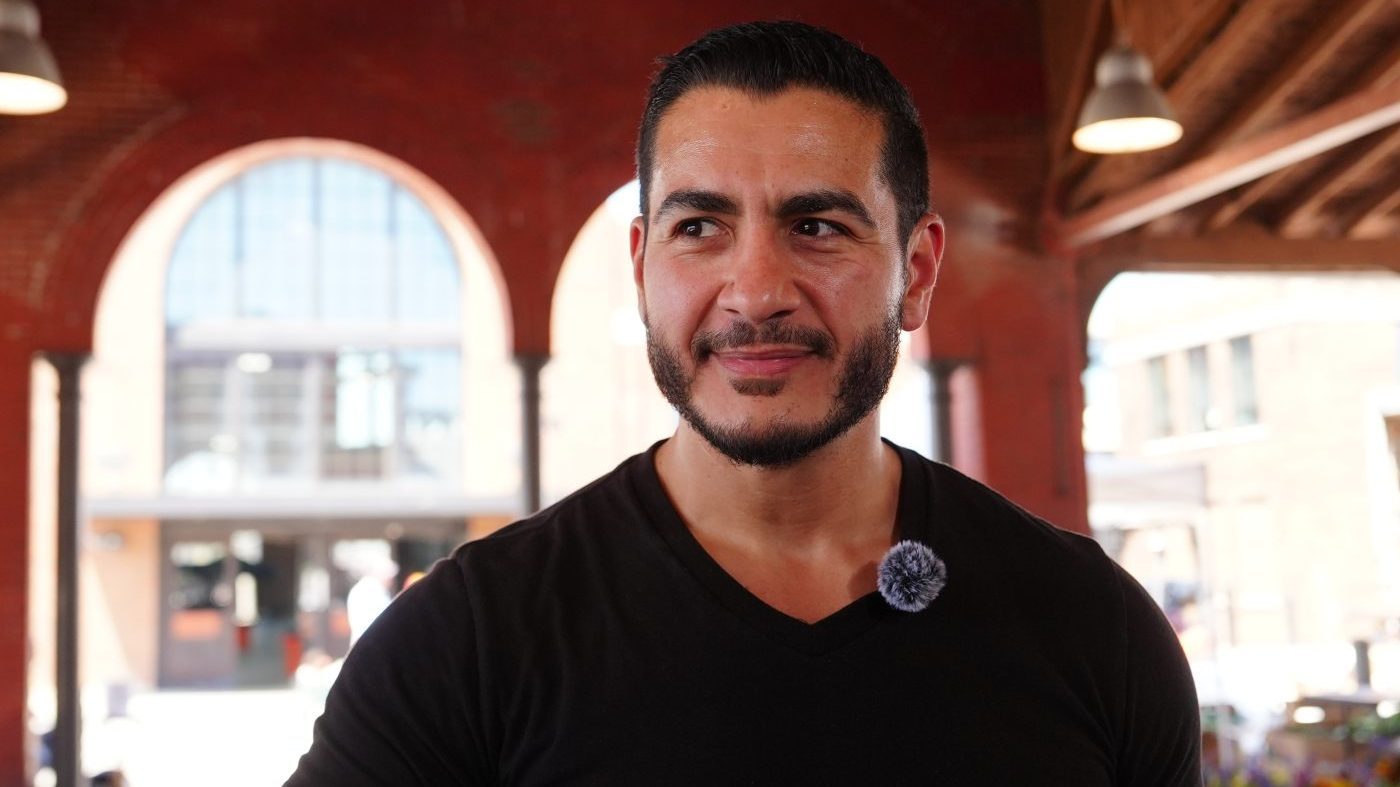
A fresh CNN/SSRS survey released Wednesday indicates that Democratic Senate hopefuls Troy Jackson in Maine and Abdul El-Sayed in Michigan are currently ahead of their Republican adversaries, though both leads sit within the margin of error as the midterm campaign enters its final stretch.
In Maine, Jackson, the former state Senate president, is backed by 48 percent of 880 registered voters, while five-term incumbent Senator Susan Collins trails at 45 percent. Four percent say they would back neither, and 3 percent favor another candidate. The survey's margin of error is plus or minus 3.7 percentage points.

Among the 839 Mainers who expressed a preference, 82 percent say their decision is firm. The remaining 18 percent either concede they could still be swayed or have yet to commit, according to the poll.
Jackson, who served as Maine Senate president for six years until 2024, is trying to unseat Collins, a Republican who has become a key target for Democrats. The race is one of several that could determine control of the Senate, where Democrats need a net gain of four seats to reclaim the majority.
In Michigan, El-Sayed, a progressive and former Wayne County health official, leads former GOP Representative Mike Rogers by 3 points, 47 percent to 44 percent, among 843 registered voters. Five percent back neither, and 3 percent support another candidate. The margin of error there is 4.1 percentage points.
The Wolverine State contest is more fluid, the poll suggests, with more than a quarter of those who have chosen a candidate saying they might change their mind or have not settled on one. El-Sayed and Rogers are competing to succeed retiring Democratic Senator Gary Peters, who has held the seat for two terms.
Though Republicans have not won a Michigan Senate race since Spencer Abraham in 1994, Donald Trump carried the state twice in his three presidential bids, underscoring the GOP's potential in the state. The race has drawn national attention, with recent campaign events highlighting the sharp ideological contrasts.
El-Sayed's progressive platform has made him a flashpoint in the party's broader ideological struggle, as democratic socialists gain influence and generational shifts reshape Democratic primaries. His campaign has also faced scrutiny over his association with controversial online figures, a topic that has generated media debate.
According to Decision Desk HQ (DDHQ), Jackson and El-Sayed currently have 53 percent and 66 percent chances of winning their races, respectively. DDHQ now gives Democrats a slightly better than even odds to take the Senate, a notable shift from late July, when Republicans were favored with a 60 percent probability of retaining control.
The Maine and Michigan contests are pivotal in the national battle for the upper chamber. With less than two months to go, both races remain tight, and the outcome could hinge on late-breaking voters.