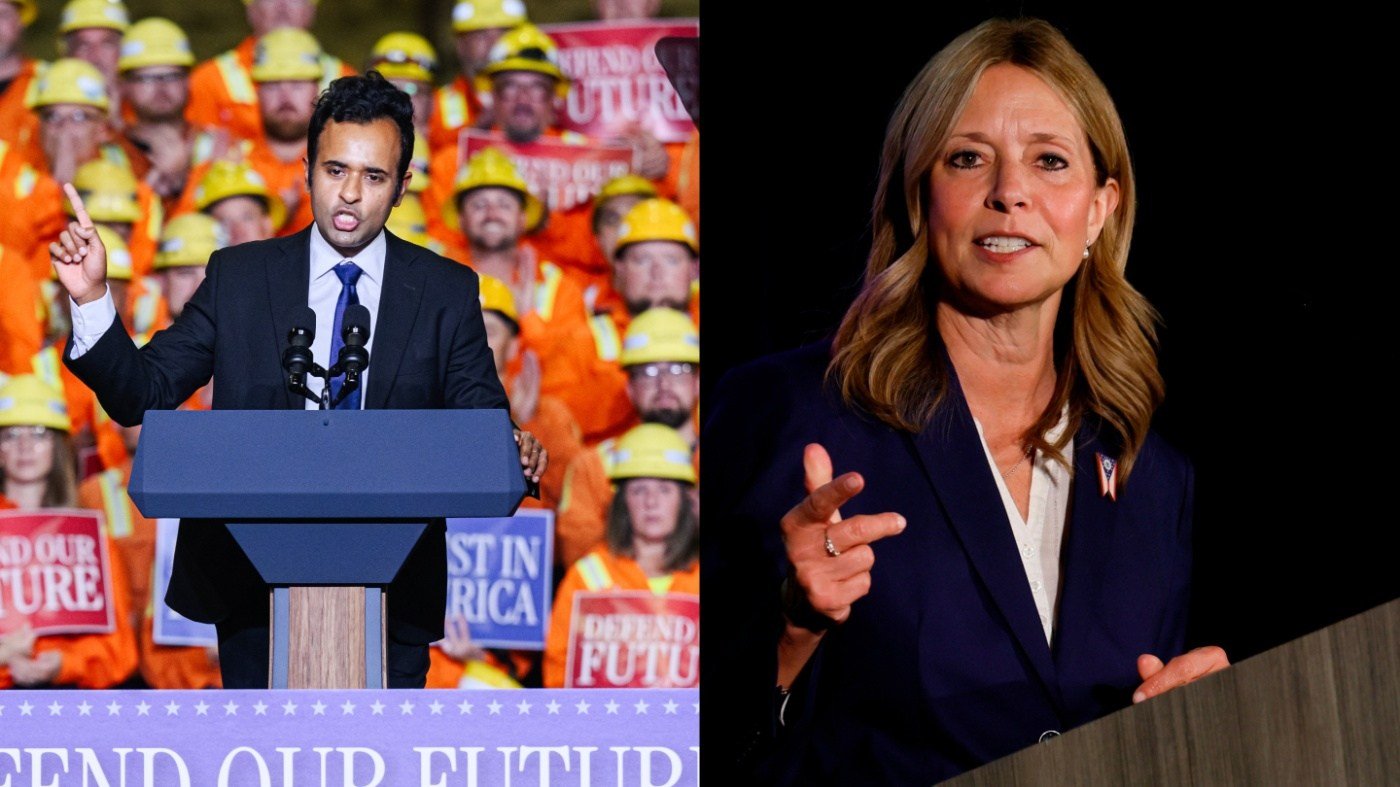
The Cook Political Report has shifted its rating for Ohio's gubernatorial race, moving it from a toss-up to leaning Democratic after a controversial advertisement upended the contest. The nonpartisan forecaster now favors Democrat Amy Acton over Republican Vivek Ramaswamy in the Buckeye State.
Ramaswamy's campaign recently launched an ad featuring Acton's estranged mother, who calls Acton a "liar" and urges voters to reject her. Acton was removed from her mother's custody at age 12; her campaign says she was sexually abused by her stepfather, with whom her mother remained until his death. The ad has drawn widespread condemnation from Democrats and even some Republicans, including Ohio's current governor, Mike DeWine. However, both President Trump and Vice President Vance have defended the ad vigorously.
Jessica Taylor, Cook's Senate and governor's editor, noted that GOP sources are largely critical of the move. "We haven't talked to a GOP source who thought this was a good idea," Taylor wrote. "This is not the kind of TV ad you run if you're winning — or even if you're confident you can. Recent polls were trending in Acton's direction even before the bombshell ad became a national news story."
Cook's own polling, conducted before the ad aired, showed Acton leading Ramaswamy by five points. Sabato's Crystal Ball, another nonpartisan election forecaster, also shifted its rating from "toss up" to "leans Democratic" earlier this week. Decision Desk HQ, a partner of The Hill, gives Acton a 62 percent chance of victory.
The ad's backlash appears to have boosted Acton's fundraising, while Ramaswamy's campaign is spending $4 million to keep it on the air. The race has become a national flashpoint, drawing attention to the role of personal attacks in modern campaigns. Some GOP strategists worry the ad could alienate swing voters, particularly suburban women, in a state that has trended Republican in recent cycles.
Acton, a former public health official who gained prominence during the COVID-19 pandemic, has focused her campaign on healthcare and economic issues. Ramaswamy, a biotech entrepreneur and political newcomer, has positioned himself as a Trump-aligned outsider. The shift in ratings reflects broader concerns about the ad's impact on his viability.
Political analysts note that Ohio remains a competitive state, and the race is far from decided. However, the ad's timing—just weeks before the election—could prove pivotal. As voter outreach efforts intensify, both campaigns are mobilizing their bases. The controversy also echoes other recent races where personal history has become a central issue, such as independent candidates shaking up party dynamics.
For now, the Cook shift signals that the ad may have backfired, but with several weeks left, the race remains fluid. Acton's campaign is capitalizing on the moment, while Ramaswamy's team defends its strategy. As one GOP operative put it, "This is a gamble that could cost him the election."