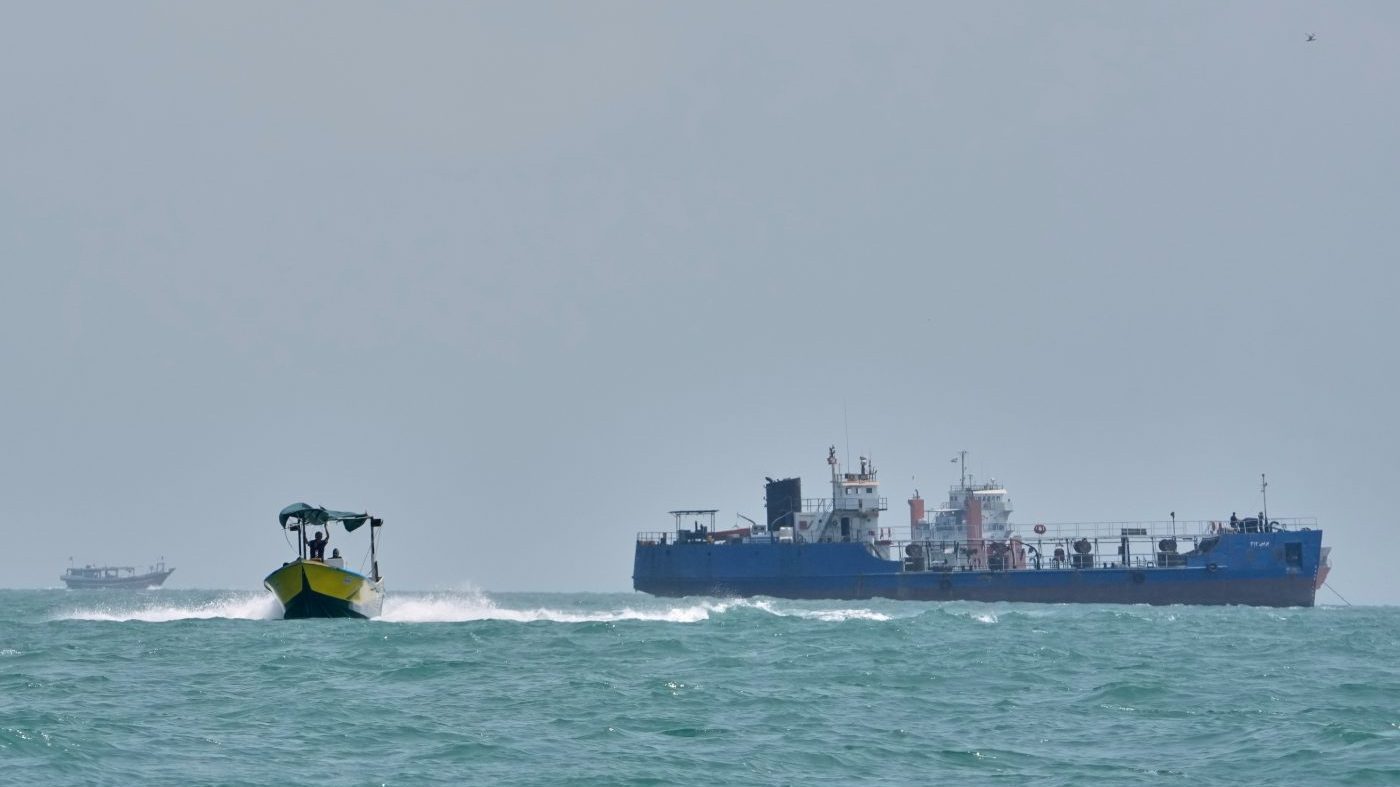
Tehran announced on Wednesday that its forces had struck ten ships near the Strait of Hormuz, including two American warships and eight oil tankers, in direct retaliation for the U.S. military's destruction of five Iranian oil tankers a day earlier. The Islamic Revolutionary Guard Corps (IRGC) said the vessels were targeted as they tried to transit an area that Iran had declared off-limits.
The IRGC also launched ballistic missiles at a U.S. base in eastern Jordan, marking a significant escalation in the ongoing confrontation. These tit-for-tat strikes come after the Pentagon confirmed that U.S. forces had sunk the Iranian tankers in the Gulf of Oman and near Kharg Island. The U.S. military said the action was taken after Iran twice attempted to hit a Navy warship with ballistic missiles in the preceding days.

The latest exchange is another sharp uptick in the six-month-old conflict that has severely disrupted the vital shipping lane. Iran has restricted traffic through the strait as part of its retaliatory strategy, and the renewed hostilities have sent shockwaves through global energy markets. The international Brent crude benchmark surged past $100 a barrel for the first time since July, a spike that President Trump downplayed earlier this week, claiming prices would fall significantly once the war concluded.
U.S. Central Command (Centcom) swiftly rejected Iran's assertion that it successfully struck the two American destroyers. In a statement posted online, Centcom declared, "Iran's Islamic Revolutionary Guard Corps (IRGC) forces have claimed they struck two U.S. Navy destroyers operating in the Middle East. This is completely FALSE. No U.S. Navy warship has been struck; all IRGC attempted attacks failed." The command added that U.S. forces had destroyed ten Iranian tankers over the past week.
Secretary of State Marco Rubio reinforced the U.S. stance, warning that Washington would continue to target Iranian tankers in response to any attempts to hit American naval vessels. "Iran continues to try to hit U.S. naval ships, and for every time they do that or try to do that, they're going to lose tankers," Rubio told reporters during a visit to Colombia, according to Reuters.
The developments have intensified concerns about a broader regional war. The fresh U.S. strikes on IRGC targets have already drawn threats of further retaliation from Tehran. Meanwhile, Iran's missile and drone attacks on U.S. bases in Jordan and the UAE have underscored the widening scope of the conflict.
Analysts say the oil price spike reflects deep market anxiety about the stability of the region, but a military stalemate persists, with neither side able to land a decisive blow. The situation remains fluid, and the risk of miscalculation is high.