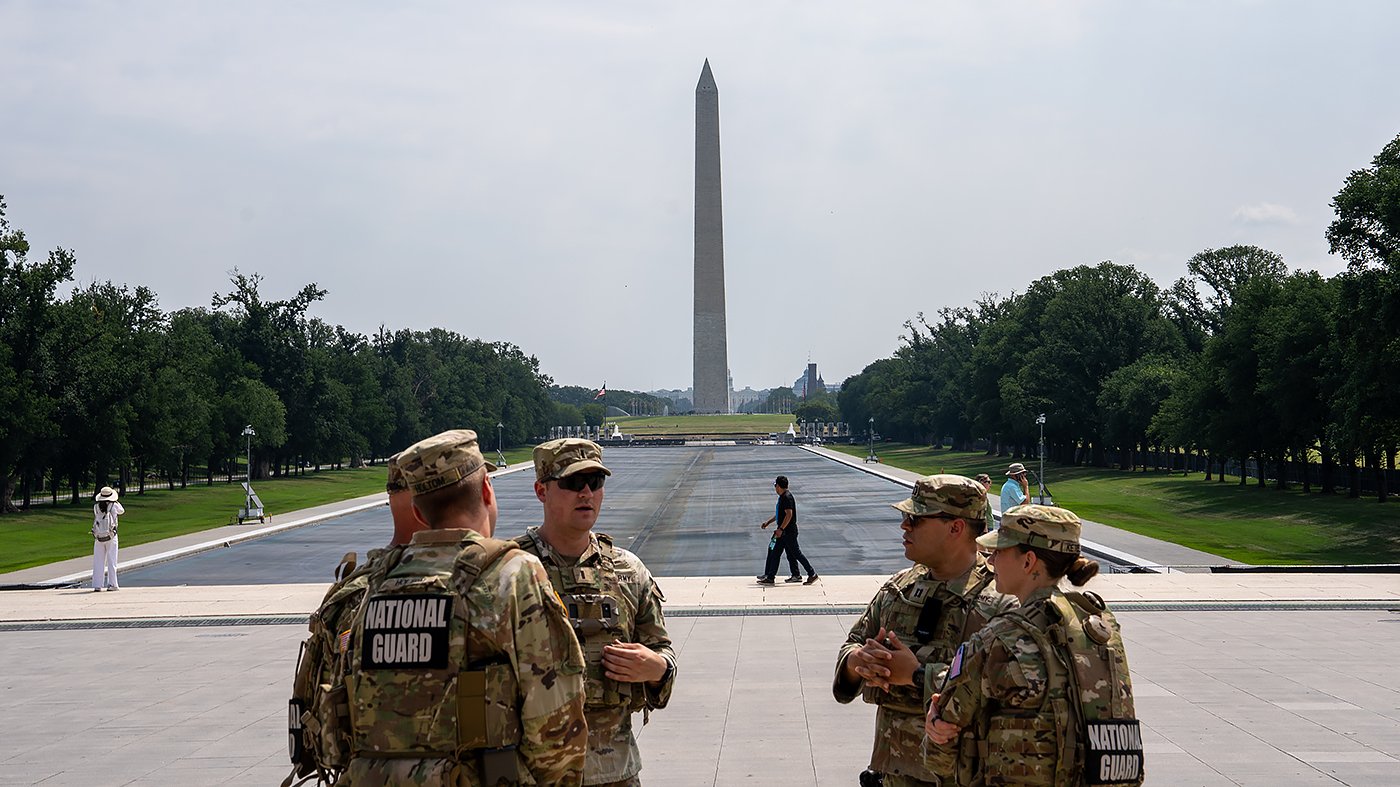
The National Guard announced Thursday a $292 million contract to provide up to 2,000 apartment-style lodging units for service members stationed in Washington, D.C. The deal, awarded to corporate lodging firm Placemakr, is the largest interagency housing acquisition in the Guard's history.
Placemakr, which previously partnered with Hilton on a Phoenix apartment project, will manage the units. The announcement, however, has drawn criticism from local activists who point to the lack of a stated end date for the deployment or the contract itself.

A Guard official confirmed to The Hill in July that the Pentagon expects to maintain a National Guard presence until Inauguration Day 2029, pending approval from Defense Secretary Pete Hegseth. That timeline means troops could remain in the capital for years unless the president orders otherwise. Hegseth has expressed support for the mission, thanking service members during a July visit.
The deployment stems from Executive Order 14252, which created the D.C. Safe and Beautiful Task Force. President Trump and other officials have framed the operation as a crime-reduction and beautification effort. The Guard claims troops have performed over 530 medical assists and reunited 27 children with their families, while supporting law enforcement.
Nearly 5,150 Guard members are currently in D.C., including 599 from the D.C. National Guard and 4,403 from 21 states, Puerto Rico, and the U.S. Virgin Islands. The deployment has been underway for about 11 months.
The contract was completed in 85 days, which the Guard says is faster than typical timelines, though it faced an agency-level vendor protest. The nonpartisan Congressional Budget Office has estimated the deployment costs at $3 million per day. Separately, Sens. Gary Peters (D-Mich.) and Andy Kim (D-N.J.) reported in February that taxpayers are shouldering nearly $1.65 million daily.
The Guard claims this lodging deal is nearly 50 percent cheaper than using commercial hotels. The arrangement is part of a broader push to manage the financial and logistical footprint of a long-term military presence in the capital. For context, the Pentagon has also faced scrutiny over other security-related costs, including a surge in Secret Service threat investigations and a negligence claim from a bystander shot near the White House.
Meanwhile, the Guard's role in domestic operations continues to expand, as seen in recent deployments for West Virginia flood relief. The D.C. housing contract, however, underscores the growing permanence of a military presence in the nation's capital, a trend that raises questions about cost, oversight, and civil-military balance.