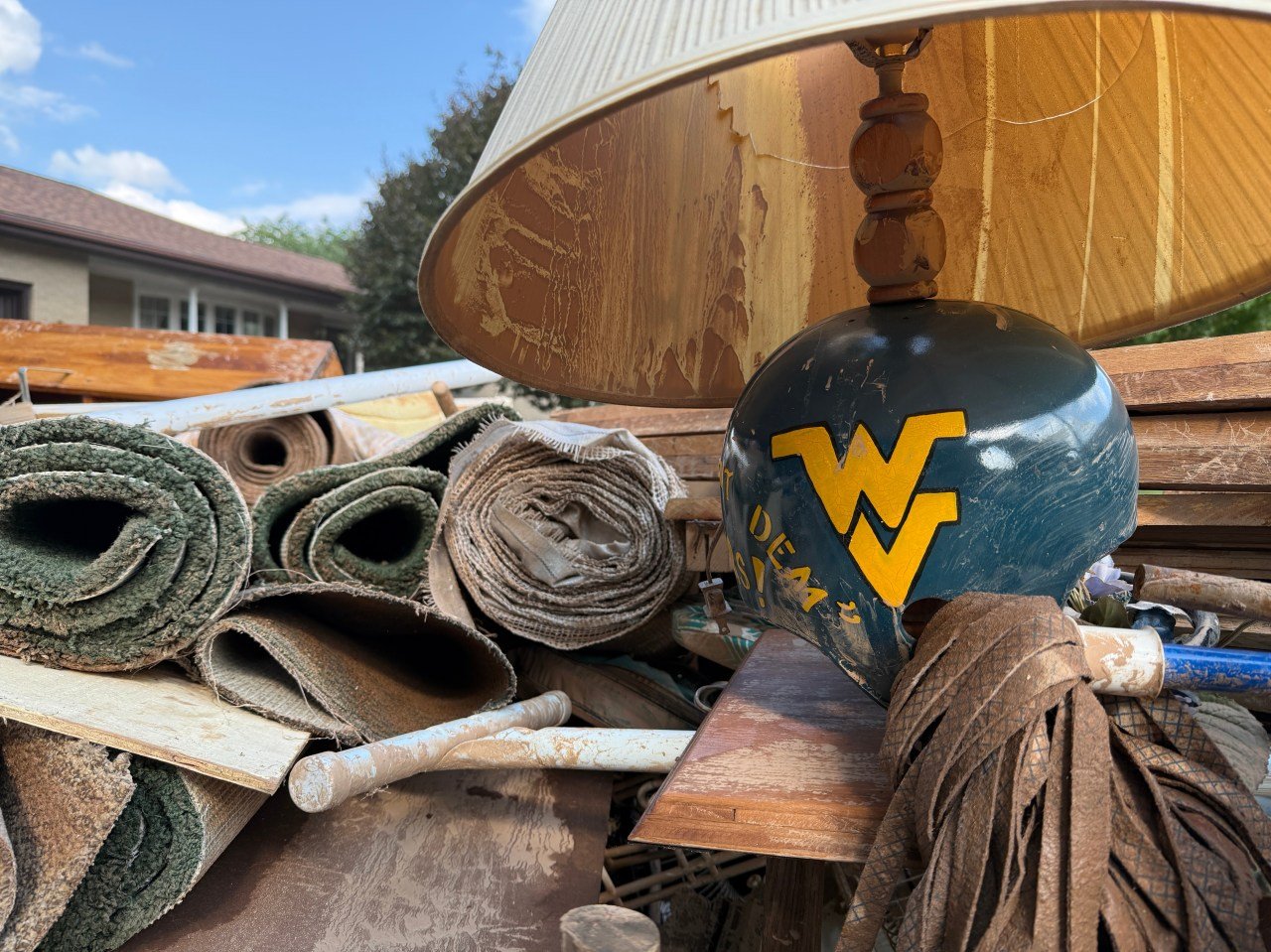
CHARLESTON, W.Va. — A relentless deluge has triggered catastrophic flash flooding across northern West Virginia, submerging homes and businesses, collapsing bridges, and forcing emergency crews into a frantic rescue operation that continues into Wednesday. Governor Patrick Morrisey has deployed hundreds of National Guard troops to the hardest-hit communities and declared a state of emergency for all 55 counties.
The governor reported that state Division of Natural Resources personnel have carried out at least 85 rescues, with 19 National Guard and state police helicopters either actively pulling people from danger or standing ready for immediate deployment. Three shelters have been opened, housing more than 100 displaced residents.

When pressed on whether anyone remains missing, Morrisey acknowledged the grim possibility. “We don’t have an exact number but we are concerned about fatalities,” he said during a news conference. Officials are working to verify any deaths before releasing details, according to Lars Dalseide, the governor’s communications director, who stressed that established procedures must be followed to ensure accuracy.
The storm dumped up to 7 inches (18 centimeters) of rain, with some areas receiving 4.5 inches (11.4 centimeters) in just 37 minutes. “There’s no place for the water to go,” Morrisey said, noting that the ground was already saturated from earlier storms that had dropped more than 2 inches (5 centimeters) on Saturday. The flooding has forced closures of portions of Interstate 79, U.S. Route 48, and numerous secondary roads.
Social media images captured the extent of the inundation: vehicles submerged in parking lots, muddy water pouring into a Walmart in Weston, and a hotel’s ground floor entirely flooded. Emergency crews reported dozens of rescues of people trapped in submerged cars, but some areas remained inaccessible because floodwaters had cut off roads. This crisis echoes the devastating floods in other parts of the country, such as the recent Texas floods that killed two and left hundreds rescued in a region still recovering from prior disasters.
In Buckhannon, Mayor Robbie Skinner described the scene as heartbreaking. “This is not something you want to see in your hometown. But we will get past it. We will get through it,” he said. Officials are still waiting for floodwaters to recede before designating drop-off points for donated supplies; one planned location is West Virginia Wesleyan College.
The storms were part of a broader weather system stretching from Ohio to the New York City suburbs, which also spawned tornado reports. Damage from a suspected tornado was reported near St. Marys and Belmont in West Virginia. The flooding comes exactly a decade after a similar disaster in the same region claimed 23 lives. A U.S. Geological Survey gauge on Sand Run, a creek tributary near Buckhannon, recorded a record water level, surpassing the mark set during the November 1985 flood that killed 47 people statewide.
Lewis County Commissioner Agnes Quinn Queen described the destruction as extensive. Emergency service channels were buzzing with activity late Tuesday night as first responders conducted water rescues into Wednesday morning. The disaster has sparked discussion about the role of the National Guard in domestic emergencies, a topic explored in the Defend the Guard movement, which advocates for restoring the Guard to its domestic roots.
Governor Morrisey called for unity and resilience. “This is a time for West Virginians to come together to do everything possible, not only to pray for all those who are affected, but we’re going to need a lot of help in the days and weeks ahead,” he said. “Let’s help these communities rebuild.” The National Guard deployment underscores the severity of the situation, as the state braces for a prolonged recovery effort reminiscent of the challenges faced by Hill Country camps on high alert as floods return, echoing the 2025 disaster.