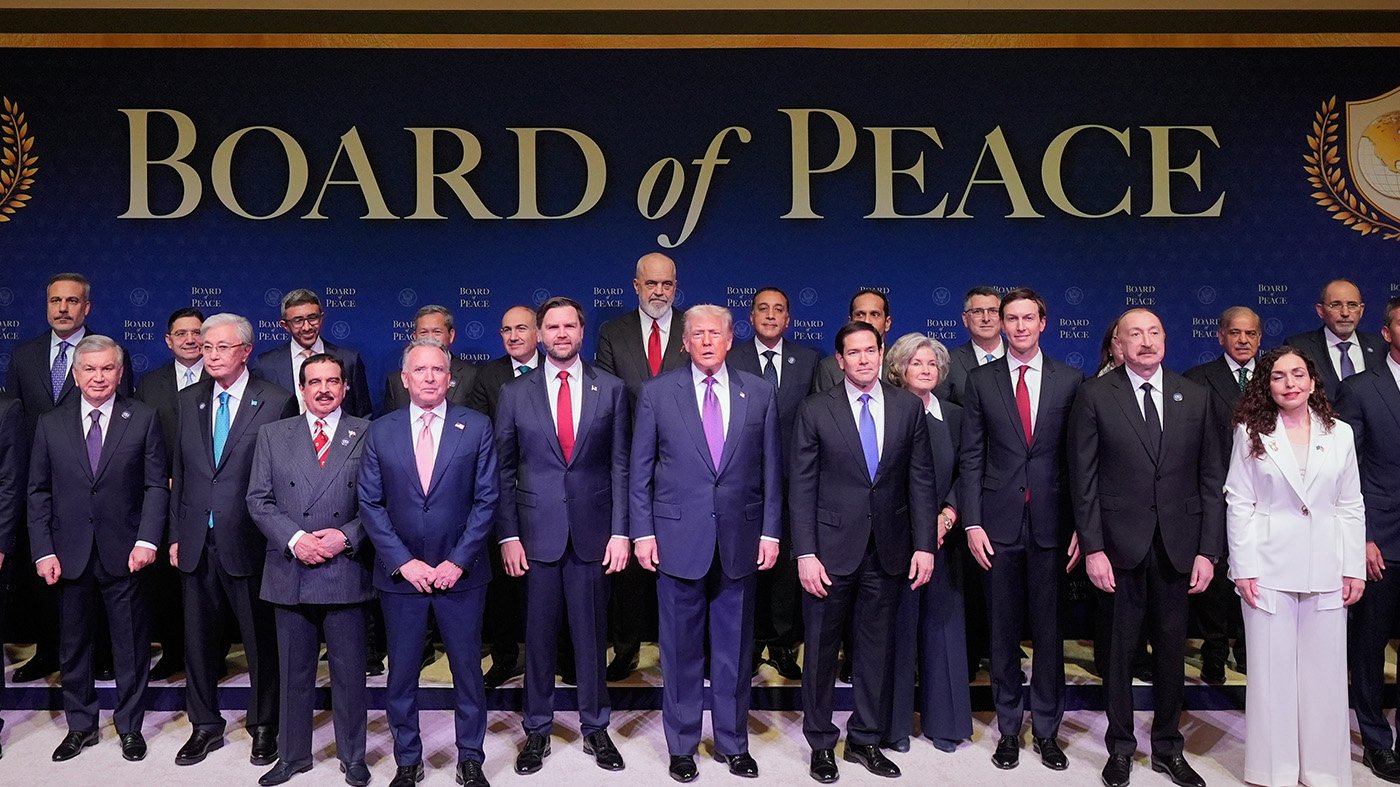
President Trump's high-profile Board of Peace is under increasing scrutiny over its funding sources and destinations, even as its marquee project—a U.S.-led peace plan for Gaza—remains stalled amid significant obstacles. The board, unveiled with much fanfare, has raised questions about transparency and effectiveness.
At a February signing ceremony, Trump announced a U.S. pledge of $10 billion for Gaza's reconstruction and claimed commitments of over $7 billion more. However, the World Bank estimates the total cost of rebuilding Gaza exceeds $70 billion. The Financial Times reported in May that a World Bank account set up to receive funds had received no money, with countries instead depositing into a private JPMorgan account. A Board of Peace official told The Hill that the organization has collected "hundreds of millions of dollars," far short of the initial $17 billion pledge.
Secretary of State Marco Rubio, facing questions from Democrats, confirmed last week that no U.S. funds have been deposited into accounts designated for donations. Under questioning from Senator Jacky Rosen (D-Nev.), Rubio said Congress would "ultimately" oversee funds flowing to the Board of Peace, especially U.S. dollars. Rosen expressed dissatisfaction, stating in an email that "the Secretary's response raised more questions than it answered" and called for a briefing.
Rosen also asked Rubio whether money in the JPMorgan account could be used to compensate Trump or his family. Rubio replied, "No one's talking about doing that." Senator Catherine Cortez Masto (D-Nev.) has introduced legislation to block the State Department from transferring $1 billion in fiscal year 2026 funds to the board, redirecting it to low-income housing and energy assistance. She criticized the board as a "slush fund for themselves" amid rising costs.
The Board of Peace was created by Trump in November as part of a deal to end the Israel-Hamas war and implement a 20-point peace plan for Gaza. Endorsed by the UN, Trump expanded its mandate in January to address global conflicts, appointed himself as permanent chairman, and solicited $1 billion donations for lifetime membership. The board operates from the former U.S. Institute of Peace building, now rebranded with Trump's name, though a lawsuit by former USIP staff challenges the takeover.
Staff include Brad Klapper as communications director, Aryeh Lightstone as senior adviser, and Jason Olson as director of deradicalization. However, experts say the staff lack decision-making power. Ahmed Fouad Alkhatib of the Atlantic Council noted a "total disconnect" between the board's mandate and on-the-ground operations, citing a gutted State Department and closed USAID. "With no administrative or organizational infrastructure, the Board will never succeed," he said.
The board also suffers from a lack of attention from senior Trump officials focused on the war with Iran and Israel-Hezbollah conflicts. Natan Sachs of the Middle East Institute said Trump's leverage over Israel and influence on Hamas are essential but doubted optimism. "Attention span is not a feature of our administration," he said.
Rubio pushed back against Democratic criticisms in a June 2 House Appropriations Committee hearing, insisting the administration has not forgotten Gaza. As questions persist, the board's future remains uncertain amid funding gaps and political distractions.