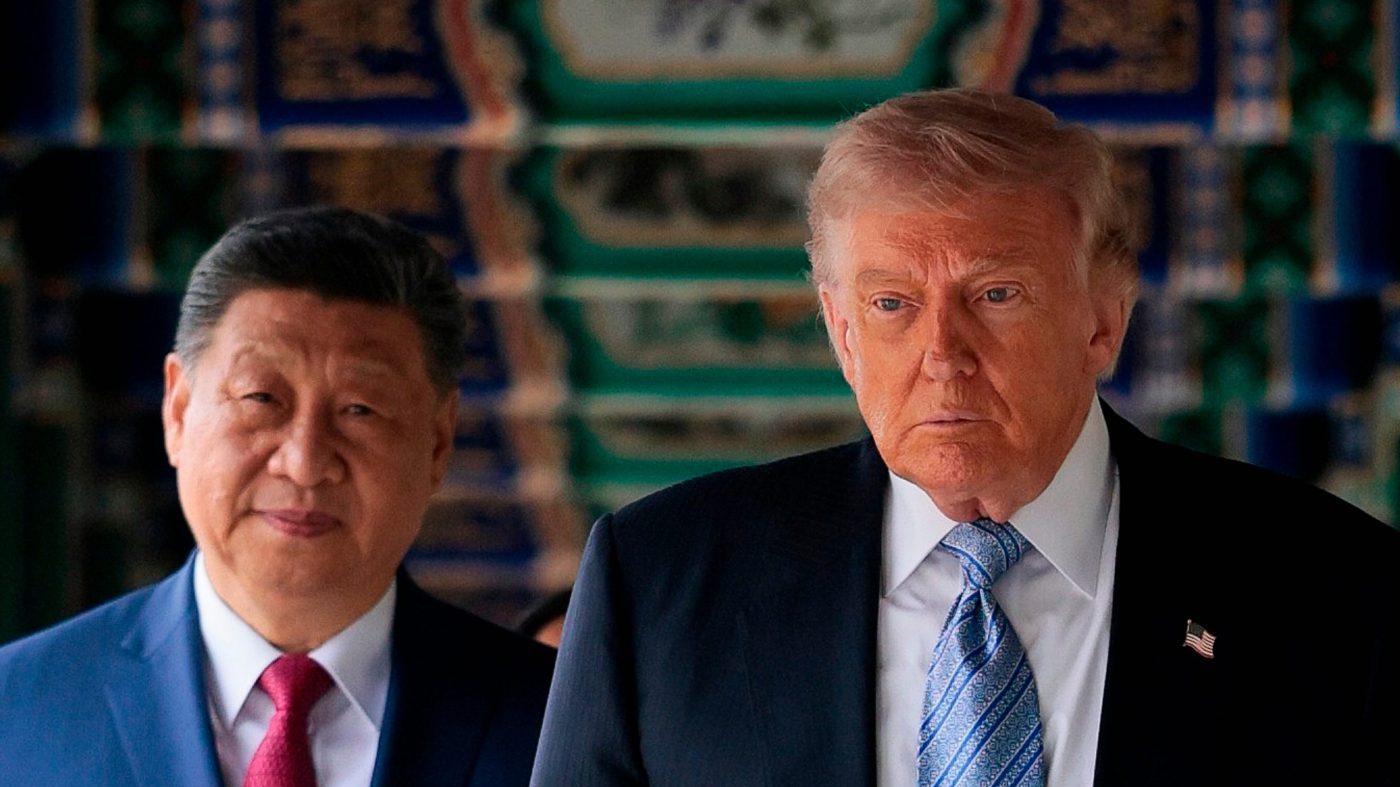
President Trump wrapped up his most consequential foreign trip of his second term on Friday, returning to Washington from China after a visit marked by grand ceremony but little substantive progress. The meeting with Chinese President Xi Jinping featured elaborate pageantry, yet underlying tensions over the Iran war, Taiwan's status, and trade imbalances were unmistakable.
Trump's approval ratings have sagged at home, partly due to the ongoing conflict with Iran, which began with a U.S.-Israeli military campaign on Feb. 28. The trip had been postponed six weeks earlier because of that war. While Trump appeared to relish the high-profile diplomatic stage, the visit yielded no clear achievements to tout.
No Breakthrough on Iran
The central issue for Washington was pressing Beijing to lean on Tehran to reopen the Strait of Hormuz and adopt a more conciliatory stance in negotiations. But China experts had predicted Beijing would not act out of goodwill alone. The best-case scenario was a bargaining process, but no agreement emerged from the summit. China's official readouts barely mentioned Iran, and Trump offered only generalities about wanting the strait open. On Air Force One, Trump said, "I am not asking for any favors because when you ask for favors you have to do favors in return. We don't need favors," adding that Xi would "automatically" pressure Tehran. This left Trump without a signature achievement from the trip.
Sharp Warning on Taiwan
The Taiwan issue remains a flashpoint. China considers the island a breakaway territory and has threatened force to integrate it. The U.S. maintains a policy of "strategic ambiguity," neither endorsing nor fully challenging China's claim. During Trump's visit, a Chinese foreign ministry spokesperson called Taiwan "the most important issue in China-U.S. relations," warning that mishandling it could lead to "clashes and even conflicts." Trump said little on Chinese soil about Taiwan, but later noted he hadn't decided on a pending U.S.-Taiwan arms deal. Secretary of State Marco Rubio dismissed the topic as routine, telling NBC News, "They always raise it on their side. We always make clear our position, and we move on."
China as an Equal Partner
A striking feature of the summit was how Xi and his team projected themselves as co-equals with the U.S. Trump, who typically dominates bilateral meetings, at times sounded deferential. He called Xi a "great leader" and noted he often gets criticized for praising the Chinese president. Xi, in turn, spoke of a "once in a century transformation" in world affairs—diplomatic code for the belief that U.S. dominance is waning. Trump took to social media to address this, insisting Xi was referring to "tremendous damage" from the Biden administration and that Xi had congratulated him on his successes.
Business Deals and Open Door
Trump was accompanied by top U.S. CEOs, including Elon Musk, Tim Cook, and Jensen Huang, underscoring the importance of the Chinese market. Xi promised that "China's door will only open wider," but concrete outcomes were thin. The visit did little to resolve the core tensions, leaving the relationship on a steadier footing but without the headlines Trump craves.