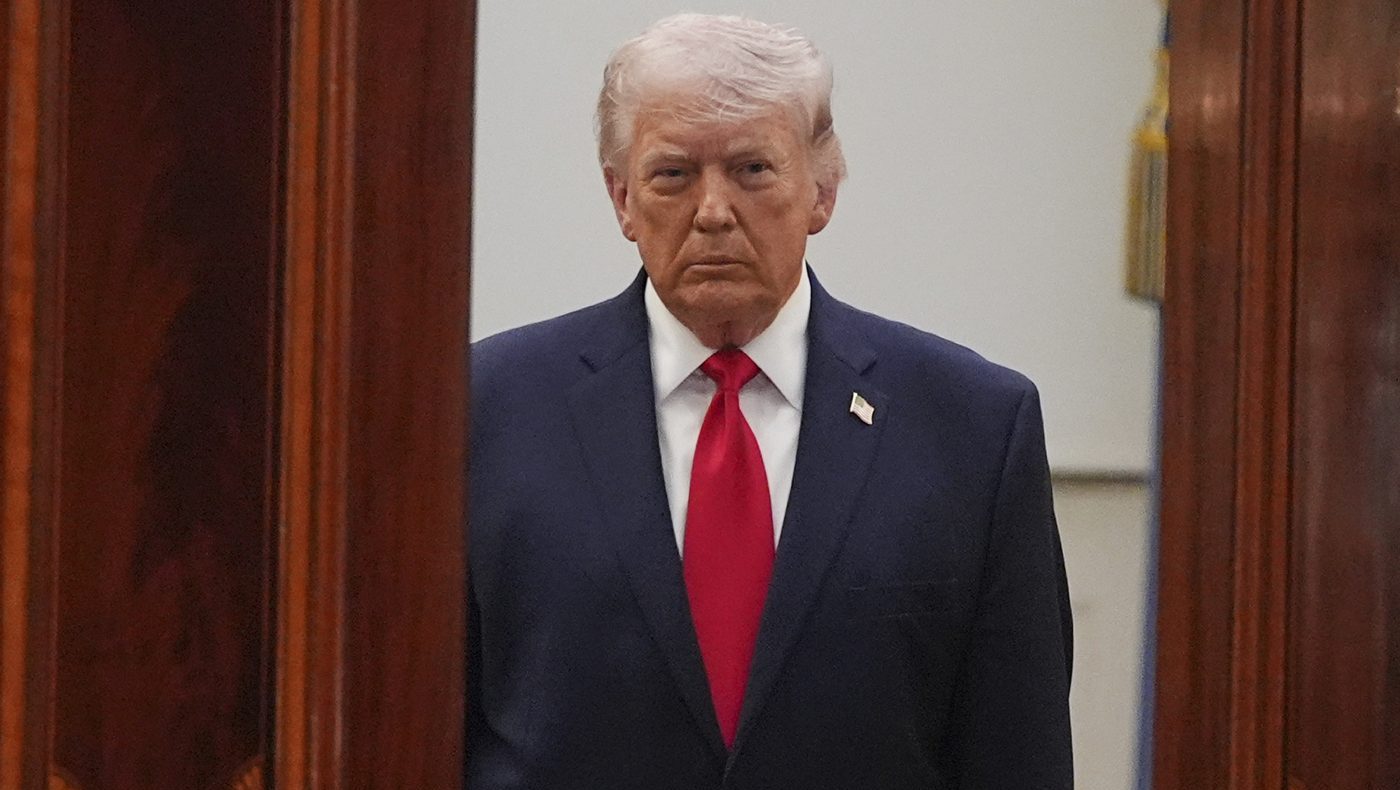
President Donald Trump issued a direct and urgent warning to Iran on Saturday, declaring that time is running out for the Islamic Republic to reach an agreement with the United States before facing a major military escalation. In a post on his Truth Social platform, Trump referenced a previous ten-day deadline, stating the window had narrowed to just 48 hours before "all Hell will reign down on them." The threat punctuated the message with a religious invocation.
Military Losses Prompt Presidential Ultimatum
The president's latest warning follows significant combat losses for U.S. forces on Friday. Iranian air defenses successfully engaged two American fighter jets. An F-15E Strike Eagle was shot down within Iranian airspace, forcing both crew members to eject. While one service member has been recovered, the status of the other remains unknown, triggering an extensive search-and-rescue operation. In a separate incident, an A-10 Warthog attack aircraft was struck and crashed after reportedly entering Kuwaiti airspace; its pilot was rescued.

These engagements occurred just one day after Trump claimed in a national address that U.S. operations had successfully neutralized Iran's anti-aircraft capabilities. The downings also resulted in the loss of a U.S. Air Force UH-60 Black Hawk helicopter and a second search-and-rescue helicopter that were hit during the recovery mission for the F-15E crew.
Congressional Criticism and Warnings of Deception
The aircraft losses drew sharp rebuke from congressional Democrats, who argued the events demonstrate a failing strategy. Representative Seth Moulton (D-Mass.) stated the incidents prove "Iran is winning the war" and accused the president of being "way in over his head." Moulton charged that Trump has "no idea what he's doing, and he's lying to us once again" about the state of the conflict and Iranian defenses. This criticism echoes broader Democratic concerns about the administration's transparency and strategic competence, as seen when Senator Bernie Sanders demanded congressional action following a previous Trump threat.
Trump's rhetoric has intensified throughout the week. On Thursday, following a U.S. strike that damaged the B1 bridge near Tehran, he threatened further attacks on Iranian infrastructure, declaring the military "hasn't even started destroying what's left in Iran." He demanded on social media that Iran "MAKE A DEAL BEFORE IT IS TOO LATE." This pattern of combining military action with public ultimatums has been a hallmark of the administration's approach, which some analysts criticize as a diplomatic liability.
Strategic Stakes and Economic Pressure
The core U.S. demand, reiterated in Trump's Saturday post, is for Iran to reopen the Strait of Hormuz, a critical global oil chokepoint whose closure has triggered a sharp rise in gas and oil prices. The president has linked the military campaign directly to this economic pressure. Last week, he agreed to a Pentagon pause on striking Iranian energy infrastructure until April 6, following a request from Tehran, suggesting a potential, albeit fleeting, diplomatic opening.
In his Wednesday address to the nation, Trump asserted the military operation was "near completion," a claim now challenged by the recent aircraft losses and his own escalating threats. The administration's financial maneuvers are also under scrutiny, as with the DOJ's settlement with former National Security Advisor Michael Flynn, highlighting concerns over politically motivated expenditures during the conflict.
Broader Regional and Economic Implications
The confrontation extends beyond bilateral exchanges. Israeli forces have conducted strikes on Iranian infrastructure, including its largest petrochemical facility, as the U.S. deadline looms, indicating coordinated pressure. The economic ramifications are profound. JPMorgan Chase CEO Jamie Dimon has warned that prolonged conflict could trigger a recession through sustained inflation and subsequent interest rate hikes, posing a significant risk to the global economy.
As the 48-hour clock ticks down, the situation remains volatile. The president's ultimatum sets the stage for a potential dramatic escalation or a last-minute negotiation. The loss of advanced U.S. aircraft to Iranian defenses, however, complicates the narrative of overwhelming American superiority and raises serious questions about the operational challenges and costs of a prolonged campaign, even as Trump vows to unleash "all hell."