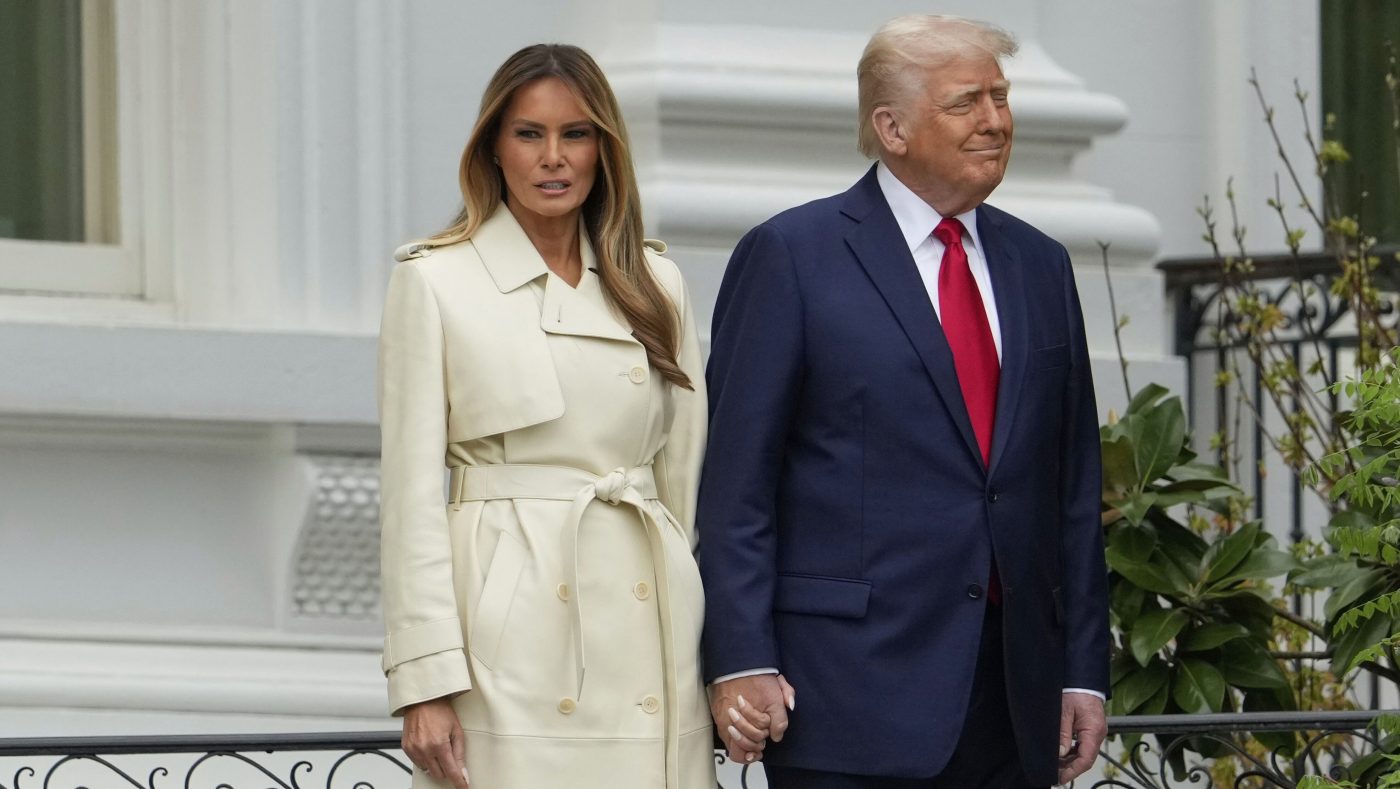
President Donald Trump and First Lady Melania Trump are presiding over the White House Easter Egg Roll on Monday, a spring tradition that marks one of the administration's major public social events. The gathering on the South Lawn represents a blend of cultural ceremony and political messaging, coming during a period of significant international tension and domestic political maneuvering.
A Platform for Cultural and Political Themes
In his remarks opening the event, President Trump revisited a theme from last year's celebration, declaring that a religious revival is underway in the United States. "Faith is coming back to America," he stated, framing the Easter observance within his broader cultural agenda. This emphasis aligns with a consistent pillar of his political rhetoric and policy appeals to his conservative base.
The event's history stretches back to 1878 under President Rutherford B. Hayes, establishing it as one of the oldest annual White House traditions. Notably, it operates without direct taxpayer funding. Financial support is provided by the American Egg Board and a roster of corporate sponsors, which this year includes technology behemoths YouTube, Meta, and Amazon. Their involvement highlights the continuing, if sometimes fraught, relationship between Silicon Valley and the Trump administration.
Context of a Busy Political Landscape
The Easter Roll occurs against a backdrop of pressing political challenges for the administration. Foreign policy, particularly concerning Iran, remains a dominant focus. The administration is concurrently managing a critical deadline in its standoff with Tehran, which has rejected a series of U.S. demands. This diplomatic pressure is underscored by the President's own public ultimatums delivered via social media, threatening severe consequences if Iran does not comply.
Domestically, the administration faces legislative and political headwinds. Congress is actively challenging executive authority, as seen when the House forced a vote on extending Temporary Protected Status for Haitian nationals, directly opposing the administration's immigration stance. Furthermore, internal Republican Party dynamics are evolving, with discussions beginning to surface about a potential post-Trump era and the future direction of the GOP.
Ceremony Amidst Controversy and Division
While the Egg Roll presents an image of festivity, it is not insulated from the nation's political divisions. The administration's policies continue to spark protest movements, both domestically and internationally. High-profile cultural figures have lent their voices to opposition, exemplified by events like a major rally headlined by Bruce Springsteen that framed its message in direct contrast to the President's agenda.
Internationally, adversarial states have adapted new methods to challenge U.S. leadership. Iran, for instance, has reportedly employed sophisticated digital tactics, including AI-generated memes as part of its propaganda war against the Trump administration. These developments underscore how traditional political ceremonies exist alongside modern, asymmetric conflicts.
The live broadcast of the event offers the public a view into a White House striving to project normalcy and tradition. However, the surrounding context—from corporate sponsorship debates and foreign policy crises to domestic political friction—reveals the complex layers of governance and public engagement defining the current political moment. The Egg Roll, therefore, serves as more than a children's event; it is a strategically timed appearance that reinforces the President's connection to cultural conservatives while his administration navigates a multitude of other pressing fronts.