President Trump dismissed the necessity for any fallback strategy in the precarious peace negotiations with Iran on Friday, asserting American military actions have rendered Tehran incapable of resistance. The remarks came as Vice President J.D. Vance embarked for Pakistan to spearhead high-stakes talks aimed at securing a lasting agreement.
"No Backup Plan" Amid Fragile Ceasefire
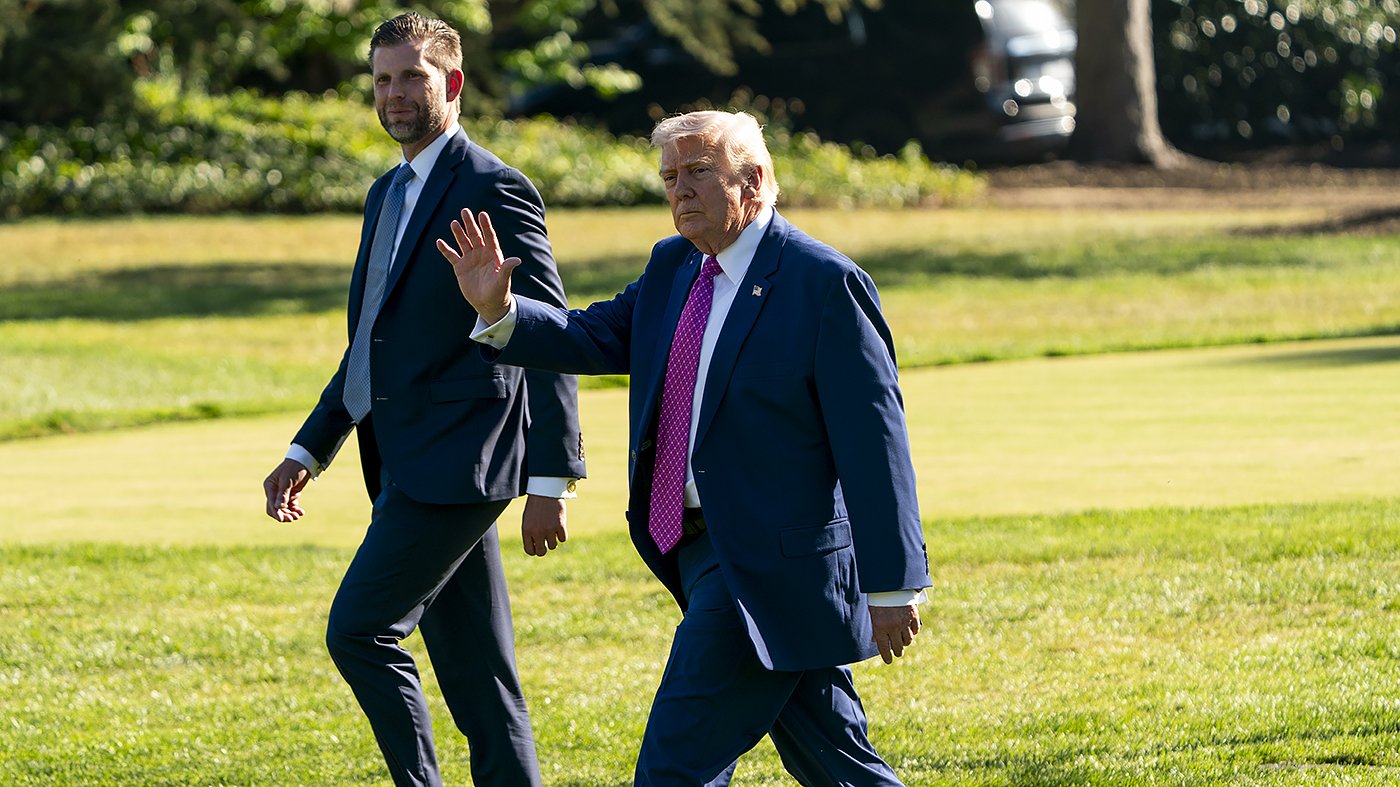
Speaking to reporters before departing Washington, Trump rejected the notion of preparing for diplomatic failure. "You don't need a backup plan," he stated. "The military is defeated. Their military is gone. We've degraded just about everything." He extended only a terse "luck" to Vice President Vance, who is traveling with special envoy Steve Witkoff and senior advisor Jared Kushner.
The delegation's mission follows a two-week ceasefire agreement already strained by fundamental disagreements. A major point of contention involves whether the truce covers hostilities between Israel and Hezbollah in Lebanon. Iranian officials and Pakistan's prime minister insist it was included, while the Trump administration and Israel maintain it was not, creating an immediate fault line in the negotiations.
Strategic Waterway at the Center of Dispute
Trump directly linked the ceasefire's survival to the unimpeded flow of traffic through the Strait of Hormuz, a critical global oil chokepoint. "The Strait of Hormuz will be opened 'with or without' Iran," he vowed, pledging to prevent Tehran from imposing tolls on shipping. Despite this declaration, commercial maritime traffic through the strait remains significantly depressed, contributing to sustained high global oil prices.
The president projected ambiguous confidence about the outcome. "I think it's going to go pretty quickly, and if it doesn't, we'll be able to finish it off," he said. "One way or the other, it's going well." He reiterated his assessment of Iran's condition: "The Navy's gone. The Air Force is gone. All anti-aircraft is gone. The leaders are gone. The whole place is gone. So, we'll see how it turns out."
Uncertainty Over War Aims and Exit Strategy
The president's rejection of contingency planning underscores the persistent ambiguity surrounding the administration's objectives and endgame for the conflict, which began with airstrikes in late February. Officials have provided conflicting timelines and definitions of victory since the outset.
Defense Secretary Pete Hegseth has attempted to distinguish the operation from past conflicts, stating it is "not endless nation-building under those types of the quagmires" seen during prior administrations. This stance echoes broader internal Republican debates over foreign policy doctrine. However, the administration's own point man on the talks, Steve Witkoff, betrayed profound uncertainty last month when asked how the war concludes, simply replying, "I don't know."
Trump's maximalist rhetoric, including the claim of total enemy degradation, continues to draw sharp criticism from foreign policy veterans. Former Secretary of State John Kerry has publicly condemned such language as reckless, warning it could pave a path toward severe historical judgment. Meanwhile, the administration faces parallel pressures, including legal challenges to its aggressive trade agenda and calls from congressional Democrats for the president to undergo a public cognitive assessment, citing his volatile threats.
As Vice President Vance engages in what Trump called "a big thing," the diplomatic effort proceeds without a defined safety net, reliant on a presidential conviction of total victory that remains unverified and amid a ceasefire already cracking at its edges.