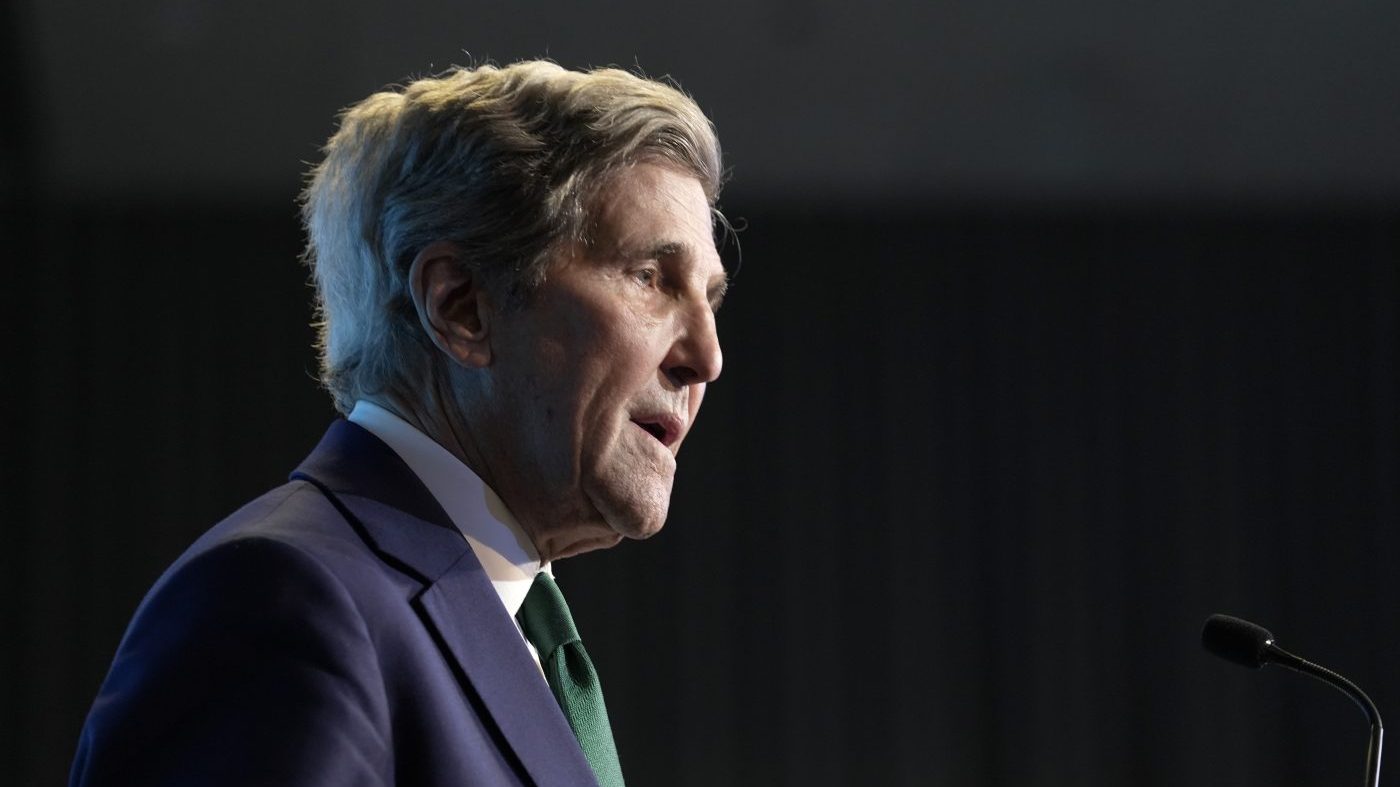
Former Secretary of State John Kerry issued a stark condemnation of President Trump's escalating rhetoric toward Iran on Friday, suggesting the president's recent threats could signal a path toward becoming "one of the greatest war criminals in history." Kerry's remarks came during an interview where he expressed profound alarm at the administration's language.
Speaking on a political news program, Kerry referenced Trump's recent social media posts, including one containing explicit language and another threatening that Iran's "whole civilization will die." The former diplomat stated he was "as shocked as I've been by anything that I have seen or read by this administration," drawing a comparison to Trump's first term.
"We're the nation that worked to liberate Europe from fascism," Kerry continued. "To then use language like that and say a whole civilization is going to die—that sounds to me like it's a prelude to becoming one of the greatest war criminals in history." He argued that threatening a civilization violates international norms and values, drawing on his own experience protesting the Vietnam War after naval service to emphasize the gravity of truthful discourse in matters of war.
Kerry directly challenged the administration's justification for recent military action, dismissing claims of an "imminent nuclear threat" from Iran. "There just wasn't an imminent threat," he asserted, noting that officials had previously claimed the U.S.-Israeli strikes in June had "obliterated" Iran's nuclear program. This critique comes as other Trump critics have pointed to his Iran statements as evidence of concerning behavior.
The former secretary's comments coincided with renewed threats from Trump himself. In an interview ahead of negotiations between Iranian officials and a U.S. delegation led by Vice President Vance in Pakistan, Trump warned he was prepared to resume strikes if talks fail. "We're going to find out in about 24 hours," he told an outlet. "We're loading up the ships with the best weapons ever made—even better than what we did previously." He added bluntly that without a deal, "we will be using them very effectively."
Trump's "whole civilization" threat earlier in the week had come with a Tuesday evening deadline for Iran to offer a peace deal and reopen the Strait of Hormuz. A temporary agreement was reached hours before the deadline, establishing a two-week ceasefire and reopening the critical waterway. However, Iran subsequently closed the strait again, citing Israel's attacks on Lebanon—a move that has created confusion about the ceasefire's scope.
Iranian officials and Pakistani Prime Minister Shehbaz Sharif have stated the ceasefire extends to Lebanon, but this interpretation has been disputed by Trump administration officials and Israeli Prime Minister Benjamin Netanyahu. The diplomatic friction underscores the fragile nature of the negotiations, with some foreign policy experts warning Iran may perceive Trump's approach as weak.
The escalating situation reflects broader tensions in Trump's foreign policy, which has frequently relied on maximum pressure campaigns. As the Islamabad talks reach their critical phase, the administration faces mounting scrutiny over its strategic coherence and adherence to diplomatic norms. The president's combative statements continue to draw fierce criticism from veteran diplomats like Kerry, who warned that such rhetoric dangerously escalates global conflicts.