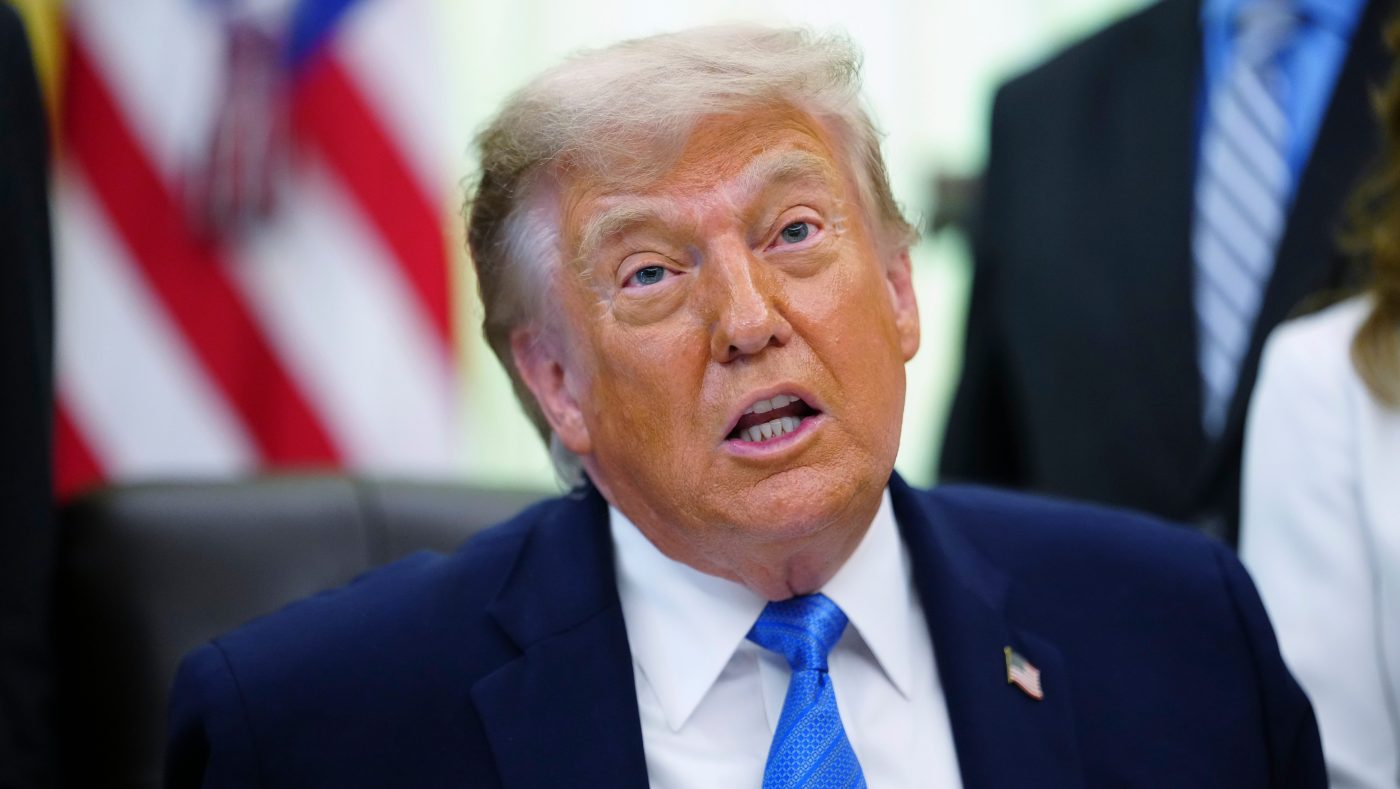
President Donald Trump pushed back forcefully on Tuesday against reports that the United States would provide Iran with access to a $300 billion reconstruction fund as part of a peace agreement, calling the narrative “ridiculous” and insisting no American money is flowing to Tehran.
Speaking to reporters at the G7 summit in France, Trump stated, “We are not investing any money in Iran, by the way, and with that rumor got out there yesterday was ridiculous. We have the right to go in some day and do, if I want to do something, or if somebody wants to do something, but we are not investing any money.” His comments came a day after Vice President JD Vance appeared to confirm that such a fund was under discussion, sparking confusion over the deal's terms.
Vance's Remarks and Administration Mixed Signals
On Monday, a U.S. official told reporters that negotiators had “discussed the possibility of releasing frozen funds, sanctions relief, you know, a big $300 billion fund to rebuild their country,” but stressed that any such moves would be contingent on Iran meeting its obligations under the agreement. The official’s statement seemed to align with earlier reports from The New York Times, which cited an Iranian official and a diplomat claiming the memorandum of understanding signed on Sunday included a $300 billion reconstruction fund.
Trump quickly sought to quash that narrative, posting on Truth Social Monday evening that the reports were “Fake News.” The president’s denial underscores the internal discord within his administration over the scope of economic concessions to Iran.
Funding Source Remains Unclear
Vance attempted to clarify the funding mechanism, stating that the “Gulf Coast Coalition” would be responsible for financing the reconstruction effort. This appears to refer to the Gulf Cooperation Council, which includes Bahrain, Kuwait, Oman, Qatar, Saudi Arabia, and the United Arab Emirates. However, no details have been provided on how or whether these nations have committed to such a fund.
According to multiple reports, the initial deal includes a U.S. waiver of sanctions on Iran’s oil exports to reopen the Strait of Hormuz, a critical chokepoint for global energy supplies. This provision would provide Iran with an immediate economic lifeline as negotiations over its nuclear program begin. Iran could also gain access to frozen overseas accounts if nuclear talks show progress.
Vance's Pre-Deal Denials
Before the agreement was reached, Vance insisted that Iran would not receive any upfront financial rewards. In a post on X on Friday, he wrote, “First, the Iranians are not receiving any cash, and no funds are being released for simply signing a deal or attending a meeting. The deal is structured to ensure that the US and its allies concerns are prioritized, and that if the Islamic Republic of Iran meets its obligations, then economic benefits will flow to them and to the entire region.”
The secrecy surrounding the deal has fueled skepticism among lawmakers and analysts, who question whether the administration has a coherent strategy for managing Iran’s nuclear ambitions and regional influence.
Political Fallout and Geopolitical Implications
The mixed messaging has also intensified tensions with Israeli Prime Minister Benjamin Netanyahu, who has publicly opposed any deal that provides Iran with financial relief without a complete dismantlement of its nuclear program. The episode highlights the broader political risks for Trump, as his handling of Iran policy could have long-term repercussions for the GOP, especially amid ongoing primary battles where his endorsement power is being tested.
As the administration works to sell the deal domestically and abroad, the conflicting statements from Trump and Vance risk undermining the credibility of the agreement and exposing divisions that could be exploited by critics on both sides of the aisle.