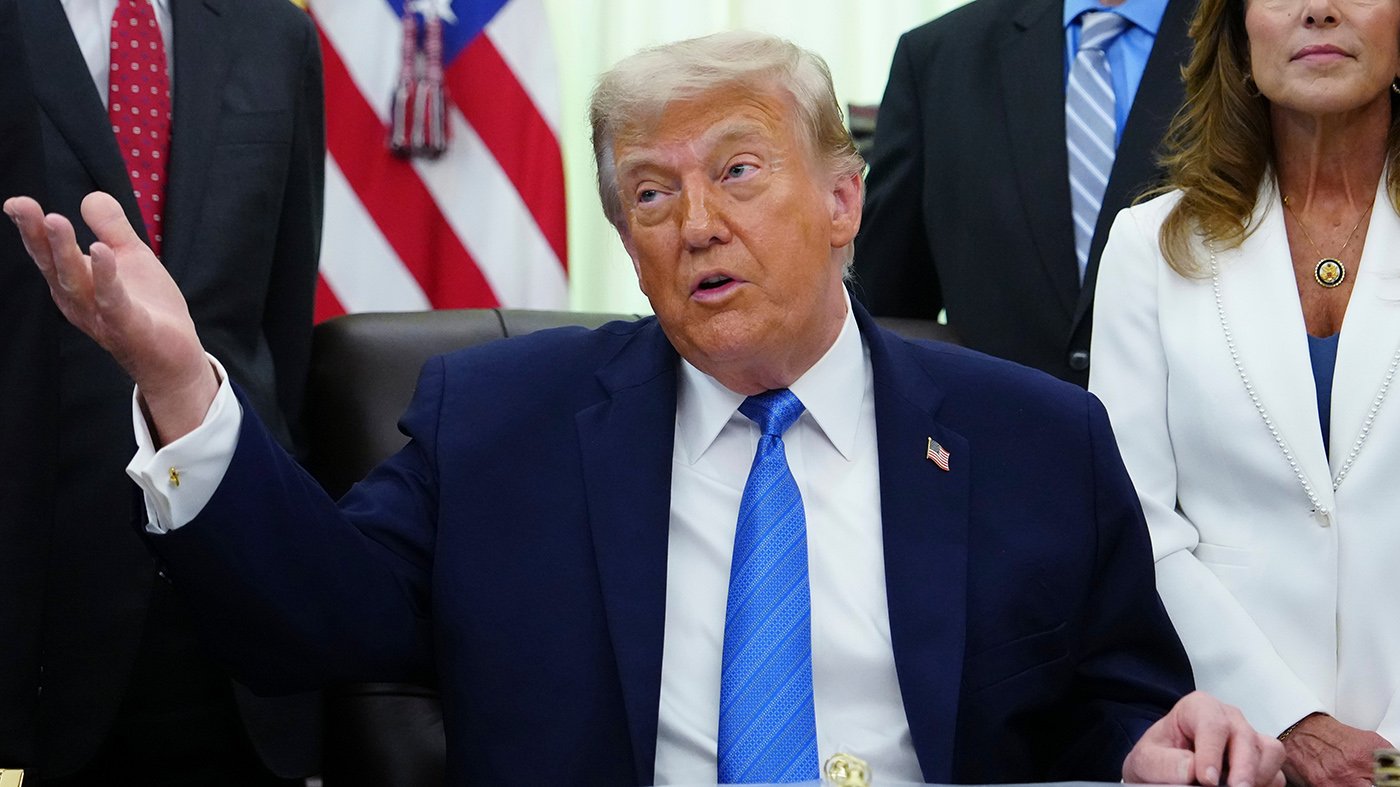
President Donald Trump on Monday dismissed reports that a $300 billion reconstruction fund for Iran was part of the newly signed peace agreement, labeling the claims as disinformation spread by political opponents. In a post on his Truth Social platform, Trump wrote, “Iran has agreed to never have a Nuclear Weapon! Also, the story that the U.S. is paying Iran 300 million Dollars is Fake News, put out by the Dumocrats!!!” He signed the message “President DJT.”
The denial came just hours after a U.S. official told reporters that negotiators had discussed the possibility of releasing frozen assets and sanctions relief, including “a big $300 billion fund to rebuild their country,” contingent on Tehran meeting its commitments. Vice President JD Vance appeared to confirm that scenario in a Monday interview with CBS News, stating that Iran “could have access to” such a fund, financed by the Gulf Coast Coalition, provided it honored its obligations. Vance likely referred to the Gulf Cooperation Council, which includes Bahrain, Kuwait, Oman, Qatar, Saudi Arabia, and the United Arab Emirates.
The mixed messaging has fueled confusion over the deal’s financial framework. Trump's Iran Deal Stirs Skepticism and Market Gains Amid Secrecy as details remain murky. The New York Times previously reported that the agreement included a provision for a $300 billion reconstruction investment fund, citing an Iranian official and a diplomat. However, senior U.S. officials clarified Monday that the memorandum of understanding (MOU), signed digitally over the weekend, is only an initial step, with “real technical discussions” to begin later this week led by Vance.
Before the MOU was signed, Vance had posted on X that Tehran would not be “receiving any cash” under the deal. “First, the Iranians are not receiving any cash, and no funds are being released for simply signing a deal or attending a meeting,” he wrote. “The deal is structured to ensure that the US and its allies concerns are prioritized, and that if the Islamic Republic of Iran meets its obligations, then economic benefits will flow to them and to the entire region.”
The apparent contradiction between Trump’s denial and his administration’s earlier statements has drawn sharp criticism from Democrats. Senate Majority Leader Chuck Schumer has demanded a full briefing on the deal’s terms, as Schumer Demands Full Briefing on Trump's Murky Iran Deal Terms. Meanwhile, the political fallout is intensifying, with Trump calling for the impeachment of Senator Jack Reed over his criticism of the agreement, as Trump Demands Impeachment of Sen. Reed Over Iran Deal Criticism.
Trump’s denial also risks deepening a rift with Israeli Prime Minister Benjamin Netanyahu, who has defied calls for a ceasefire and expressed skepticism about the deal’s security guarantees. Trump-Netanyahu Rift Over Iran Deal Deepens as Israeli Leader Defies Ceasefire Calls highlights the growing tension between the two allies over the terms of the agreement.
As technical negotiations are set to begin later this week, the administration faces mounting pressure to clarify the financial mechanisms of the deal. With Trump publicly disavowing a key element of the reported framework, the path forward remains uncertain, raising questions about the administration’s coherence on one of its most consequential foreign policy moves.