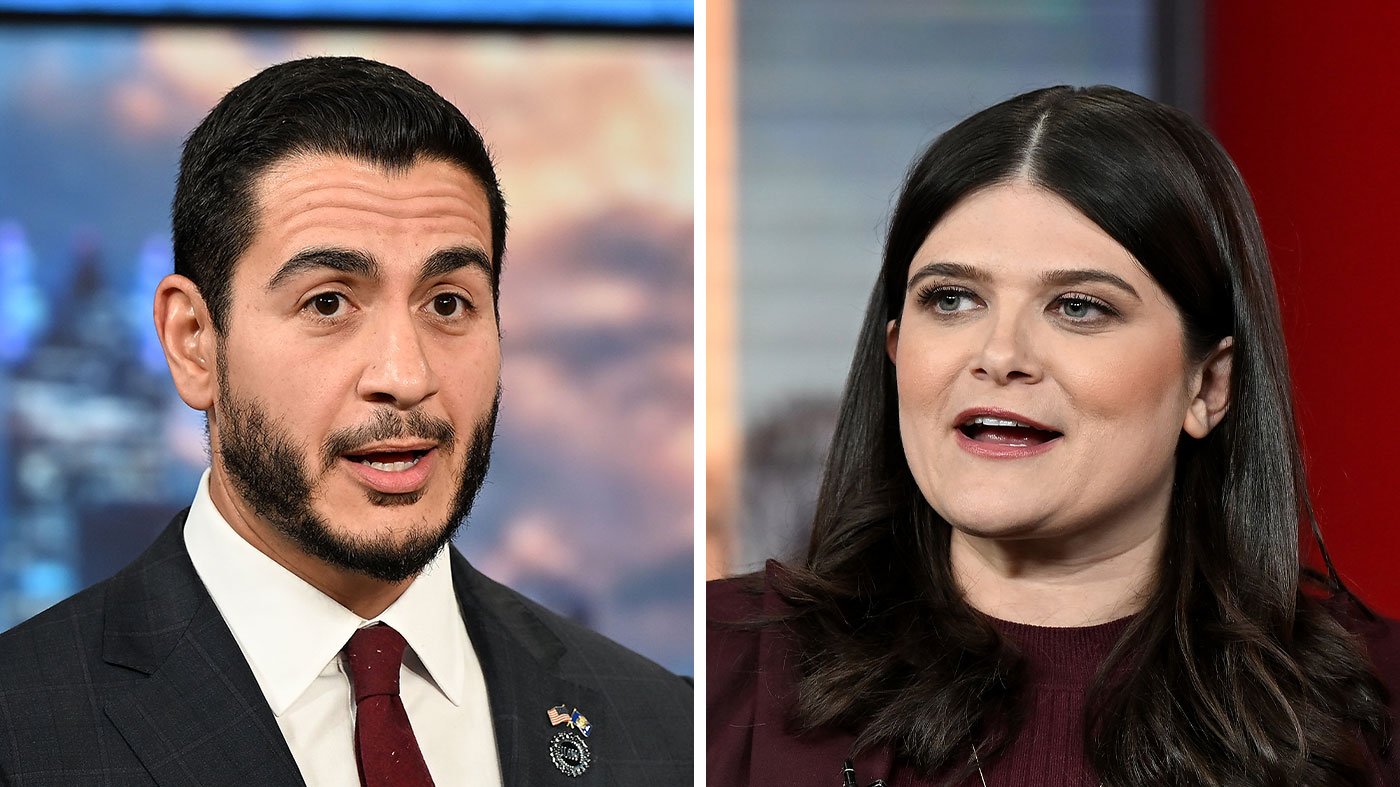
Progressive Abdul El-Sayed has opened a 15-point lead over Representative Haley Stevens in the Democratic primary for Michigan's open Senate seat, according to a new Emerson College Polling survey conducted in partnership with WLNS and WOODTV. The poll, released Thursday, shows El-Sayed with 54 percent support among likely Democratic primary voters, compared to Stevens's 39 percent, with 6 percent undecided and about 2 percent backing state Senator Mallory McMorrow, who withdrew from the race earlier this summer.
When undecided voters are asked which candidate they lean toward, El-Sayed's advantage grows to 57 percent versus Stevens's 41 percent, with McMorrow still at 2 percent. The primary is set for next Tuesday, and the winner will face former Representative Mike Rogers, the Republican frontrunner, in the general election to succeed retiring Senator Gary Peters.

Age and Race Divide
Emerson College Polling executive director Spencer Kimball highlighted a sharp generational split in the electorate. “There is a clear age divide in the Democratic Primary: voters under 50 break for El-Sayed by 42 percentage points, 67 percent to 25 percent, and that gap tightens among voters in their 50s to a 12-point lead, and voters over 60 flip to Stevens by a 14-point margin, 53 percent to 39 percent,” Kimball said in a press release.
However, Stevens holds a commanding lead among Black voters, securing 58 percent to El-Sayed's 38 percent. When undecided voters are included, Stevens's advantage among Black voters expands to 30 points, at 63 percent to 33 percent.
Establishment vs. Progressive Endorsements
El-Sayed, a former Wayne County public health official, has drawn support from national progressive figures including Senator Bernie Sanders and Representative Alexandria Ocasio-Cortez. Stevens, meanwhile, has the backing of Michigan's Democratic establishment, including Governor Gretchen Whitmer, former Senator Debbie Stabenow, and retiring Senator Peters. The contrast in endorsements mirrors the ideological battle within the party.
Moderate Democrats have grown increasingly anxious about El-Sayed's potential to win in the general election, fearing his progressive platform could alienate swing voters. Those concerns are supported by recent polling: a Michigan Education Survey showed Rogers defeating El-Sayed by 10 points in a hypothetical matchup, with 11 percent undecided. In contrast, that same survey found Stevens narrowly leading Rogers, 46 percent to 45 percent, a margin within the poll's 4-point error range, effectively a tie. For more on the general election dynamics, see our coverage of Rogers dominating El-Sayed but tied with Stevens.
Debate and Campaign Dynamics
The primary campaign has been marked by sharp exchanges, including a debate where El-Sayed and Stevens clashed over Israel and corporate cash. More recently, Senator John Fetterman fired back at El-Sayed, dubbing him “Pontiac Platner” in a sharp exchange that underscored the national attention on the race.
The Emerson College Polling/WLNS/WOODTV survey was conducted July 26-27 among 700 likely Democratic primary voters, with a margin of error of plus or minus 3.7 percentage points. As the primary approaches, the outcome will hinge on turnout among younger voters, who strongly favor El-Sayed, and older voters and Black voters, who lean toward Stevens.
Meanwhile, national Republicans are watching the race closely, with former President Trump warning of a 'communist threat' in Michigan as the Democratic primary heats up, and Trump making a pitch to Michigan voters on auto jobs and the economy ahead of the primary.