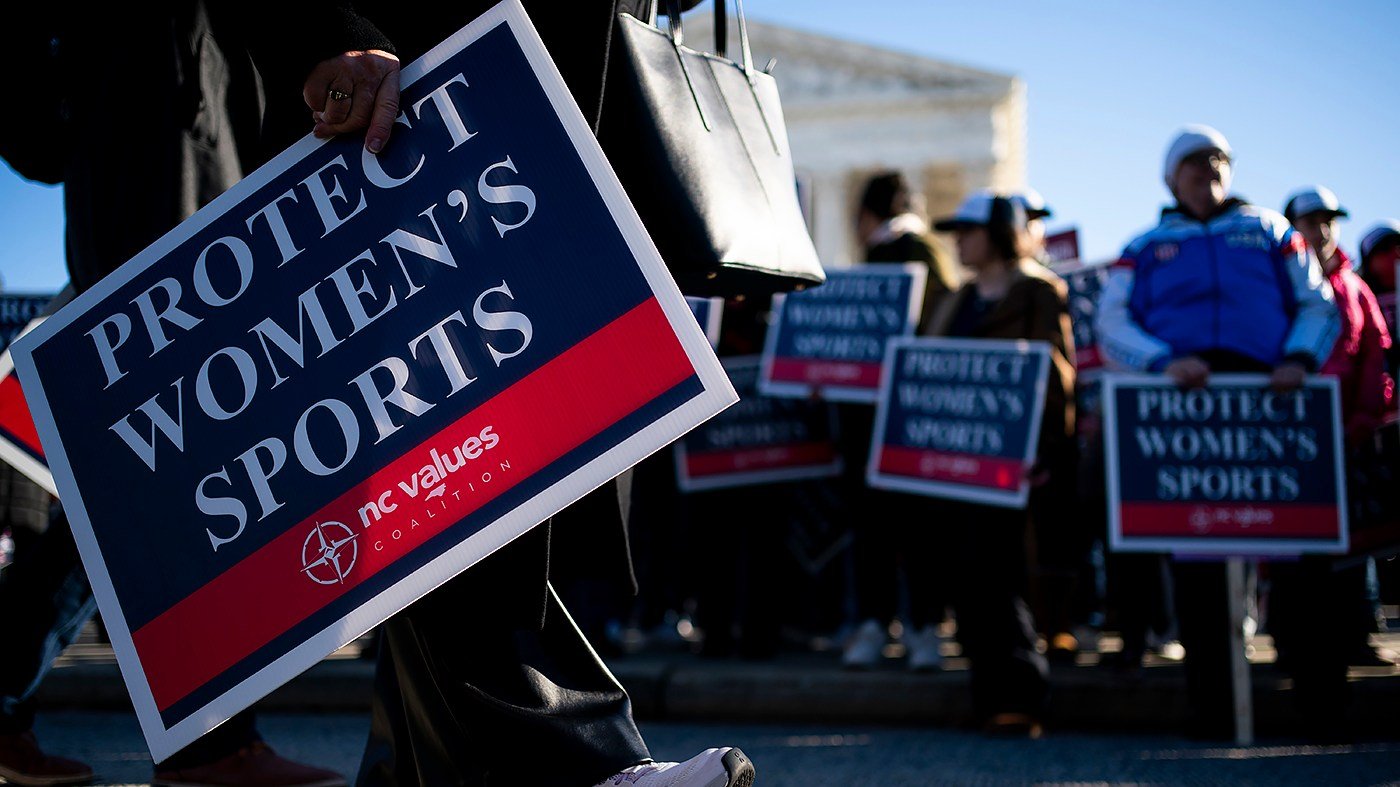
Washington voters have approved a ballot measure that prohibits transgender girls from participating in girls' and women's school sports, according to projections from Decision Desk HQ. The initiative, known as Initiative 638 or the Defending Equity in Interscholastic Sports Act, reverses a long-standing state policy that allowed transgender students to compete according to their gender identity.
Under the new law, students wishing to play on a girls' team must submit documentation from a healthcare provider verifying their sex. The verification must be based on "reproductive anatomy, genetic makeup, or normal endogenously produced testosterone levels," as outlined in the measure. This requirement applies to school districts and nonprofit organizations that oversee interscholastic sports.

The vote marks a significant setback for transgender rights advocates in a state that has traditionally leaned Democratic. Washington now joins 27 other states that have enacted similar restrictions, though most of those were passed by Republican-led legislatures. This year's push in Washington was driven by voters, not lawmakers, highlighting a shift in public opinion even in progressive strongholds.
Similar measures were on the ballot in Arizona, Colorado, and Nebraska on Tuesday, reflecting a broader national debate over transgender participation in sports. The outcome in Washington could influence future efforts in other blue states.
Supporters of the measure argue that it protects fairness and safety in women's sports, while opponents contend that it discriminates against transgender students and violates their rights. The debate has reached the Supreme Court, which earlier this year rejected arguments that such bans violate Title IX or the Constitution's equal protection guarantee in a 6-3 vote along ideological lines.
The issue has also surfaced in a recent emergency appeal to the high court. A mother whose daughter says she was sexually assaulted by a transgender girl during a wrestling match sought an exemption from competing against transgender athletes. Lower courts rejected the request, but the mother filed an emergency appeal that has been pending for nearly three weeks. The justices have not acted, leaving the case unresolved as Election Day passed.
Washington's new law is expected to take effect immediately, though legal challenges are likely. The American Civil Liberties Union and other advocacy groups have vowed to fight the measure in court. Meanwhile, school districts are preparing to implement the new verification requirements, which could face logistical hurdles as they update policies and forms.
The approval of Initiative 638 is a notable political development, especially given the state's Democratic leadership. It reflects a growing divide within the party over transgender issues, as some voters prioritize concerns about fairness in sports over inclusive policies. The result could have implications for upcoming elections and legislative battles in other states.
As Washington adjusts to the new law, the national conversation on transgender athletes is far from over. With the Supreme Court's recent ruling and ongoing litigation, the issue remains a flashpoint in American politics.