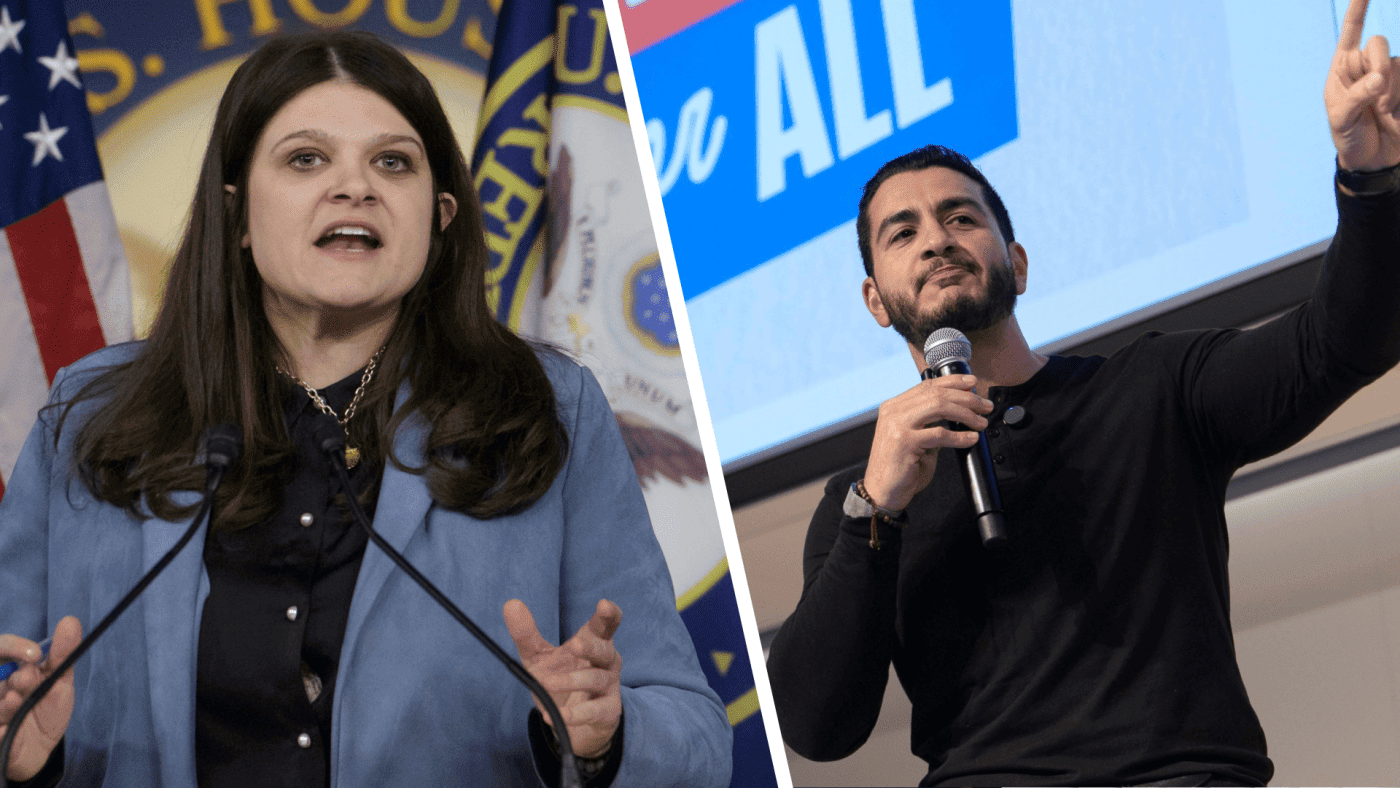
With just one week until Michigan's Aug. 4 Democratic Senate primary, Rep. Haley Stevens and former Wayne County health director Abdul El-Sayed met for their second one-on-one debate, trading blistering attacks over corporate money and the war in Gaza. The contest to replace retiring Sen. Gary Peters has become a proxy fight over the party's direction on foreign policy and campaign finance.
The debate, hosted by FOX 2 in Detroit, came hours after President Trump held a rally in Milford, Michigan, alongside GOP Senate nominee Mike Rogers and other Republicans. The president used the event to brand Democrats as "communists," a line that echoed through the Democratic debate as El-Sayed sought to distance himself from the socialist label.
Israel and AIPAC Spending Dominate
The sharpest exchanges centered on the American Israel Public Affairs Committee's super PAC, the United Democracy Project, which has poured up to $30 million into the race to boost Stevens and attack El-Sayed, according to AdImpact. El-Sayed hammered Stevens over a House vote earlier this month against an amendment that would have cut $3.3 billion in aid to Israel. "Just last week, our friend here voted to send 3.3 billion of your tax dollars to a foreign government. That is the pro quo that comes with a quid of $30 million spent by AIPAC," El-Sayed said.
Stevens countered that she supports a two-state solution and has been attacked by Israeli Prime Minister Benjamin Netanyahu herself. "The goal is always long-term peace," she said, rejecting El-Sayed's characterization of Israel's actions as genocide. The former health official has long accused Israel of committing genocide, a position that has drawn sharp lines within the party.
The AIPAC super PAC's spending has become a central issue in the primary, reflecting broader Democratic divisions over Israel policy. For more on how this dynamic is playing out in other races, see our report on Trump's Canada tariffs giving Democrats a new attack line in Michigan races.
Corporate Money and Family Ties
El-Sayed also accused Stevens of being "bought off" by corporations like DTE Energy and Blue Cross Blue Shield. Stevens denied taking money from utility companies in her Senate bid, though Bridge Michigan reported she had accepted DTE PAC contributions in previous House races. Blue Cross Blue Shield's PAC donated $2,500 to Stevens' House account in April 2025 before she entered the Senate race.
Stevens turned the tables by highlighting that El-Sayed's father-in-law has spent over $1 million supporting his campaign. The exchange underscored the personal and financial stakes in a race that has drawn national attention.
Michigan Democrats are watching closely as the primary narrows. Gov. Gretchen Whitmer has already thrown her support behind Stevens, a move that could shape the final outcome. For context on the broader primary dynamics, read about Whitmer's endorsement of Stevens.
El-Sayed Rejects Socialist Label
Under pressure from Republicans and Trump's attacks, El-Sayed pushed back against being labeled a socialist. "I'm not a socialist. I'm just a capitalist who understands how capitalism works," he said, arguing that the biggest threat to capitalism is monopoly, not regulation. Trump's rally earlier that day had painted all Democrats as "communists" who want to raise taxes to 80 percent and seize homes.
The GOP is trying to tie El-Sayed to the Democratic Socialists of America after a series of progressive primary wins this summer. The strategy could resonate in a general election, but in the primary, El-Sayed's base remains energized. For more on how Trump's rhetoric is shaping the race, see our coverage of Trump's warnings about a 'communist threat' in Michigan.
The debate also touched on economic issues, with both candidates vying to appeal to working-class voters. El-Sayed emphasized his background in public health and his fight against corporate interests, while Stevens highlighted her legislative record and support from establishment figures.
With the primary just days away, the race remains tight. The winner will face a tough general election battle against the GOP nominee, likely Mike Rogers, in a state that has become a key battleground. The outcome will test whether the party's progressive or centrist wing holds sway in Michigan, a state that could determine control of the Senate.