The Trump administration's decision to slap an additional 50 percent tariff on Canadian goods is handing Democrats a powerful economic weapon in Michigan, a state where cross-border trade underpins the economy and where competitive midterm races are taking shape.
Last week, the president accused Canada of “discriminatory” trade practices and announced the new tariff, adding to existing 25 percent levies on steel and aluminum and a 10 percent tariff on softwood lumber. He has also floated further penalties tied to Canada's handling of wildfires that sent smoke across U.S. states.

Michigan imports more than $43.5 billion in goods from Canada annually—including natural gas, plastics, and aluminum—and exports over $21.2 billion in engines, crude petroleum, and aircraft parts. That deep economic integration makes the state uniquely vulnerable to trade disruptions. As Adrian Hemond, a Michigan-based political consultant at Grassroots Midwest, put it: “It's another headwind in an election full of headwinds for Republicans, but some of how stiff the headwind is is going to depend on how effective Democrats are in calling attention to the direct impact of these tariffs on the voters.”
Democrats are already sharpening their message. Rep. Haley Stevens, who is running in a competitive Democratic Senate primary, wrote on X that “Trump cares more about power plays than Michigan families.” Her primary opponent, Abdul El-Sayed, is a prominent figure on the party's left flank, and the GOP has been warning about what it calls a communist threat from his candidacy. The Republican primary for Senate is essentially decided, with former Rep. Mike Rogers running unopposed.
In the governor's race, Trump-backed Rep. John James faces businessman Perry Johnson in the GOP primary. The winner will take on either Secretary of State Jocelyn Benson or Genesee County Sheriff Chris Swanson in the general. Meanwhile, Rep. Tom Barrett’s House seat is rated a toss-up by the nonpartisan Cook Political Report, and the tariff issue could tip the balance.
Jason Cable Roe, a Michigan-based Republican strategist, acknowledged the danger: “Tariffs with Canada are a particularly Michigan issue. I expect it will play a role in whatever attacks come regarding the economy.”
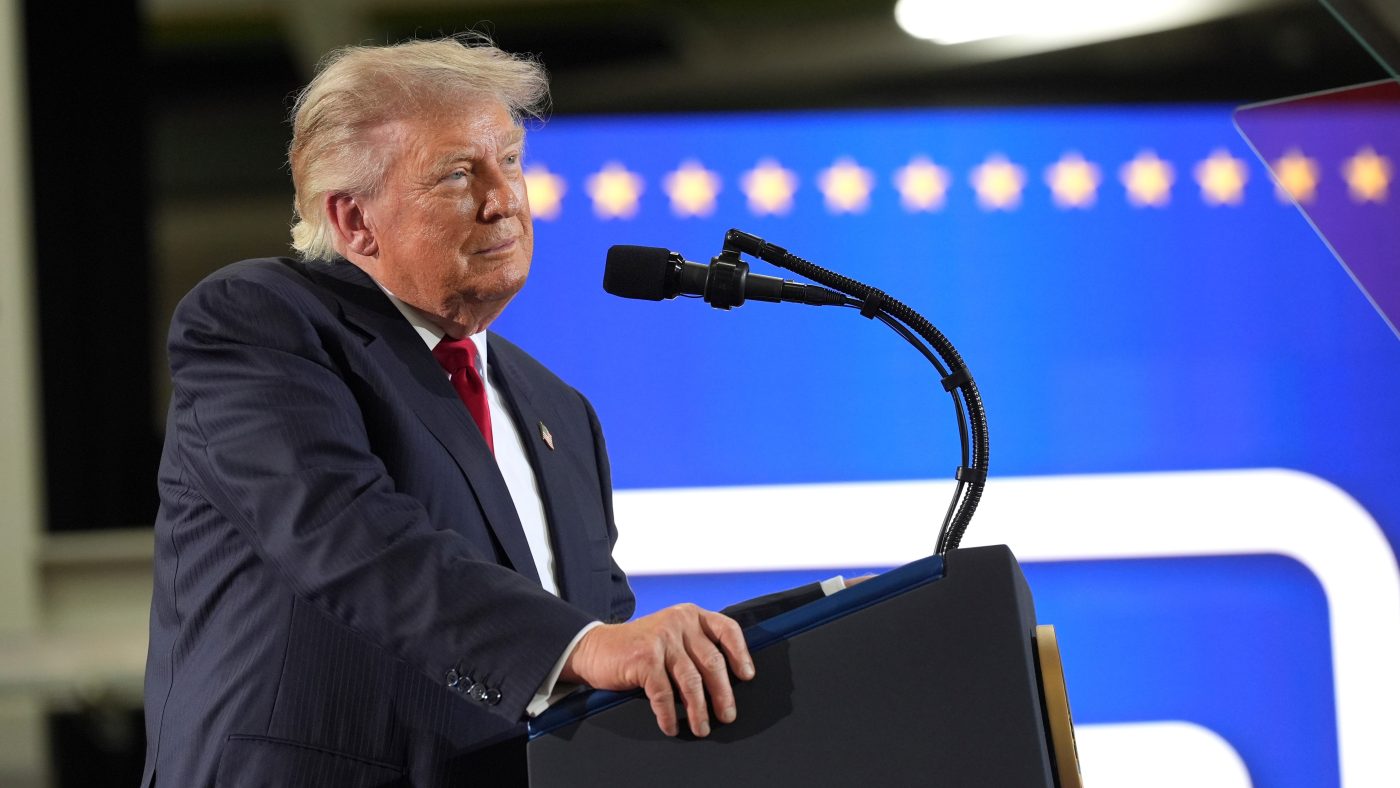
Trump defended his trade policies during a campaign stop at the General Motors Proving Ground in Milford on Monday, boasting that his 25 percent tariff on foreign automobiles is “something that no other president had the courage to ever do.” He did not directly address the Canada tariffs, but his administration's broader trade stance is likely to remain a central theme as the state heads toward its August 4 primary.
The Gordie Howe International Bridge, connecting Detroit to Windsor, Ontario, has become a symbol of the strained relationship. The U.S. was uninvited from its official opening ceremony last week, and Trump did not visit the bridge during his Michigan trip. He said he was “fine” with the snub, given that Canada is “paying substantial TARIFFS to the United States.”
Canadian Prime Minister Mark Carney has warned that “everything's on the table” if no agreement is reached before the tariffs take effect next month. A report from the Midwest Economic Policy Institute and the Project for Middle Class Renewal found that Trump's tariffs last year raised costs as much as 55 percent higher in the Midwest than the national average per household—a data point Democrats are likely to hammer home on the campaign trail.
With the primary season in full swing, many Democratic candidates have yet to fully deploy the tariff issue, but strategists expect that to change. “Up to now, I have not heard much rhetoric on the tariff issue, but that doesn't mean they don't plan to use it,” Roe said. Given Michigan's economic reliance on cross-border trade, the president's tariffs are poised to become a defining issue in races that will help determine control of Congress and the governor's mansion.

