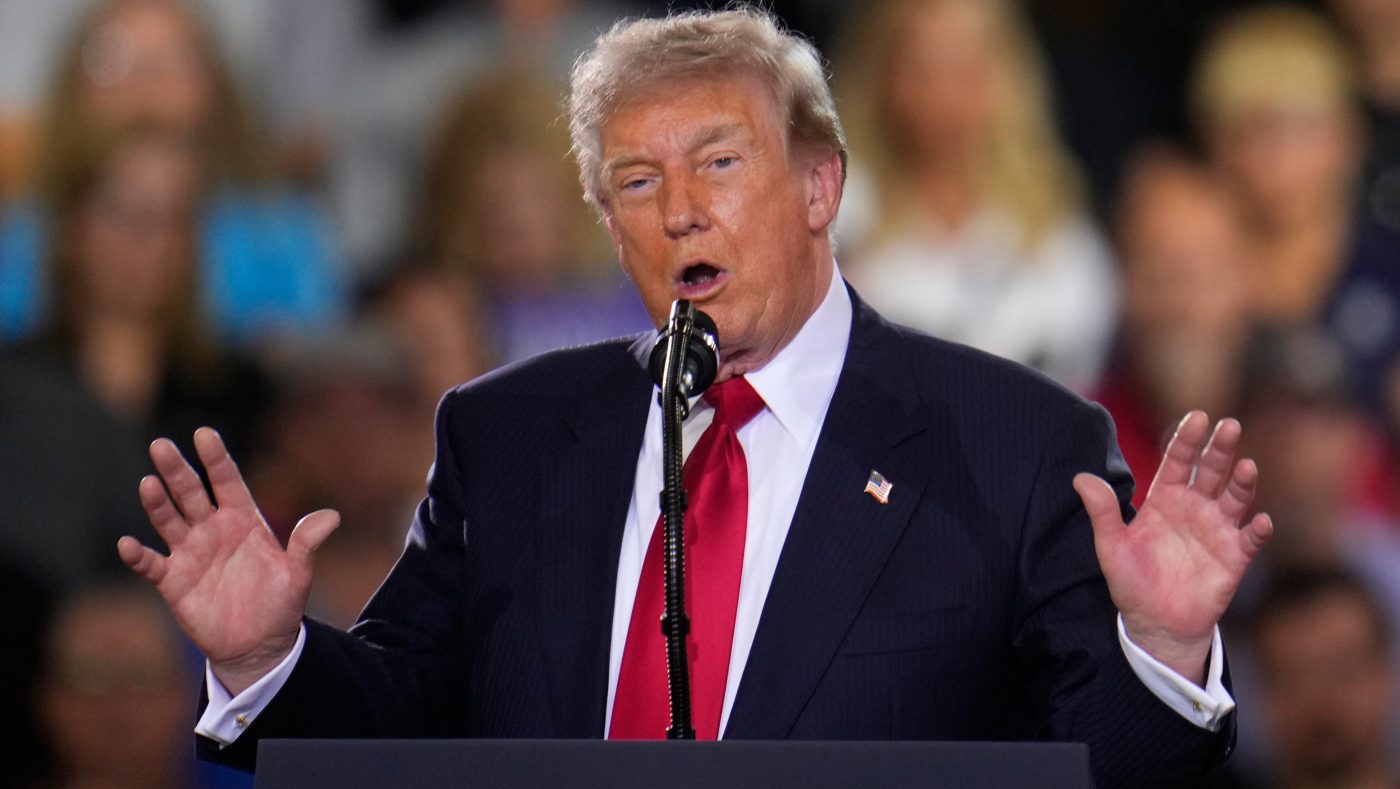
President Trump delivered a fiery campaign-style speech in Milford, Michigan, on Monday, warning that communism poses "the greatest threat to our country in history," surpassing even the world wars and Pearl Harbor. The rally, held ahead of Michigan's Democratic Senate primary next week, saw Trump avoid naming the two leading candidates—Rep. Haley Stevens and Abdul El-Sayed—but he aimed to tie the entire Democratic Party to the communist label.
Trump told the crowd that the United States is experiencing "the single greatest year we've ever had as a country" and that "we can't let these people destroy it." He pointed to policy proposals he claimed would confiscate homes, raise taxes to 80 percent, and take citizens' money. At one point, he singled out a heckler, calling the person "a communist."
Michigan's Democratic Senate primary is one of the most closely watched intraparty contests this cycle. El-Sayed, a progressive physician and former state health official, has drawn attacks from Stevens and the party establishment for being too far left. Stevens, a two-term congresswoman backed by Governor Gretchen Whitmer and Senate Minority Leader Chuck Schumer, is seen as the establishment choice. According to the Decision Desk HQ polling average, El-Sayed leads Stevens 47 percent to 41 percent.
Trump's rhetoric on communism fits a broader pattern of using ideological scare tactics to mobilize his base. The president has previously warned of socialist and communist influence within the Democratic Party, and his Michigan stop was part of a series of visits to swing states where he blends policy attacks with cultural warfare. The rally also touched on economic themes, including auto jobs and energy prices, as Trump sought to contrast his record with the Democratic field.
The primary, set for August 4, is seen as a bellwether for the party's ideological direction. El-Sayed has embraced a platform of Medicare for All, a Green New Deal, and tuition-free public college, while Stevens has positioned herself as a pragmatic progressive who can work across the aisle. The race has drawn national attention, with outside groups spending heavily on both sides.
Trump's decision to focus on communism rather than naming specific candidates may reflect a strategic choice to avoid elevating either Democrat. By painting the entire party as extreme, he aims to tie the eventual nominee to an unpopular label. Polls show that while voters in the district remain divided, the broader national mood is skeptical of far-left policies.
The president's comments come amid a backdrop of Democratic Party financial struggles and internal debates over messaging. The DNC's recent debt and leadership issues have raised questions about its ability to counter Trump's attacks in the run-up to the 2026 midterms. Meanwhile, Trump's own approval ratings remain mixed, though his base remains energized by his combative style.
Michigan Republicans are also watching the primary closely, hoping to flip the open Senate seat in a state Trump won in 2016 but lost in 2020. The general election is expected to be one of the most competitive in the country, with both parties pouring resources into the state.
As the primary approaches, the contrast between Stevens and El-Sayed will sharpen. Stevens has emphasized her record on manufacturing and infrastructure, while El-Sayed has focused on health care and economic justice. Trump's communism warning is likely to feature heavily in Republican attacks against whichever Democrat emerges, setting the stage for a bitter general election fight.

