For the first time, the wars in Ukraine and Iran are colliding directly. A Ukrainian attack on an Iranian cargo ship bound for Russia in the Caspian Sea last week prompted a tense phone call between Kyiv and Tehran to prevent retaliation, according to Ukrainian Foreign Minister Andrii Sybiha. The incident underscores how the two frontlines are increasingly overlapping, even as major powers try to keep them separate.
President Trump, who has long downplayed Moscow's support for Tehran, appears to be recalibrating his stance toward Kyiv as Ukraine gains battlefield momentum. On Tuesday, Trump agreed to send his envoys Steve Witkoff and Jared Kushner to Kyiv for peace talks, a first. He also greenlit Ukraine's co-production of critical air defense munitions, a move advanced during a meeting between President Volodymyr Zelensky and Lockheed Martin executives.

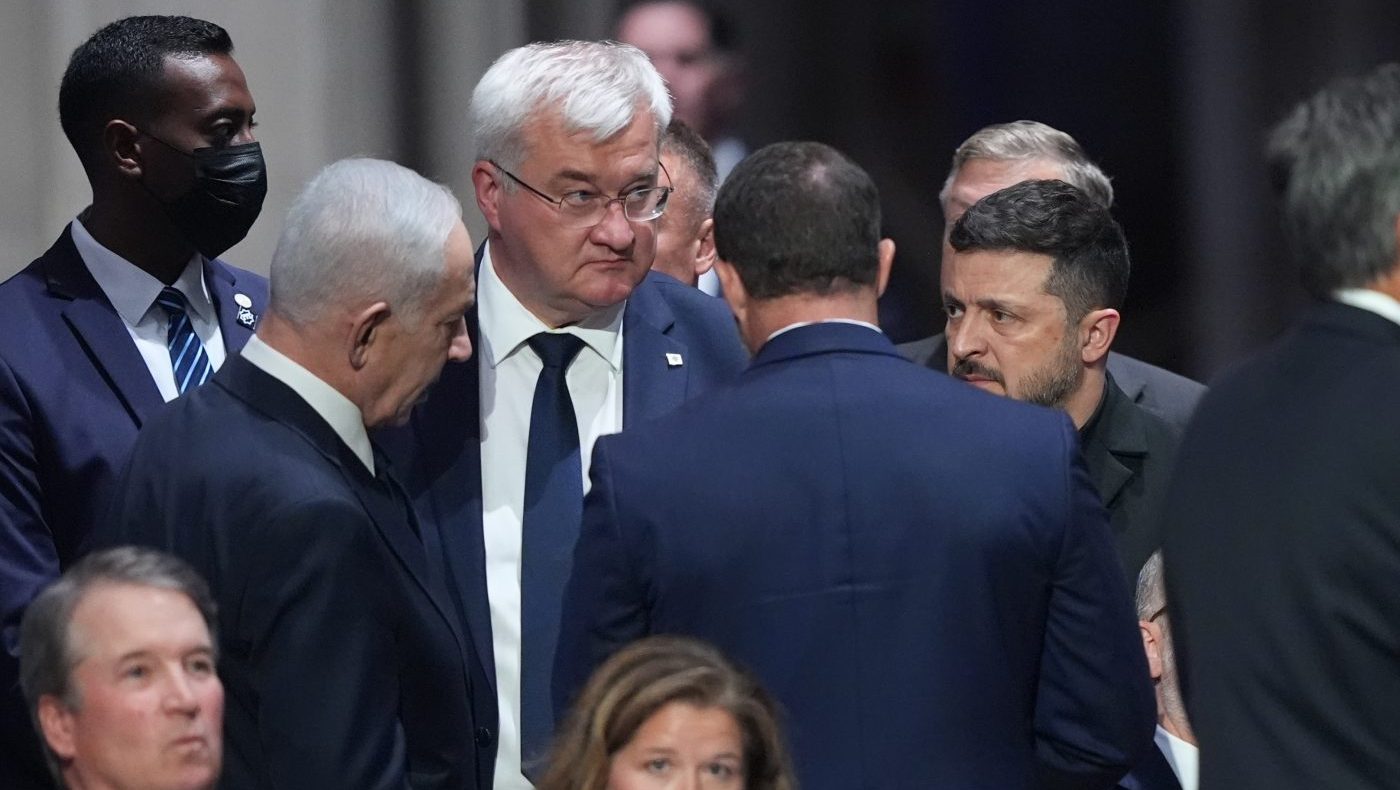
Meanwhile, Zelensky and Israeli Prime Minister Benjamin Netanyahu crossed paths at a memorial service for Senator Lindsey Graham in Washington—their first face-to-face meeting in three years. The encounter, though brief, came after Israel rebuffed a Ukrainian request for a formal sit-down, reflecting ongoing tensions. Netanyahu has prioritized ties with Russian President Vladimir Putin since 2022 to preserve Israeli freedom of action in Syria against Iranian targets.
October 7, 2023, and the subsequent wars in Gaza and Lebanon have further sidelined Ukraine from Israel's agenda. Still, there are signs of modest thawing. Israeli Foreign Minister Gideon Sa'ar spoke with Sybiha Tuesday, discussing the Iranian threat and extending an invitation to Kyiv for 35th anniversary celebrations of bilateral ties. In June 2025, Israel transferred a Patriot missile battery to Ukraine, and Sa'ar visited Kyiv in July, calling for a strategic dialogue on Iran. But as Daniel Rakov of the Jerusalem Institute for Strategy and Security noted in an October 2025 analysis, those contacts were largely about coordinating a Jewish pilgrimage, not a strategic pivot.
John Herbst, senior director of the Atlantic Council's Eurasia Center, described a "little bit of movement in the right direction" but said Netanyahu remains "reluctant" to break with Putin, despite what Herbst called "really backstabbing him in Iran." Retired Marine Colonel Ray Gerber warned that failing to use Ukraine as leverage against Russia to influence the Iran front would be "strategic folly." He argued that further enabling Ukraine could create more diplomatic pressure on Moscow.
Trump has repeatedly dismissed reports of Russian and Chinese aid to Iran in the war, despite intelligence suggesting Moscow has provided targeting data for strikes on U.S. forces. Zelensky said he plans to share evidence of Russian involvement with Washington. Earlier this year, Zelensky deepened ties with Gulf states, sharing anti-drone technology as they came under Iranian attack. American forces in Saudi Arabia began using Ukrainian drone defenses in April, after Trump initially rejected the offer.
But Zelensky continues to stress that Ukraine's drone innovations cannot stop Russian ballistic missiles, renewing his plea for Patriot interceptors. Trump turned down that request earlier this month in Ankara, citing depleted U.S. stockpiles due to the war with Iran. The administration's conditional support for Ukraine, Gerber argued, has not fully tied together the conflicts in Ukraine and the Middle East.
As the wars converge, the question remains whether Trump will leverage Ukraine's battlefield gains to pressure Russia on Iran, or keep the two theaters separate. For now, the diplomatic and military threads are increasingly tangled.